

































































Taking Lessons from the Odyssey at the UN
A country cannot prosper by shutting the world out. Nor can it prosper by opening itself so completely that others determine the terms. Hospitality works because it is reciprocal.

A blockbuster from the summer may seem an unlikely place to begin a discussion about the United Nations, yet Christopher Nolan’s The Odyssey offers an unexpectedly useful lens for thinking about what is about to conclude early next week in New York.
Released in July, Nolan’s epic became one of the defining films of the year, crossing $1 billion in worldwide box-office receipts, and making it the highest-grossing film of the director’s career.
Its commercial success matters less here than what it has put back into popular conversation: an ancient story about power, deception, hospitality and the long journey home.
One of its recurring ideas is “Zeus’ Law” that Nolan borrows for his formulation of the ancient Greek principle of xenia, or sacred hospitality.
A stranger is to be received, fed and protected; the guest, in turn, owes the host respect and restraint.
In Homer's world, a traveller crossed boundaries without passports, contracts, credit ratings, or reliable courts. The host knew little about the stranger. The stranger knew little about the host. Hospitality created a basis for trust where formal institutions could not, and that is what made xenia an economic idea as much as a moral one.
The Ancient Economics of Trust
Hospitality reduced the costs of moving, trading and communicating across unfamiliar territory. The stranger could be admitted before being fully understood because both sides were bound by an expectation of reciprocity.
Hence, the obligation ran both ways. The suitors in The Odyssey violate it spectacularly. They turn Penelope's hospitality into prolonged extraction, consuming Odysseus's household while contributing nothing to it.
The witch Circe does something even more brutal, yet debatable; she turns her guests into pigs, only out of the fear of them having an upper hand over her. Once hospitality becomes exploitation, the relationship collapses.
Nolan adds an uncomfortable twist. Odysseus himself violates the principle through the Trojan Horse. The deception that wins the war is also an abuse of trust. His triumph is therefore inseparable from the moral cost of how he achieved it.
That is central to Fareed Zakaria's recent reading of the film in The Washington Post. Through his narrative in “What Odysseus Can Teach Us About Liberalism,” Zakaria contrasts Homer's admiration for Odysseus's cunning with Nolan's more troubled hero, haunted by war and by the deception at the center of his victory.
The latter’s larger argument is that modern societies need not choose between human dignity and heroic ambition. Rather, they need both. The obvious geo-political resonance of such a notion is how power can compel, but ultimately only trust can sustain.
From Xenia to the International System
Modern international relations are, in effect, a vastly more elaborate system of hospitality. Countries open their markets and economies to outsiders because exchange can make everyone better off.
Trade agreements, investment treaties, and diplomatic conventions all attempt to solve an ancient problem: how do strangers cooperate when their interests are not identical?
When trust weakens, the costs become tangible. Supply chains become instruments of leverage. Shipping routes become security cautions.
Investment carries a higher political-risk premium. Protectionism becomes easier to justify.
The world is increasingly caught in this tension. Major powers want access, influence, and strategic advantage. Smaller states are courted for their markets, geography, and diplomatic weight.
The danger is not openness itself, but in it being without agency. A strong host welcomes the guest while retaining control of the house, and that is where Bangladesh enters this story.
An Unusually Consequential UNGA
Earlier in the month, the 81st session of the United Nations General Assembly opened in New York, with Bangladesh's Foreign Minister Khalilur Rahman presiding. Rahman was elected in June after a closely contested vote, winning 99 votes against 91 for the Cypriot candidate.
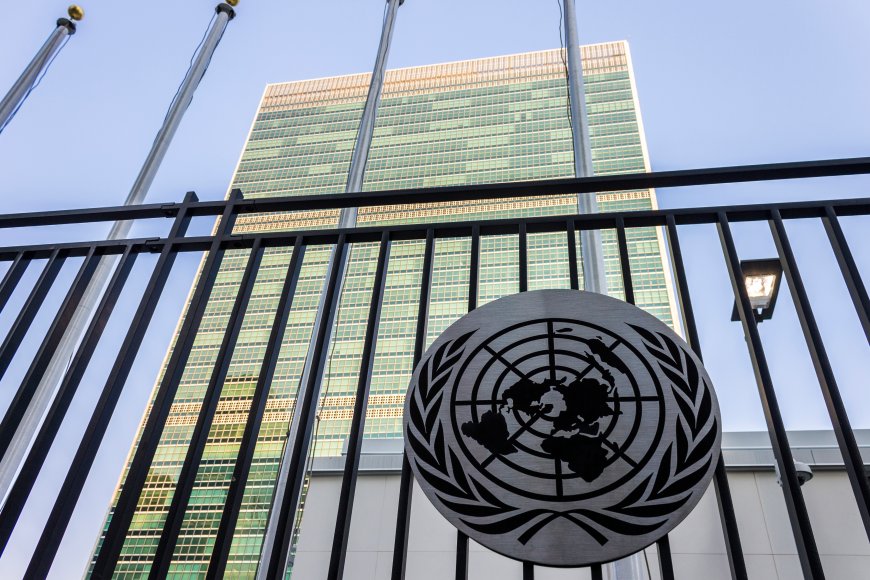
His presidency came at a particularly consequential moment. The UN is confronting wars, strategic rivalry, economic fragmentation, and declining confidence in multi-lateral institutions. The stated theme of the incoming presidency -- “Restoring Trust, Managing Transformation: A United Nations that Delivers for All” -- could almost have been written as a contemporary gloss on xenia.
There is, however, another reason why this session matters.
2026 is the year in which the United Nations selects António Guterres' successor as Secretary General. Its formal process is already underway, with the General Assembly and Security Council involved in determining who will become the organization's next chief diplomat.
The symbolism is difficult to miss. The very organization that is designed to bring states into the same room must now demonstrate how it is still capable of ensuring cooperation among countries that increasingly distrust one another. That is the politics of hospitality, manifested at its highest level.
Bangladesh as Host
For Bangladesh, Rahman's presidency is more than a ceremonial distinction. It is an opportunity to demonstrate a form of diplomacy that middle powers increasingly need: open, pragmatic, and collective, without becoming subordinate.
The Prime Minister of Bangladesh was scheduled to deliver his own maiden speech at the session on Thursday.
The country’s economic and strategic interestsrequire engagement with all major centers of power.
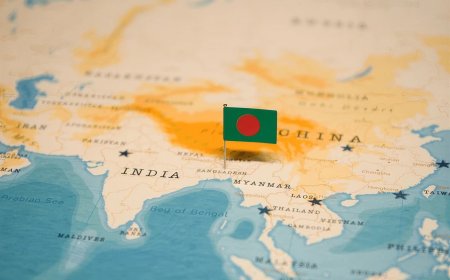
The European Union is a crucial export market. China and India are major economic partners and neighbors. The United States remains an important destination for Bangladeshi exports. The Bay of Bengal gives Bangladesh a geographical position of growing strategic significance.
None of this requires choosing one camp over anot her. Instead, it requires becoming a credible partner to many.
The economics of hospitality is therefore relevant to Bangladesh in a very practical sense. Foreign investment requires confidence. Trade requires predictability. Transit and maritime connectivity require trust. Diplomacy requires the belief that agreements will be honored.
But reciprocity matters.
Bangladesh should welcome investment without surrendering policy space, pursue connectivity without becoming somebody else's corridor, and cooperate on security without becoming an extension of another power's strategic ambitions.
The objective is not neutrality for its own sake. Rather, it may be best described as strategic autonomy. That distinction will matter even more as competition among major powers increasingly reaches into the Bay of Bengal and the wider Indo-Pacific.
The Lesson of Ithaca
This is perhaps where Nolan's Odyssey speaks most directly to the moment.
Odysseus spends years trying to get home. His journey is filled with alliances, temptations, deception, generosity, and betrayal. His eventual return is not simply a physical homecoming. It is the restoration of order.
Bangladesh's challenge is different, but the principle travels well. A country cannot prosper by shutting the world out. Nor can it prosper by opening itself so completely that others determine the terms. Hospitality works because it is reciprocal.
The question for Bangladesh, therefore, is not whether to open the door. It is who enters, what is exchanged, and whether the relationship leaves the house stronger.
With Khalilur Rahman already having taken the chair at the UN General Assembly, alongside the possibility of the organization choosing its first-ever woman leader, the ancient idea of xenia acquires an oddly modern relevance.
The world does not need fewer doors. It needs better hosts, more trustworthy guests, and rules strong enough to ensure that neither mistakes hospitality for weakness.
That may be the most useful lesson that The Odyssey has brought back from Ithaca.
Zunairah Hassan is an avid chronicler of civilizations and antiquities. Zeeshan Abedin is an economist and an academic researcher.