




























































The Border Still Bleeds
56 previous conferences have produced 56 joint records. The 57th record will be written in New Delhi over four days beginning June 8. It will either mark the beginning of a different kind of diplomacy, one in which Bangladesh’s written commitments mean something and India’s violations carry consequences, or it will confirm that the pattern has been accepted as permanent.
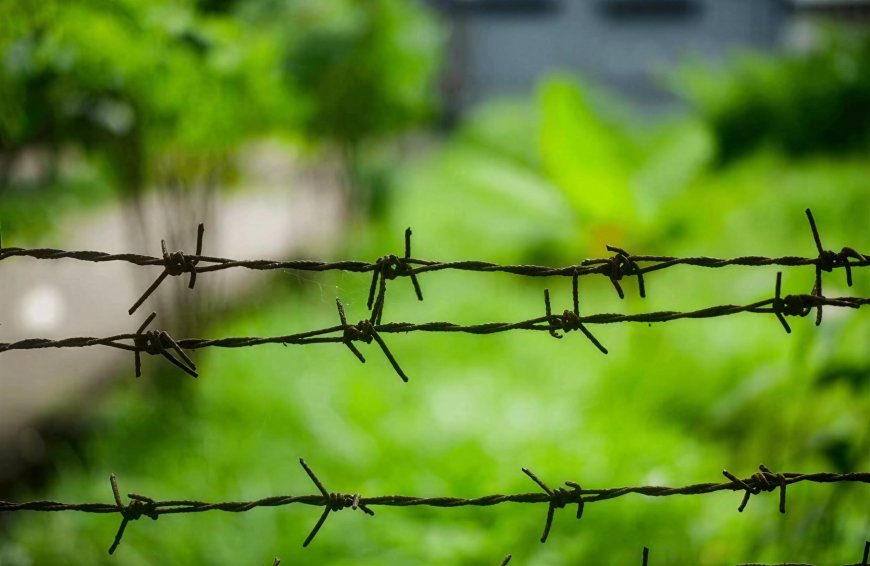
Somewhere along the 4,156 kilometres that separate Bangladesh from India, a pattern has calcified into policy. A Bangladeshi is shot dead. A family is told he was a smuggler. A diplomatic note is filed. A conference is held. A joint record is signed. The family buries its dead. The next Bangladeshi is shot.
This is not a description of a border in crisis. It is a description of a border functioning exactly as the more powerful party intends -- a managed theatre of accountability without consequence, sustained by a bilateral framework sophisticated enough to absorb grievance without ever resolving it.
The 57th Director General-level Border Coordination Conference between the Border Guard Bangladesh and India’s Border Security Force opened in New Delhi on June 8, and by the time it concludes on June 11, another joint record will have been produced.
The language will be familiar. Both sides will commit to reducing violence. Both sides will affirm the importance of legal channels for repatriation. Both sides will note the need for continued cooperation. And then the delegations will fly home, and the border will continue its quiet, grinding brutality, undisturbed by the paperwork generated in its name.
Except that this time, several things have changed simultaneously, in ways that remove every excuse for repeating the ritual.
Bangladesh has a new government carrying a democratic mandate for exactly the kind of sovereign assertiveness the border relationship has always lacked.
West Bengal has a new government -- the BJP under Suvendu Adhikari, the first right-wing administration in the state’s history -- whose entire political identity is constructed around expelling people it labels infiltrators, and which has already begun accelerating fencing and push-in operations with a speed that makes the Mamata years look restrained by comparison.
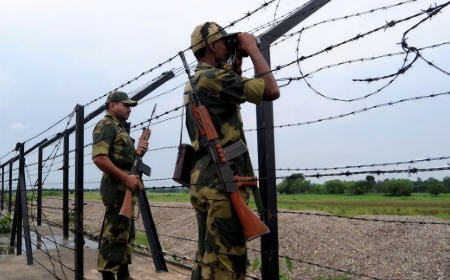
The India-Pakistan military confrontation that followed last year’s Pahalgam attack has introduced a new securitisation logic that the BSF is actively deploying against Bangladesh. And in the days immediately before the conference, the border has descended into something approaching open confrontation -- people stranded in no-man’s-land, prison vans delivering batches of deportees to the zero line at dawn, BGB and BSF units facing each other across the wire in tense standoff.
This is a make-or-break moment in Bangladesh-India border diplomacy, and Bangladesh appears to be approaching it with neither the preparation nor the political clarity the moment demands.
The Push-in Machine
Start with the numbers.
As per New Age statistics, between May 7 last year and May 8 this year, Indian authorities pushed 2,463 people into Bangladesh -- without identity verification, without legal process, and in direct violation of bilateral frameworks both governments have endorsed on paper.
At least 223 of those pushed across were Rohingyas, including 50 registered with the UNHCR in India -- people who are legally India’s problem, not Bangladesh’s, being silently transferred across a border under cover of darkness.
More striking still: BGB headquarters data reveal that 126 of those pushed into Bangladesh between May last year and January this year were Indian nationals -- citizens of the country doing the pushing, handed across a foreign border without the knowledge or consent of their supposed host.
The operation is not migration enforcement. It is an exercise in forced disappearance at national scale, with Bangladesh as the designated void.
The mechanics have become brazen in direct proportion to BJP’s electoral consolidation in West Bengal.
On a single Thursday before the conference, BSF pushed 28 people across at Chapainawabganj. The following day, a group of seven men, six women, and four children were forced across near border pillar No. 237 in Kalmudanga, walked seven kilometres through paddy fields before dawn, and were intercepted by BGB.
Simultaneously, attempts were foiled in Lalmonirhat, Panchagarh, Kushtia, and Meherpur. At multiple points, BGB personnel were assisted by local residents -- a telling detail, because it means that ordinary Bangladeshi villagers, with no weapons and no institutional authority, are performing the border function that India’s diplomatic commitments obligate it to honour.
The BGB has been working around the clock, deploying members under the Rangpur and Jashore regions day and night, enlisting community support, and maintaining the highest alert posture along the entire frontier. They are holding a line that their own government has not always been willing to hold politically.
What West Bengal’s new BJP government under Adhikari has done is convert a slow-burning crisis into an emergency. He promised to begin land handover to the BSF for fencing completion the moment he took office and delivered within weeks -- 75 acres transferred in late May to fence 27 kilometres of border, with the remaining 860-odd unfenced kilometres now a stated state government priority framed explicitly as a national security project.
The push-in machine is not a border management problem. It is an Indian domestic political project, and Bangladesh is its designated dumping ground.
The Killing Fields Nobody Investigates
The mortality data is as damning as the push-in statistics.
18 Bangladeshis killed at the border in 2021. 23 in 2022. 31 in 2023. 30 in 2024. 34 in 2025, 24 from gunfire and 10 from physical torture. At least eight in the first five months of 2026 alone.
And these are only the documented deaths -- recorded through media reports and family testimonies, against an institutional backdrop in which India conducts no independent investigation and Bangladesh has historically declined to demand one.
There is a further category of violence that has received almost no diplomatic attention: At least 12 Bangladeshis were killed in 2025 in border areas of Sylhet Division not by the BSF, but by members of Indian communities -- including the Khasi community -- operating in the same territorial fault line.
These deaths expose an important truth: The violence is not simply a consequence of BSF institutional culture. It is embedded in a broader eco-system of impunity in which the Indian state, at both the federal and state level, has decided that Bangladeshi lives at the frontier carry no accountability cost whatsoever.
The BSF’s standard defence -- that firearms are deployed only as a last resort against smugglers and trespassers -- has survived decades of scrutiny because Bangladesh has never mounted a structural challenge to it.
Joint investigation, mandatory in principle under the Coordinated Border Management Plan, has never been meaningfully operationalized. No BSF officer has faced criminal accountability for a border killing.
The joint records from the 54th, 55th, and 56th conferences all contain language about bringing deaths to zero. The 57th will almost certainly contain the same language. And the killing will continue.
The Architecture of Permanent Disadvantage
Bangladesh arrives at this conference facing a technological gap that has not featured prominently in previous rounds of border talks.
In September last year, the BSF inaugurated an AI- and GIS-enabled Decision Support System at its headquarters, a centralised command platform designed to integrate operational records, incident databases, and geospatial information to identify patterns and support border management. Indian authorities have stated that future phases will incorporate additional sensor networks and inter-agency data streams.
On May 22, just 17 days before the conference, Indian Home Minister Amit Shah announced that a nationwide Smart Border Project would be rolled out within the year, incorporating drones, radar systems, AI-assisted monitoring, and upgraded command infrastructure across India’s land borders.
The BOLD-QIT electronic surveillance system has already been operating along a section of the riverine border in Assam’s Dhubri district since 2019, with plans for further expansion.
Bangladesh has not stood still. In recent months, the BGB has deployed radar systems, thermal imaging cameras, drones, and digital monitoring equipment in sensitive areas, including remote hill tracts, riverine regions, and the Sundarbans.
These investments represent a significant enhancement of operational surveillance capacity and demonstrate a growing recognition of the importance of technological monitoring.
Yet, the difference lies not only in the tools deployed on the ground but also in the architecture that connects them. While Bangladesh has expanded field-level surveillance, there is little public evidence that these systems are integrated into a centralised, AI-assisted command framework comparable to the one India is building.
This distinction matters because modern border management increasingly depends not merely on collecting information but on aggregating, analyzing, and acting upon it at scale. A system capable of combining surveillance feeds, operational reports, historical incident records, and geospatial data can provide decision-makers with a more comprehensive picture of developments along the frontier.
Bangladesh’s broader intelligence and security institutions have long been criticised for fragmentation, overlapping mandates, and limited coordination, challenges that can reduce the effectiveness of information-sharing across agencies.
The implications are political as well as operational. As India develops more sophisticated mechanisms for integrating border data and generating real-time situational awareness, it may acquire an increasing advantage in how incidents are documented, interpreted, and presented in bilateral discussions.
Whether the issue is a border killing, a push-in allegation, or a dispute over construction activity near the frontier, the side with the more comprehensive information architecture is often better positioned to shape the narrative surrounding events.
For Bangladesh, this raises questions that extend beyond equipment procurement. It underscores the need for stronger institutional coordination, clearer policies on data governance and information-sharing, and a more systematic approach to monitoring developments along the border.
Without such reforms, technological disparities risk becoming diplomatic ones.
The Self-Inflicted Wound
Against this backdrop, Home Minister Salahuddin Ahmed’s statement on June 2 was an act of extraordinary diplomatic self-harm.
He said, days before the conference, that if someone commits a crime within the border or trespasses illegally, the border forces will deal with it under local law, and it should not be called a border killing.
This is not an original position. It is a near-verbatim reproduction of the logic India has deployed to deflect accountability for BSF killings for the better part of two decades.
Ir also has a precedent within Bangladesh’s own recent political history that should have served as a warning rather than a template: in December 2020, then Foreign Minister AK Abdul Momen told The Daily Star that deaths resulting from illegal trade and smuggling cannot be called border killings -- a formulation that Indian commentators and BSF apologists quoted approvingly for years afterward as evidence of Bangladesh’s own tacit endorsement of the status quo.
Salahuddin Ahmed has now repeated the same concession, on the eve of the same negotiation, apparently without registering what it costs.
This matters beyond the symbolic. In international human rights law and under the terms of the Coordinated Border Management Plan, the test for unlawful use of force is not whether the victim was engaged in illegal activity. It is whether lethal force was proportionate and necessary.
By pre-emptively conceding the jurisdictional framing India prefers -- crime equals legitimised killing -- Bangladesh’s home minister has handed the Indian delegation its closing argument before the talks have begun.
The BGB officers holding the zero line at Kalmudanga and Chapainawabganj deserve political leadership that matches their operational commitment. What they have received instead is a statement from their own minister that structurally validates the force that shoots their counterparts.
What Accountability Actually Looks Like
The Bangladeshi delegation for the 57th conference is broad -- the Prime Minister’s Office, the Ministries of Home Affairs, Foreign Affairs, and Shipping, the Department of Land Records, and the Joint Rivers Commission are all represented.
That breadth signals an intention to treat the border as a political question rather than a security technicality.
The question is whether that intention survives contact with an Indian delegation that arrives with a securitised agenda, a newly consolidated West Bengal base, and a home minister’s statement already in its back pocket.
A serious Bangladesh position requires concrete demands, not diplomatic language.
A formal written commitment on repatriation with a specific timeline and joint nationality verification mechanism. A formal acknowledgment in the joint record that lethal force violates the Coordinated Border Management Plan, with named incidents attached.
A demand for joint investigation machinery with a defined activation threshold, not a vague aspiration toward cooperation. A stated position on smart surveillance infrastructure protecting Bangladesh’s sovereignty in the zero-line corridor.
None of this is maximalist. All of it has precedent in the existing bilateral framework. The problem has never been that these demands are unreasonable. The problem is that Bangladesh has historically preferred the comfort of ambiguous language over the friction of precise demands that India might reject -- and has paid for that preference in Bangladeshi lives.
56 previous conferences have produced 56 joint records. The border has not improved. The 57th record will be written in New Delhi over four days beginning June 8. It will either mark the beginning of a different kind of diplomacy, one in which Bangladesh’s written commitments mean something and India’s violations carry consequences, or it will confirm that the pattern has been accepted as permanent.
For the BGB personnel holding the line at dozens of border points across the country, working through the night with local villagers beside them, that answer cannot come soon enough.
Jannatul Naym Pieal is a Dhaka-based writer, researcher and journalist. He can be reached at [email protected].