




























































What Does Gen Z Need to Do to Get a Seat at the Table?
A historic election was held 18 months after the government's resignation with an electorate of approximately 44% under 35. Yet fewer than 10% of candidates were under the age of 35, and just twelve were elected to parliament.

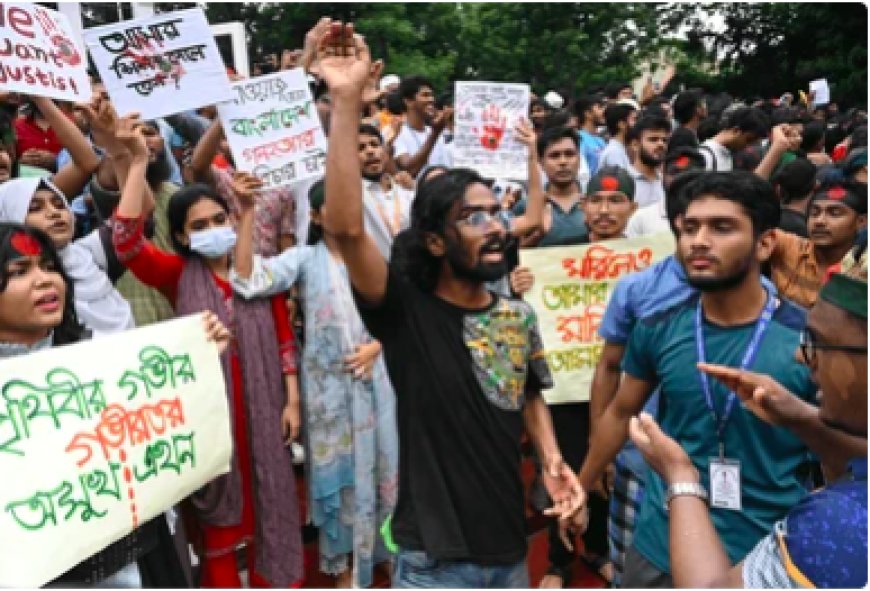
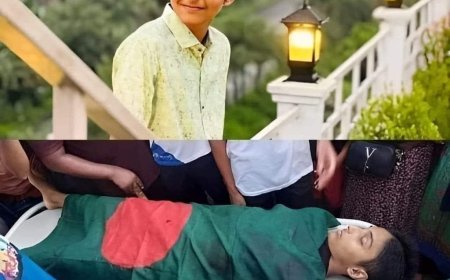
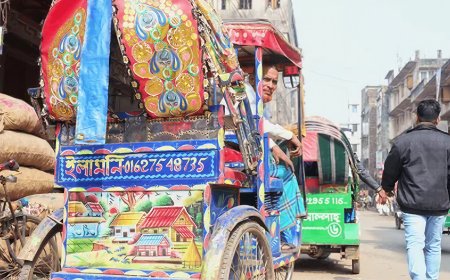
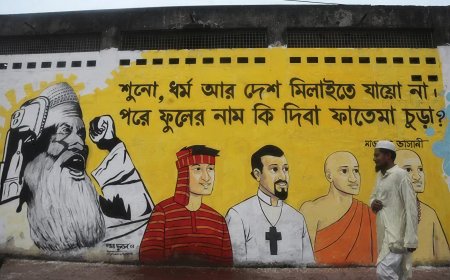
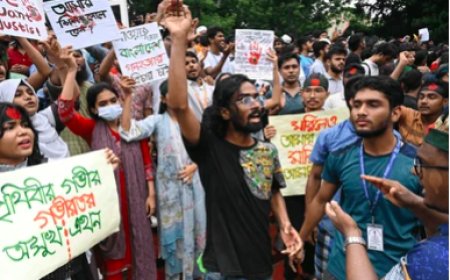
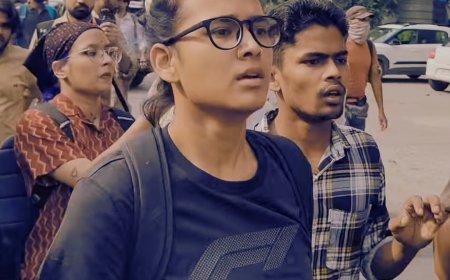
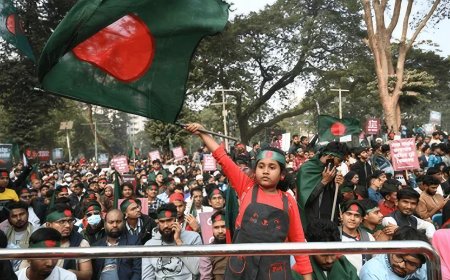
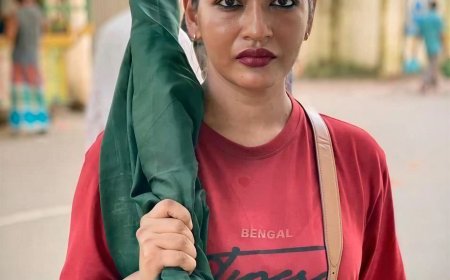
For a generation long relegated to the margins of politics, the streets became a place of power. Beginning in July 2024, Bangladesh's youth came out in large numbers and became a force that toppled a government that had held power for 15 years.
A historic election was held 18 months after the government's resignation with an electorate of approximately 44% under 35. Yet fewer than 10% of candidates were under the age of 35, and just twelve were elected to parliament.
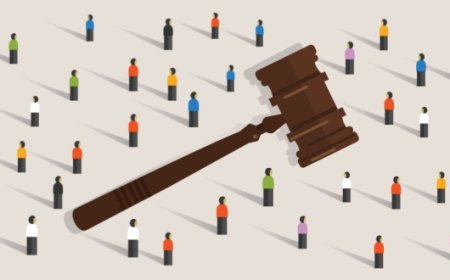
Youth politics is a paradox everywhere: Societies will give youth the risk of political confrontation but not the power that comes with it.
They can storm the streets, their hashtags can rise to prominence, and they can imbibe the tear gas. The question is whether they are permitted to participate in drafting the laws.
That gap between being mobilized and being empowered is not incidental. It is structural and global. One-half of the world's population is under the age of 30.
However, the Inter-Parliamentary Union's latest analysis of 210 chambers across 155 countries shows that the proportion of MPs aged 30 or under has remained at 2.8%, unchanged from 2023 and the first time the figure has not improved since the IPU began tracking it in 2014.
37% of chambers worldwide have no MP at all under the age of 35.
The problem is not participation, but getting them to participate. It's not an argument that youth deserve office because they are young. It is a claim that a system can mobilize a whole generation but prevent it from participating in the decision-making process, without offering it a remedy under another name.
A party, a movement, or a moment is calling upon mobilization. Participation is voting, marching, or posting.
Agency is the capacity to set terms, not simply follow them: A young volunteer campaigning for a political party, or a young candidate who has chosen the party's platform, is asserting agency.
The two terms are often used interchangeably, and the confusion benefits incumbents.
Sherry Arnstein's "ladder of citizen participation" is useful, precisely because participation is not a singular phenomenon. The manipulation and therapy categories are at the bottom of the ladder, forms of engagement which aim to appease rather than to empower.
Consultation is in the middle, where people are listened to, but not followed. Partnership or delegated power sits near the top.
Youth councils, advisory panels, and party youth wings often take the middle rungs. They are visible. They are photographed.
But they seldom have a budget, a candidate list, or an agenda.
That asymmetry is reflected in the 2024 Trust Survey of OECD countries, which surveyed some 60,000 respondents from almost 30 member countries.
Young people aged 18-29 are less likely to vote than older age groups. Still, they are more likely to participate in demonstrations and political discourse online, and volunteering is also higher among youth in some countries.
Only one in three respondents felt the political system allowed people like them to have their say at all. The younger generation is not rejecting politics; they are being channeled towards its least authoritative outlets. The 2026 IPU data are worth reading, rather than just the headlines.
The proportions of MPs aged 30 or under and 40 or under have risen to 19.2%, but progress for young women has stalled, with their representation among MPs dropping to 1.2%.
According to earlier IPU data, the younger the MPs, the more gender-balanced the chamber's makeup.
The ratio of men to women among legislators aged 21 to 30 was approximately 60:40, while it was 76:24 for MPs over 45. Where improvements have been made, they have been through specific institutional or political changes, not through generational goodwill.
The first two countries have both recently undergone democratic transitions: Armenia, with 16.8% of its lower chamber aged 30 or younger, as a result of its 2018 Velvet Revolution; Ecuador is next at 13.7%, due to a 2022 law mandating that 25% of electoral candidates be young adults.
Four countries have parliamentary seats reserved for youth (Rwanda, Morocco, Kenya, and Uganda), and youth quotas are now in place in 16 parliamentary chambers worldwide. Representation increases when institutions change the rules of access, not when youth start to show up in greater numbers.
The best example is from Bangladesh. The protests against the quota system in 2024 were overwhelmingly by students at these universities and escalated into a mass movement that toppled the government that had seemed invulnerable.
The Commonwealth Observer Group, which evaluated the February 2026 election and July Charter referendum, found that youth make up about 44% of the electorate, and that youth were the key force in the 2024 protests; however, their representation in party leadership and candidatures was also found to be low during the period of the vote.
There are genuine signs of movement. According to the transparency data released by Bangladesh's own transparency body, TI-Bangladesh, in the candidate data published by The Daily Star, the share of candidates aged between 25 and 34 in the field increased from 3.96% in the 2024 polls to 9.41% in the 2025 elections.
Only 12 MPs from that age group were elected to Parliament, representing only 3.98% of the 297 MPs. The National Citizen Party, organized by the uprising's organizers, put forward 32 candidates, 19 of whom were aged 25-34.
The post-election analysis by Chatham House revealed that the BNP's strength lay with older, working-age voters, while Jamaat-e-Islami's appeal was disciplined and targeted younger, more educated voters.
The gap may reflect the fact that, as significant political power shifted elsewhere, parties became more inclined to woo young voters. It is the same story on the campus where the uprising had started.
As of September 2024, at least 33 higher-education institutions have stopped allowing students to engage in politics, while Dhaka University has repeatedly reaffirmed its ban on student politics in its residential halls.
The Central Student Union of Dhaka University last month elected its first leadership team since the uprising, with registered voters turning out at 78%, a real assertion of student agency.
However, less than a year later, party politics returned to DU's residential halls, as the student wing of the BNP was the first to form new committees, prompting one independent 2025 candidate and uprising organizer to wonder if the promise of depoliticizing campus life had already been broken.
From the survey, which UNDP carried out across all 64 districts of the country, 85.3% of surveyed youth, including Indigenous, Dalit, Bihari, and Tea Garden communities, expressed their desire to vote, while administrative, linguistic, cultural, and social barriers to voting disproportionately affect marginalized youth.
This pattern repeats at all scales: enthusiasm is rich, institutional authority is not.
The closest parallel in Kenya is outside South Asia. Protests against a regressive Finance Bill escalated in June 2024, leading to the bill's withdrawal from parliament and, eventually, to the cabinet's dissolution.
Some activists set out to create new political vehicles before the 2027 elections; others joined or joined forces with the political mainstream that they had been fighting against.
One of the more vocal activists eventually won some support from the youth for the president's "broad-based government."
Being elected to a street concession is not a victory for the next budget. Party youth wings also face a similar dilemma: they recruit and train young members; they might also be a holding place for young activists who develop loyalty to the party, while others select candidates and write policies.
Changes in outcomes occur when institutions have re-engineered rules. The UNDP good practice guide, which has existed for years, enumerated 21 entry points around the world, from youth party sections in Kenya to electoral monitoring in Mexico, as ad hoc goodwill has proved a poor substitute for rule change.
The barriers fall into four categories: institutional barriers, such as high ages for candidacy; economic barriers, such as campaign costs; cultural barriers, such as assuming that authority is handed down through the generations; and political barriers, such as patronage networks that have little incentive to give up control to younger politicians.
They reinforce each other: Age eligibility can restrict access, campaign expenses can drive out new faces, culture can assume that older is wiser, and patronage systems can make incumbent parties more prone to internal divisions.
This is not to be an uncritical celebration of youth. Young people, like older voters and politicians, are capable of amplifying disinformation and personality cults.
The case for youth agency is not one about youth being equal to virtue, but rather a more limited claim: that democracies have a duty to give all citizens a fair chance at political competence and a fair opportunity to exercise accountable authority. Two objections need to be addressed.
The first is that young people are inexperienced, and that inexperience is not the same as judgment; mentorship and institutional safeguards will help bridge that gap.
The second, that younger parliaments do not necessarily lead to better governance, is a fair one that can be granted.
It's not just about younger politicians; it's about institutions that are more representative, accountable and participatory at the time. The process of shifting from mobilization to power is clear.
First, it is organized; then it is programmed; then it is put into coalitions; then it is institutionalized.
Those movements that jump to assumed influence are short-lived when the grievance is solved; those that become enduring parties or coalitions are long-lived. Exhortation would be of little value; concrete reforms would greatly help.
Parties can have transparent, planned procedures for identifying candidates and provide youth wings with meaningful budget authority, not just campaign-day logistics.
Parliaments can establish formal youth caucuses with standing access to committee work and legislation, and set requirements for youth impact assessments on key bills.
Election systems can address financial access as a barrier for first-time candidates and implement youth candidacy quotas, as in Ecuador. Civic literacy can be fostered in universities, which are the birthplace of the Bangladesh movement, and will remain after every protest.
There's a responsibility for the young, too: To organize against personality politics and hold young officeholders to the same standard of accountability as older ones.
A democracy does not demonstrate its dedication to youth by knowing how to rally them; the populist movement in history has been adept at that.
It demonstrates commitment by shifting real power in the budget and candidate process and on legislative floors to those who haven't aged 10 years in the legislature.
Bangladesh's students were not asking to be the guests of honor of their re-shaped country. What they, and their counterparts in Nairobi and elsewhere, are negotiating for is not a bigger invitation to participate. This is a seat in which decisions are made.
Abdulla Al Rahat is a youth activist and independent researcher, currently pursuing a Master’s degree at Islamic University, Kushtia.