






































































Why Britain Blames the Migrants it Sent For (Part One)
Ordinary people in Britain have plenty to be angry about. Those grievances are real, and I hear them often. The question is who caused them, and whether the evidence supports the claim that migrants are draining the country.

In May this year the Office for National Statistics published a figure that ought to have changed the way Britain argues about immigration.
Net migration for 2025, meaning the number of people who came to live here for a year or more minus the number who left, was 171,000.
In the year to March 2023 it had been 944,000.
In less than three years it fell by more than three quarters, and it is projected to drop below 100,000 before the end of this year, a level the country has not seen since the late 1990s.
On the day the figures came out, the think tank British Future published its annual survey of public attitudes. Only 16% of people thought migration had fallen over the past year. Almost half believed it had gone up. Nothing had changed.
For more than ten years I have earned part of my living knocking on doors across England as a social research interviewer. I sit in people's front rooms, in council flats and in detached houses, and ask them about their lives. The work has taught me to listen without arguing. It has also shown me how firmly people hold beliefs that the evidence does not support.
The one I hear most often is that there are more migrants than ever and that crime has gone up because of them. The official figures say otherwise. The Crime Survey for England and Wales estimates that violent crime is 78% lower than at its peak in 1995, and theft 77% lower.
A study from King's College London, published last month, found the public wrong on almost every measure of crime, including the share of offenders who are foreign nationals.
The complaint about “illegal migrants” comes as often from people who were once migrants themselves, Bengali and Pakistani families who settled here twenty-five or thirty years ago, and that was what first caught my attention. They have adopted the views from the newspapers and the television, and from politicians who talk as though every newcomer arrived on a small boat.
Marxists have a name for this, false consciousness, and there is a great deal of it about. But I do not think it is the whole story. Settled migrants often live on the same streets where newcomers arrive, and work in the same restaurants and warehouses. When wages at the bottom are squeezed, they feel it before anyone else. Their anger has a real root, even when it is aimed at the wrong target.
I have lived in this country for 29 years, and I have come to believe that the argument was never really about numbers. Britain has a habit. It sends for workers when its economy needs them, and when the need passes, or when a government needs someone to blame, it turns on the people it invited. The figures rise and fall. The habit has not changed in more than a century.
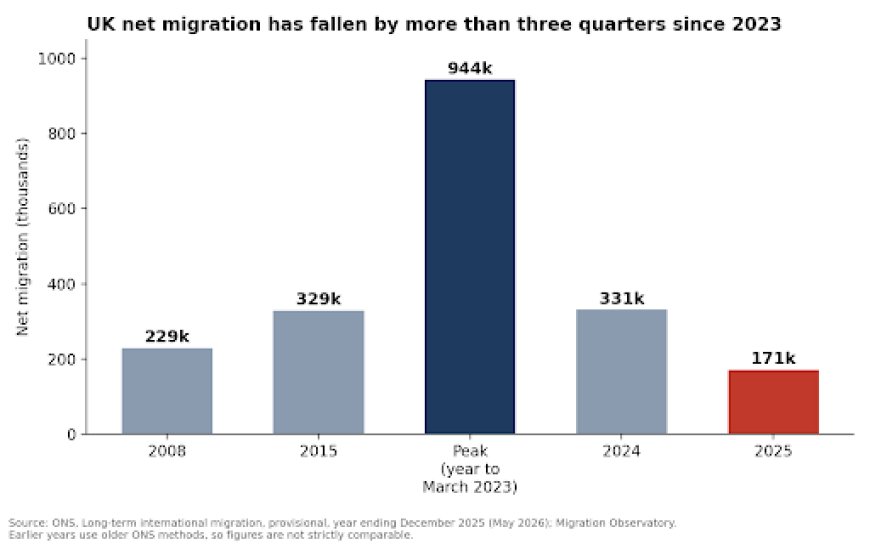
Figure 1: UK net migration, selected years
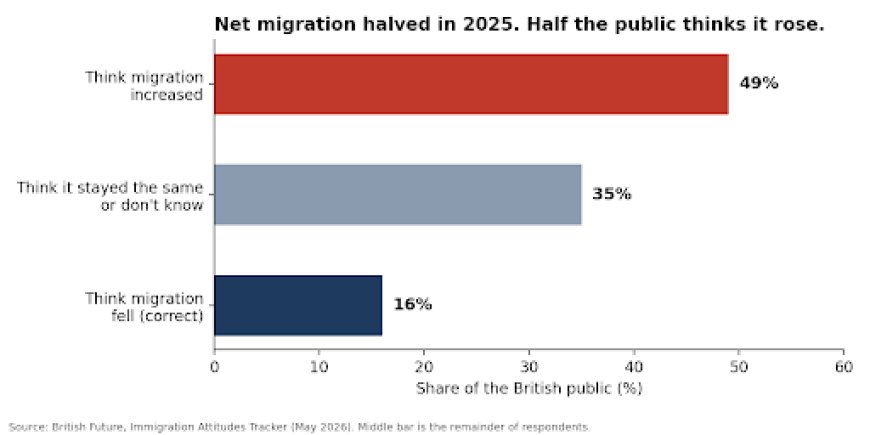
Figure 2: What the public thinks happened to migration in the past year
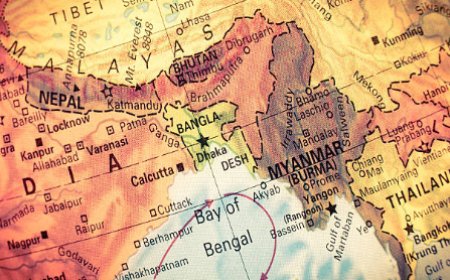
The Bengali presence in Britain began with that habit. From the nineteenth century, Sylheti seamen worked in the engine rooms of British merchant ships, stoking the boilers in the hottest and worst-paid jobs on board. Some left their ships in London and stayed, and the small community they built near the East London docks became the root from which Brick Lane grew. Nobody invited them to settle. The shipping companies wanted them at sea and nobody wanted them on shore.
Britain came out of the Second World War short of labour and losing an empire, and this time the invitation was official. The British Nationality Act of 1948 gave people from the colonies and the Commonwealth the right to live and work here. London Transport recruited bus crews in Barbados.
The new National Health Service brought nurses from the Caribbean and doctors from India and Pakistan. The textile mills of Lancashire and Yorkshire, already losing to competition abroad, filled their night shifts with men from Mirpur and from what was then East Pakistan. These men worked the hours local workers would not work, on old machines the owners could not afford to replace.
Resentment arrived almost as fast as the workers did. The Commonwealth Immigrants Act of 1962 ended the open door and introduced employment vouchers, so that a man's right to come now depended on whether Britain had a job it wanted done. In 1968 Enoch Powell made his “rivers of blood” speech, and the Immigration Act of 1971 closed most of the routes that remained.
By the late 1970s the mills were shutting, and the men who had kept them running were blamed for the decline of the towns they had helped keep alive. In East London, Bengali families faced attacks in the street and on their doorsteps. In May 1978 a young clothing worker, Altab Ali, was murdered on his way home in Whitechapel. The park where he died now carries his name.
Some years ago I helped record the life stories of Bengali elders in East London for Tales of Three Generations of Bengalis in Britain. One of the people we interviewed was the late Aloke Biswas, who came to Hackney as a social worker in 1972 and watched the mood change as the work ran out in the middle of that decade. He described it this way. “But when the capitalist system is in crisis, it sheds its work force."
During that time, they pointed their fingers [at] the Black community and said that these are the people who are responsible for the economic downturn.”
In the language of those years, “Black” meant anyone who was not white, Asians included. The workers Britain had sent for were now being blamed for its crisis. As Biswas saw it, the real conflict was one of class, but it was presented to the public as a matter of colour.
A. Sivanandan, who ran the Institute of Race Relations for more than three decades, argued that none of this was an accident. In his account Britain wanted the labour of its former colonies without taking on the cost of the people who provided it.
The workers arrived young and healthy, their schooling already paid for by the countries they left, and the British state did its best to avoid paying for their families, their housing and their old age. The racism that followed was not simply the prejudice of ignorant people. It had a use, because a worker who is made to feel he does not belong is a worker who will accept less.
60 years after they were invited, the men and women of the Windrush generation were still paying for the habit. In 2012 Theresa May, then Home Secretary, set out to create what she called a "hostile environment" for people without the right papers, turning landlords, employers, banks and hospitals into unpaid border guards.
By 2018 it had emerged that men and women who had lived here legally for 50 years, who had driven the buses and cleaned the wards, were being detained, refused treatment, and in some cases deported. The Home Office had destroyed its archive of paper landing cards in 2010, leaving them unable to produce documents the state had never replaced.
It took Windrush six decades to reach that point. The care workers recruited after Brexit have covered the same ground in four years. Once free movement from Europe ended, Britain found it could not staff its care homes. Social care had been starved of money for a decade and pay sat close to the minimum wage, so British workers were leaving for supermarkets that paid the same for easier work.
In February 2022 the Conservative government made care workers eligible for the Health and Care Worker visa. The government's own Migration Advisory Committee treated this as a stopgap while ministers dealt with the real problem, which in its view was underfunding. Its main recommendation was that care workers paid from public funds should earn at least £1 an hour above the minimum wage. Nine months later the government had still not replied, and the committee wrote in its annual report that it was bewildered by the lack of urgency at the Department of Health and Social Care.
So the workers came instead of the money. In the twelve months to March 2024 alone, the Home Office granted 71,046 visas to care workers and home carers. Indians received the most, followed by Nigerians, Zimbabweans, and Ghanaians. Bangladeshis came fifth, with 7,097 visas.
Many paid agents large sums for the chance. Some arrived to find that the employer who had sponsored them had no work for them at all. For the British state it was cheaper to bring in carers from Dhaka and Lagos than to pay the wages that would have kept British carers in their jobs.
The door began to close again within two years. In 2024 care workers lost the right to bring their families. In 2025 the Labour government shut the route to new overseas recruitment altogether. Those already here are now being told they must wait ten years instead of five before they can settle, and the government's “earned settlement” plans are designed to keep people in jobs classed as lower-skilled, care work above all, away from the welfare system they pay into. The women and men who looked after Britain's elderly in the years after the pandemic are now treated as a problem to be managed.
Refugees have been handled in the same spirit since March this year, when those recognized as refugees began to receive only temporary protection, renewable every 30 months. Those who arrived without permission may wait up to thirty years before they can settle. Under the old system a refugee received five years' leave and could then apply to stay permanently.
So why, with net migration at its lowest in years, is the noise louder than ever?
Some of it is ordinary party politics. Reform UK has built its rise on immigration, and nothing matters more to its voters. The party has spent most of the past year at or near the top of the opinion polls.
In August Nigel Farage promised what he called the largest military operation in the Channel since the Second World War, sending the navy to push boats back to France, at a time when small boat arrivals for the first seven months of the year were down by more than 40%.
A party whose support depends on migration being a crisis has no reason to tell its voters that the crisis has shrunk.
Farage is not the only source of it. Earlier this year the Labour immigration minister warned Parliament that up to 2.2 million people could become eligible for settlement between 2026 and 2030, and said this would put a massive strain on public services. These are people who came legally, invited by British governments, to fill jobs British employers could not fill.
A Labour minister now presents them as a threat. Nor is this new for Labour. The slogan "British jobs for British workers" did not come from the far right. Gordon Brown used it as prime minister in 2007.
None of this removes migrant workers from the economy, which is where the deeper answer lies. Care homes still need staff and hospitals still need nurses. What changes is the position of the worker.
A man whose visa is tied to one employer, whose right to stay must be renewed every thirty months, who must wait a decade before he can settle, thinks twice before complaining about unpaid hours or joining a union. He is unlikely to report an employer who cheats him. Marx called this the reserve army of labour, a pool of insecure workers whose weakness holds down wages for everyone. The fear of migrants and the insecurity of migrants work towards the same end.
Stuart Hall, in Policing the Crisis, showed how the British state, facing economic trouble in the 1970s, directed public anxiety towards the figure of the young black mugger, and in doing so won support for harder policing and a harder politics.
Today the small boat has taken the mugger's place. Real wages in Britain spent the best part of 15 years after the 2008 crash below their earlier peak. Local councils are going bankrupt. A government that will not tax wealth, and will not borrow to build the houses the country needs, has to find another explanation for why life feels worse. The migrant, who usually has no vote and little voice, is the cheapest explanation available.
Ordinary people in Britain have plenty to be angry about. Rents are punishing and a GP appointment can take weeks to get. Some towns received large numbers of newcomers in a short time without a penny of extra money for their schools or surgeries.
Those grievances are real, and I hear them often. The question is who caused them, and whether the evidence supports the claim that migrants are draining the country. That is where the economist Robert Rowthorn's work comes in, along with the newer evidence from the Office for Budget Responsibility and the Migration Advisory Committee.
In the second part I will look at what migrants actually cost and contribute.
Jamil Iqbal is a Bangladeshi-British researcher and writer based in London. His work focuses on political economy, migration, labour and development in South Asia.