

































































Iran May Lose the Battles. Can It Still Win the War?
Destruction is useful only when it contributes to the political end. If overwhelming military force cannot produce that end at an acceptable cost, battlefield superiority becomes strategically insufficient.

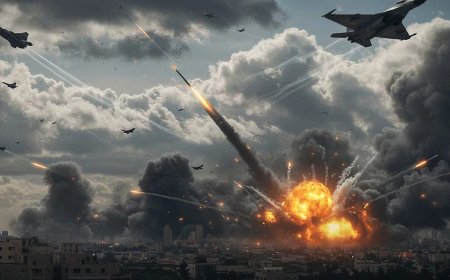
War is often judged by the wrong arithmetic. We count missiles fired, aircraft destroyed, targets struck, sorties flown, and installations damaged -- and then declare a winner.
But war is not an equation in which the side with the larger number automatically wins. War is not algebra. Military power matters, but only because it serves a political purpose.
Carl von Clausewitz understood this distinction. He famously described war as “an act of force to compel our enemy to do our will.” In other words, the battlefield is a means, not the end.
Strategy connects military action to the political objective of the war. That is the paradox at the heart of the war in Iran. Iran may lose many battles, suffer enormous destruction and still emerge as the strategic winner -- if it can deny its adversaries the political outcome they sought.
The argument advanced by Tucker Carlson and others in the American debate therefore deserves serious examination, even if one does not accept all of their political conclusions.
The essential question is not who can destroy more Iranian targets. It is much simpler: What is the objective of the war -- and has that objective been achieved?
If the objective is to destroy Iranian military infrastructure, the United States and Israel possess overwhelming advantages. Their airpower, intelligence, surveillance, precision weapons and technological superiority enable them to inflict damage Iran cannot remotely match. But destroying military assets is not the same as defeating a state.
If the objective is regime change, the calculation becomes profoundly different. Iran is not merely a government occupying a piece of territory. It is a large, populous country with a deep historical identity and considerable capacity for endurance.
Its military infrastructure can be damaged. Its economy can be weakened. Its commanders and scientists can be lost. Yet none of these automatically translates into the collapse of the Iranian state.
Iran has also spent decades preparing for precisely the kind of conflict in which conventional superiority becomes less decisive. Its dispersed military infrastructure, underground facilities, missile forces, drones, asymmetric capabilities and geography provide it with options that cannot be eliminated simply by destroying fixed targets.
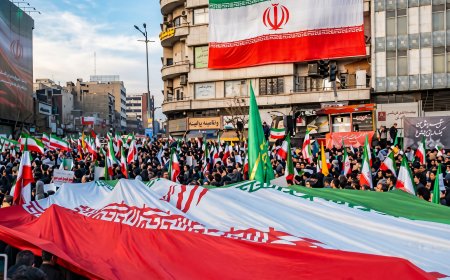
Iran is also not a state without strategic depth. It is the product of one of the world's oldest civilisational traditions, with a strong national identity that predates the modern Islamic Republic by centuries.
That distinction matters. Governments can fall; states and national identities are harder to erase. This is where Clausewitz becomes especially relevant.
The purpose of war is not destruction for its own sake. Destruction is useful only when it contributes to the political end. If overwhelming military force cannot produce that end at an acceptable cost, battlefield superiority becomes strategically insufficient.
This is also where the idea of “war by algebra” breaks down. Wars cannot be reduced to spreadsheets. A destroyed missile launcher is measurable.
The political effect of destroying it is not. Ten successful air strikes may produce less strategic effect than one failed political calculation. A military can win every engagement and still lose the war if it cannot convert battlefield success into a sustainable political settlement.
Iran therefore does not need to defeat America in conventional warfare. Tehran needs something much less ambitious: Survival, denial, and endurance.
Sun Tzu understood the danger of prolonged conflict: A state may exhaust itself even while winning engagements. History offers powerful examples. Vietnam demonstrated the limits of overwhelming military superiority when political objectives, local resistance, and public endurance pull in different directions.
Afghanistan offered another reminder that superior military technology cannot by itself manufacture a durable political order. Iran's strategy can therefore be asymmetric.
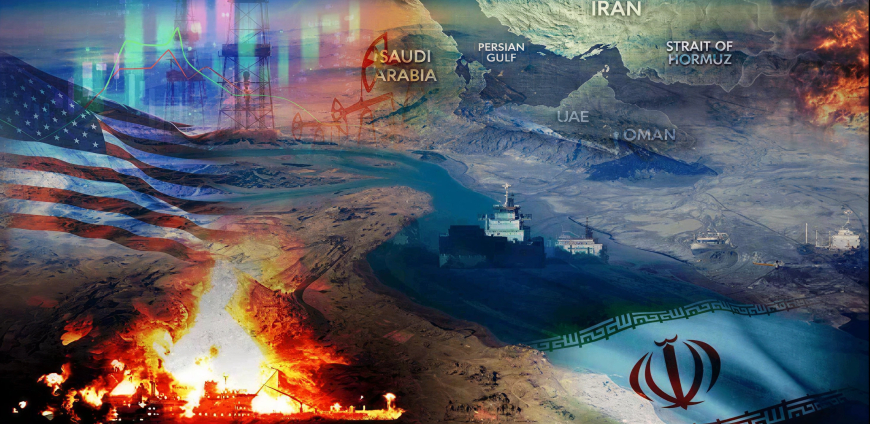
It can lose aircraft, missile launchers, naval assets and infrastructure while continuing to deny its adversaries their ultimate political objective. The Strait of Hormuz illustrates this perfectly.
The United States possesses vastly greater naval power. Yet geography gives Iran an extraordinary source of leverage. The Strait is a narrow maritime chokepoint through which enormous volumes of global energy trade have traditionally passed.
Iran does not need permanent sea control to exploit that geography. Sea denial can be enough. That distinction has become visible in the present confrontation.
Washington has claimed “total control” of Hormuz, while Tehran has rejected that assertion and maintained that passage remains subject to its conditions. Reuters reported on August 13 that the two sides were making competing claims over control of the Strait, while shipping through the waterway remained severely disrupted.
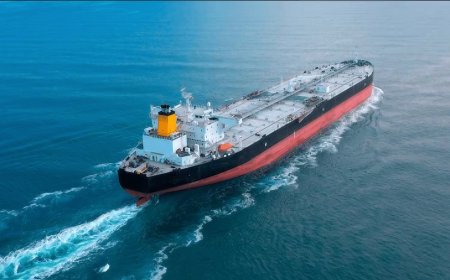
The strategic issue, however, is not simply which navy has more warships. It is whether commercial shipping, insurers, energy companies and governments believe that maritime passage is sufficiently safe and predictable to resume normal operations. That is the power of strategic uncertainty.
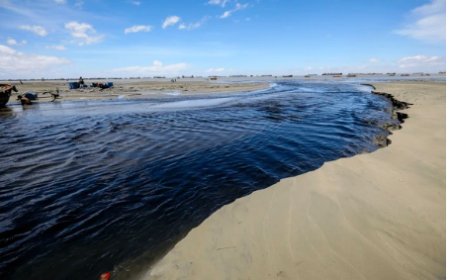
A missile does not necessarily have to sink a tanker to influence the global economy. The credible possibility of attack can raise insurance costs, alter shipping decisions, disrupt energy markets, and force governments to reconsider their calculations.
Recent reporting has shown how sharply maritime traffic through Hormuz has fallen despite the presence of superior American naval power. This produces another asymmetry. America must demonstrate victory. Iran may only need to demonstrate survival.
Washington must eventually explain the cost of the war to its own population. It must justify casualties, expenditure, deployments and economic disruption.
It must reassure regional partners that American power has produced greater security, not prolonged instability. And eventually it must answer the hardest question of all: What political outcome did all this military power produce?
Iran faces a different test. For Tehran, the message can be considerably simpler: We survived. If Iran remains a functioning sovereign state, prevents regime change, retains meaningful strategic capabilities and eventually negotiates the reopening of Hormuz, it could claim that it resisted a vastly more powerful military coalition and denied it the political outcome it sought.
That would constitute a form of strategic victory -- even if Iranian cities and military installations have suffered devastating destruction.
Field Marshal Bernard Montgomery once offered a useful reminder of the relationship between battles and wars: “Every soldier must know, before he goes into battle, how the little battle he is to fight fits into the larger picture.
That is precisely the distinction being missed when battlefield destruction is mistaken for strategic victory. America and Israel may win numerous battles.
They may destroy important Iranian capabilities. They may achieve major operational objectives. But if Iran prevents regime change, preserves its sovereignty and ultimately forces negotiations on terms it can accept, those operational victories may not amount to strategic success.
The emerging dispute over Hormuz makes the point even sharper. Iran has linked reopening the Strait to broader conditions surrounding the conflict, while Washington has demanded its own concessions.
Tehran, in turn, has raised demands involving sanctions, frozen assets and compensation for wartime destruction. Whatever one thinks of those demands, their very existence demonstrates that the ultimate contest is moving beyond the battlefield and toward bargaining power. And that is where the war will ultimately be judged.
It would nevertheless be premature to declare Iran the winner. Iran has suffered serious losses. Its economic endurance cannot be assumed indefinitely, nor can its ability to replenish sophisticated weapons and maintain internal cohesion.
Resilience should not be romanticised. Survival becomes victory only when it is converted into a political outcome. That is the decisive point. The ultimate battlefield may not be Tehran, the Persian Gulf or the space over Iran.
It may be the negotiating table. If the war eventually ends with an intact Iranian state, no regime change, continued Iranian strategic autonomy and a negotiated settlement over Hormuz, Tehran will have achieved something remarkable: It will have denied a vastly superior military power the political result that overwhelming force was intended to secure.
Iran may therefore lose the battles and still win the war. Not because Iran is militarily stronger than America. It is not. But because military superiority and strategic victory are not synonymous. And that is the deeper lesson.
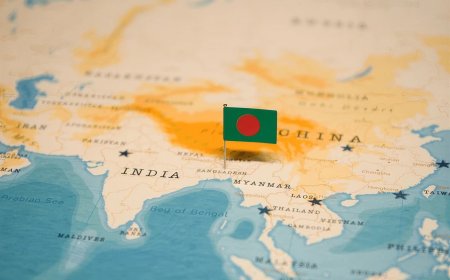
For maritime states such as Bangladesh, the Iran conflict demonstrates the enduring importance of chokepoints, sea denial, maritime resilience and the political leverage that geography can provide to a state whose conventional military power is comparatively limited.
In an interconnected world, the ability to make a strategic maritime artery uncertain can sometimes matter almost as much as the ability to control the battlefield. The lesson of Iran may ultimately be this: A weaker power does not have to defeat a stronger power's military. It only has to prevent that military from achieving its political purpose.
When that happens, the side that appears to be losing the battles may discover that it has won the war that actually mattered.
Syed Misbah Uddin Ahmad (Retd) is the Director General at Bangladesh Institute of Maritime Research and Development (BIMRAD).