
















































![A Ledger of the Soul: Navigating the Allah-Bhagavant Nexus in a 19th-Century Puruṣākāra Jñāna Caupara [Gyan Chauper]](https://counterpointbd.com/uploads/images/202608/image_430x256_6a93baa3b09a7.jpg)





















Why the Iran War Will Be Decided at Sea
For Bangladesh and other maritime-dependent nations, the lesson is clear. Security can no longer be conceived in predominantly territorial terms. It must be understood as a function of connectivity, resilience, and access -- all of which are fundamentally maritime.

Since February 28, the images dominating global media are familiar: Precision airstrikes, missile interceptions, and the spectacle of technological warfare unfolding in the skies over Iran and its periphery.
The United States and Israel appear to command overwhelming aerial superiority, conducting high-tempo operations to degrade military infrastructure and strategic leadership nodes. To the casual observer, this is a war being fought -- and perhaps decided -- in the air. Yet this is a profound strategic illusion.
History warns us not to equate tactical dominance with strategic victory. As Carl von Clausewitz reminds us, war is not merely a contest of force but a struggle over centers of gravity -- CoG -- the sources of an adversary’s strength. In the still-unfolding confrontation with Iran, particularly the current Hormuz chokehold, the center of gravity does not lie solely in airbases or command bunkers.
It lies, more fundamentally, in the maritime domain: The fragile arteries of global trade, energy flows, and sea lines of communication. This is not an air war with maritime implications. At its core, it is a maritime war disguised as an aerial theater.
The Return of Sea Power
More than a century ago, Alfred Thayer Mahan argued that a nation's command of the sea shapes its destiny. While his theories were framed in the age of battleships and imperial competition, their essence has not diminished. Instead, they have evolved.
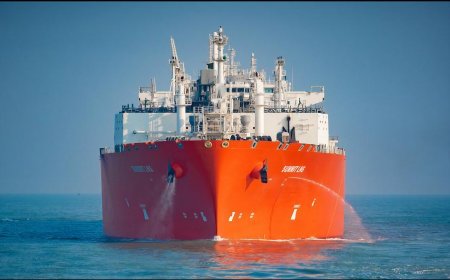
Today, sea power is no longer defined solely by fleets and firepower. It is defined by the ability to secure or disrupt the global economic system, much of which moves by sea. Maritime trade accounts for nearly 90% of global commerce by volume. Energy flows -- from crude oil to liquefied natural gas -- remain overwhelmingly sea-borne.
In this context, the insights of Julian Corbett offer a necessary refinement. Corbett emphasized that the object of naval warfare is not always decisive battle, but the control of maritime communications. Control, in his formulation, may be partial, temporary, or contested -- yet still strategically decisive.
The ongoing Iran conflict exemplifies this Cobbettian logic. The United States may dominate the skies, but Iran is contesting the seas -- not to win outright, but to deny stability, impose cost, and shape outcomes indirectly.
Modern scholarship, particularly that of Geoffrey Till, further expands this understanding by framing sea power as part of a broader maritime system -- encompassing trade, law, diplomacy, and economic interdependence. In this system, disruption at key nodes can have cascading global effects.
A Chokepoint of Global Consequence
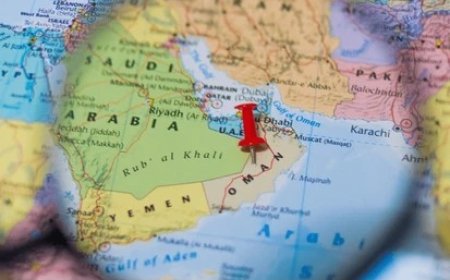
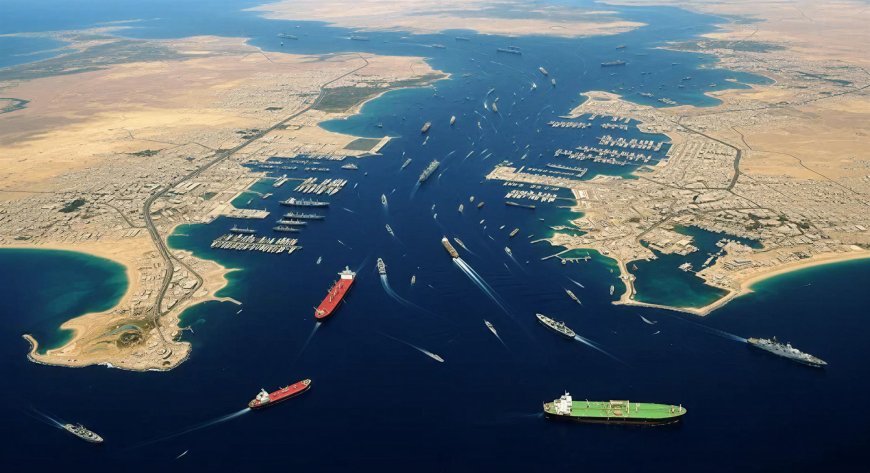
At the heart of this maritime contest lies the Strait of Hormuz -- arguably the most critical energy chokepoint in the world. Approximately one-fifth of globally traded oil passes through this narrow corridor. Its geography makes it inherently vulnerable: Confined waters, dense traffic, and proximity to Iranian territory create ideal conditions for asymmetric disruption.
Iran does not need to close the Strait to achieve a strategic effect. Indeed, closure would invite overwhelming retaliation. Instead, it pursues a more sophisticated approach, such as:
- Threat of harassment of commercial shipping, if not authorized by the IRGC
- Deployment of drones, employment of coastal missiles
- Deployment of fast attack craft from hidden shelters
- Implicit or explicit mining threats
- Leveraging proxy actors to create fog of war
- Bringing the offensive force to strategic culmination
The objective is not simple Corbettian denial, but to create uncertainty through Clausewitzian friction. In maritime strategy, uncertainty is a lethal weapon. Even limited disruptions can trigger disproportionate consequences: Rising insurance premiums, rerouting of vessels, delays in supply chains, and spikes in global energy prices. In this sense, the Strait of Hormuz functions less as a battlefield and more as a pressure point, the CoG for the global economy.
The Strategy of the Weak
Unable to match the conventional military capabilities of its adversaries, Iran has adopted a strategy that aligns closely with the timeless wisdom of Sun Tzu: To avoid strength and exploit weakness. This manifests in what may be termed distributed maritime warfare -- a decentralized approach that leverages:
- Swarm tactics using small, fast vessels
- Low-cost unmanned systems
- Cyber and electronic interference
- Proxy engagements across a wide geographic arc
Such methods complicate attribution, dilute the effectiveness of superior firepower, and stretch the operational bandwidth of technologically advanced navies. The paradox is striking: While the United States possesses unmatched naval capabilities, it faces a persistent challenge in securing vast and vulnerable maritime spaces against low-cost, high-impact disruptions.
Control of the sea in this environment becomes not an absolute condition but a continuous and resource-intensive endeavor.
From Regional Conflict to Global Shockwaves
One of the defining features of maritime warfare is its capacity to rapidly internationalize conflict. Unlike land battles, which may remain geographically contained, disruptions at sea reverberate across continents. A single incident in the Persian Gulf can affect fuel prices in Asia, manufacturing timelines in Europe, and food security in developing economies. The current conflict has already demonstrated this dynamic:
- Energy markets react sharply to perceived risks in the Gulf
- Shipping routes adjust, increasing transit times and costs
- Insurance markets recalibrate risk assessments
In effect, the maritime domain transforms a regional confrontation into a global economic event. This reinforces a critical insight: The true battlefield is not defined by where weapons are deployed, but by where strategic effects are felt most profoundly.
Hormuz, the Indo-Pacific, and the Bay of Bengal: A Strategic Continuum
For Bangladesh, the implications of this maritime-centric conflict are both immediate and far-reaching. The country’s economic lifelines are deeply intertwined with global sea lanes. Energy imports, industrial supply chains, and export-oriented trade all depend on the uninterrupted flow of maritime traffic. The disruption of the Strait of Hormuz, therefore, is not a distant geopolitical concern -- it is a direct strategic vulnerability.
More importantly, Hormuz must be understood not in isolation but as part of a broader Indo-Pacific maritime continuum extending to the Bay of Bengal. This continuum connects:
- Energy production zones in the Gulf
- Critical transit routes across the Indian Ocean
- Manufacturing hubs in East and Southeast Asia
- Emerging economies along the Bay of Bengal
Any instability at the western end of this chain inevitably propagates eastward, affecting nations like Bangladesh in multiple dimensions. This reality calls for a shift in strategic thinking. Bangladesh must move beyond a narrowly defined coastal defense posture toward a more comprehensive approach that includes:
- Enhanced maritime domain awareness
- Strengthened naval capabilities for SLOC security
- Active participation in regional maritime cooperation frameworks
- Integration of economic and security planning in the maritime sphere
- Rethinking Power: From Dominance to Disruption
The unfolding conflict reveals a deeper transformation like power itself. Traditional metrics -- fleet size, tonnage, and firepower--remain important, but they are no longer sufficient. The ability to disrupt complex systems has emerged as an equally consequential, if not more so, form of power.
In this context, the maritime domain offers unique opportunities for asymmetric actors.
The cost of disruption is relatively low, while the potential impact is disproportionately high. This creates a strategic environment in which weaker states can challenge stronger adversaries not through confrontation, but through systemic interference. For established naval powers, this necessitates a recalibration of doctrine -- from seeking decisive control to managing persistent uncertainty.
A Maritime Awakening
The war involving the United States, Israel, and Iran is often portrayed as a contest of airpower, technology, and precision strike capabilities. While these elements are undeniably significant, they do not capture the full strategic picture.
Beneath the visible spectacle of aerial warfare lies a quieter, more consequential struggle -- one that unfolds across the world’s oceans, along its chokepoints, and through its economic lifelines. It is here, in the maritime domain, that the true balance of advantage is being tested.
For Bangladesh and other maritime-dependent nations, the lesson is clear. Security can no longer be conceived in predominantly territorial terms. It must be understood as a function of connectivity, resilience, and access -- all of which are fundamentally maritime. The time has come, therefore, for a strategic reorientation: From an era defined by the dominance of the skies to one shaped by the power of the seas.
In the final analysis, the outcome of this conflict may not be determined by who controls the airspace over Iran, but by who can secure -- or disrupt -- the oceans that sustain the modern world.
Syed Misbah Uddin Ahmad (Retd) is the Director General at Bangladesh Institute of Maritime Research and Development (BIMRAD).