
































































When Skills Development Fails to Create Employment
Bangladesh is training more young people, but the economy is not creating enough jobs to absorb them. The result is a growing gap between skills development and meaningful employment.

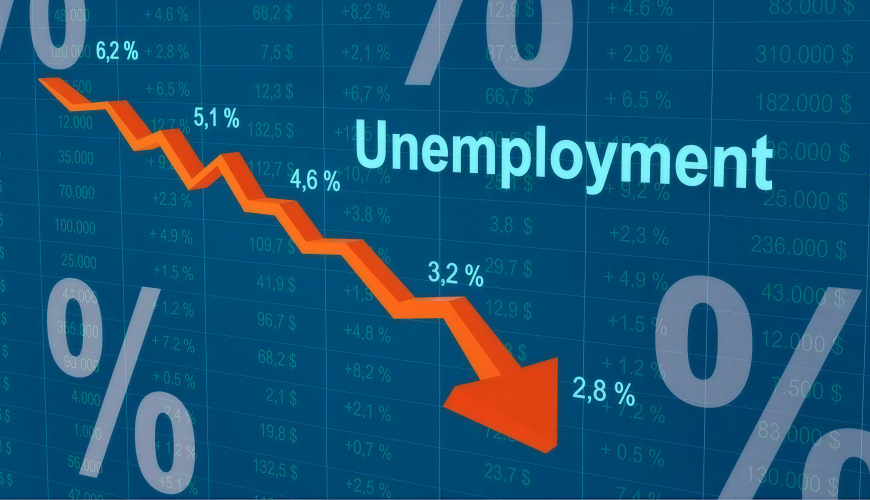
Bangladesh has spent years treating youth unemployment as a skills problem. The prescription has been familiar: Train young people, give them certificates, provide loans, encourage entrepreneurship and send them into the labour market. Yet the latest labour force data suggest that the country may be asking the wrong question.
The problem is not simply that young people do not have enough skills. Increasingly, it is that the economy is not creating enough productive jobs for the people it is training.
Every year, roughly 2 to 2.2 million young people enter Bangladesh's labour market. But employment opportunities are not expanding at the same pace. The result is visible in the latest Bangladesh Bureau of Statistics data.
The country has about 2.624m unemployed people, of whom 2.032m are between 15 and 29 years old. In other words, around 76 percent of the unemployed are young people. Even more troubling is the educational profile of unemployment.
Around 29% of the unemployed have higher education or a bachelor's degree, meaning roughly 885,000 educated people are without work.
A university degree, which was once expected to provide a reasonably secure entry into the middle class, is increasingly becoming a ticket to a longer queue. The waiting itself tells another story.
More than 27% of unemployed young people have been without work for one to three months, while about 8% have been searching for more than two years. Among highly educated job seekers, the situation is considerably worse. More than 17% have remained unemployed for over two years, while more than 15% have been unemployed for one to two years.
Put differently, nearly one in three highly educated young people who are unemployed has been waiting for work for more than a year. This is not merely a temporary mismatch between graduation and recruitment.
It points to a structural weakness in the economy. The pressure becomes clearer when we look at the competition for available jobs.
A Bangladesh Institute of Development Studies study found that around five million job seekers have profiles on Bdjobs.com.
An average of 200,000 people now visit the platform every day looking for employment, compared with about 150,000 two years ago. At the same time, employers advertise roughly 10,000 new jobs each month.
An average vacancy attracts more than 287 applicants, compared with 173 in the five years before the COVID pandemic. Competition for a similar job has therefore increased by roughly 66%. This creates an uncomfortable contradiction.
Bangladesh is producing more educated and trained people, yet the labour market is producing too few opportunities to absorb them. When hundreds of applicants compete for a single position, telling young people simply to acquire more skills can become an easy way of shifting responsibility from the economy to the individual.
This is where the government's enormous investment in skills development deserves closer scrutiny. Training is politically attractive because it produces visible outputs.
A project can announce how many people were trained, how many certificates were distributed and how much money was spent. But employment does not begin with a certificate. It begins when a trained person can actually use that skill to earn a sustainable income. Evidence from government projects illustrates the gap between training and employment.
An Implementation Monitoring and Evaluation Department evaluation of a project designed to improve the socioeconomic conditions of disadvantaged people found that 5,185 people were trained in four districts between February 2020 and June 2022 at a cost of Tk 38 crore.
Among 2,545 people who received driving training, only 72, or 2.82%, entered the profession within three years. Of the 2,640 people trained in computer and IT skills, only 121, or 4.57%, obtained jobs in that sector. Although around 60% managed to earn some income after training, 33% remained completely unemployed.
These numbers should force a rethink of what constitutes success in a skills-development programme. If a project trains thousands of people but only a tiny fraction enters the occupation for which they were trained, the number of trainees is not a measure of success. It is merely a measure of activity.
There is another problem that Bangladesh has largely failed to confront: skills development and job creation are being treated as separate policies. Training programmes prepare people for an economy that may not exist in sufficient scale.
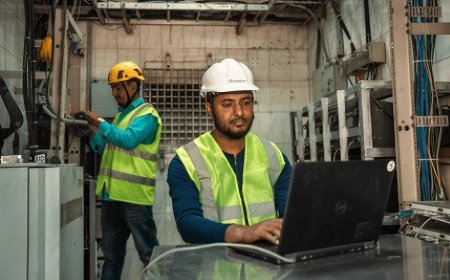
Young people are taught computer applications, driving, technical trades and other skills, but the government often does not establish a strong connection between training institutions and actual employers. Nor is there always adequate access to finance, apprenticeships, market networks or placement services after training.
A young person who receives six months of technical training but cannot find an employer willing to hire them is not necessarily unskilled. They may simply be standing on the wrong side of a broken bridge between education and employment.
The overseas labour market exposes the same weakness in a different form. Bangladesh sent 1,130,757 workers abroad in 2025, according to BMET. Yet only 4% were professionals and 22% were skilled workers. The remaining 74% were low-skilled or unskilled.
In 2024, skilled workers accounted for 23.62% and professionals 4.59% of overseas workers. In 2023, the corresponding figures were about 24% and 4.14 %. The consequence is straightforward.
Bangladesh is exporting labour, but too often it is exporting labour at the lowest end of the international wage ladder. A worker may spend years abroad, work long hours and send valuable remittances home, yet earn considerably less than a worker from a country that supplies the same market with better-trained personnel.
Saudi Arabia is a particularly important example. The number of Bangladeshi workers there has increased significantly, but the growth in earnings has not matched the growth in migration.
If countries such as India, the Philippines and Nepal can increasingly supply skilled workers and capture higher wages, Bangladesh risks remaining trapped in a model in which the number of migrants rises while the value of their labour remains low. This should change the way we think about skills.
The objective cannot simply be to make Bangladeshis employable. The objective should be to make their labour more valuable. That requires a shift from certificate-based training to demand-driven training.
Before spending money on a programme, policymakers should be able to answer a basic question: Who will employ these people? If the answer is unclear, the training programme should not be treated as an employment programme.
The same principle should apply to university education. Bangladesh cannot continue producing graduates without seriously examining where those graduates will work. The answer is not to discourage higher education.
Rather, universities need stronger links with industries, more internships, practical learning, career services and curricula that respond to changing economic needs.
At the same time, employers must invest in entry-level recruitment instead of expecting fresh graduates to arrive with several years of experience.
Most importantly, the government needs to stop measuring employment policy primarily through expenditure and enrolment figures. Tk 38 cr spent and 5,185 people trained may look impressive in a project report. But if only 72 trained drivers and 121 IT trainees entered their respective professions, the more important question is not how much was spent.
It is why the system failed to convert training into work. Bangladesh's youth do not necessarily need another certificate. They need an economy capable of valuing what they know and what they can do.
Until that happens, skills-development programmes risk becoming expensive waiting rooms for an employment crisis that is fundamentally about the shortage, quality and structure of jobs.
The country's young people are already competing fiercely for the opportunities that exist. The real policy challenge now is not to teach them how to stand better in the queue. It is to create an economy in which the queue itself becomes shorter.
H. M. Nazmul Alam is an Academic, Journalist, and Political Analyst based in Dhaka, Bangladesh. Currently he teaches at IUBAT. He can be reached at [email protected]