












































Bangladesh’s Development Dilemma
The ultimate measure of development is the extent to which rising national income expands productive opportunities, improves living standards, and reduces insecurity. Growth matters most when the people who generate it also share meaningfully in its rewards.

For decades, Bangladesh pursued economic growth as the principal means of reducing poverty. Millions of people escaped poverty, employment expanded, exports increased, and living standards improved.
Yet recent evidence raises an uncomfortable question: Why has growth become less effective in reducing poverty, and why are so many Bangladeshis once again facing economic insecurity?
Answering this question requires revisiting a longstanding development debate.
Should countries first expand national income and address inequality later, or should they distribute economic opportunities and benefits as the economy grows?
Bangladesh's experience demonstrates why this distinction matters. Growth is indispensable, but the composition of growth, the jobs it creates, and the distribution of productive resources determine how widely its benefits are shared.
The World Bank's Bangladesh Poverty and Equity Assessment 2025 documents substantial progress. Between 2010 and 2022, the national poverty rate declined from 37.1% to 18.7%, while extreme poverty fell from 12.2% to 5.5.6%. Approximately 34 million people escaped multidimensional poverty. These achievements reflect sustained economic expansion, improvements in education, agricultural productivity and infrastructure, and integration into global markets.
However, poverty reduction slowed after 2016, even as consumption continued to grow. The poverty rate fell from 37.1% in 2010 to 26.4% in 2016, representing an average annual decline of approximately 1.8 percentage points. Between 2016 and 2022, it fell to 18.7%, a slower annual decline of about 1.3 percentage points. The benefits of growth also became increasingly uneven.
During 2010–2022, Bangladesh's poverty reduction elasticity to growth was approximately 0.9, compared with South Asia's average of 1.5. Each percentage point of economic growth, therefore, corresponded to a smaller proportional reduction in poverty than in regional peers. This indicates a weakening relationship between economic expansion and household welfare.
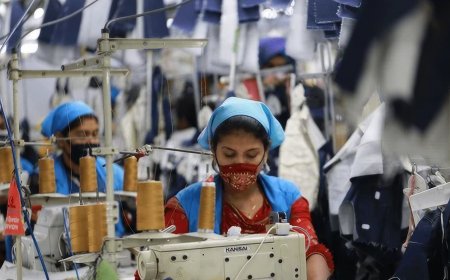
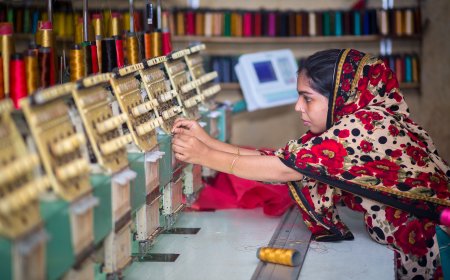
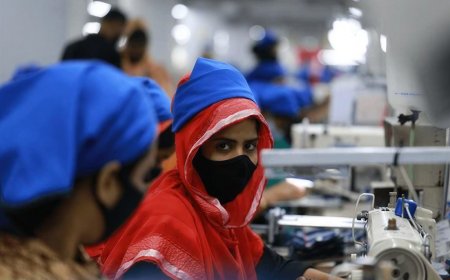
Earlier manufacturing expansion, particularly in the ready- made garment sector, generated employment for large numbers of workers, including women from rural households. Industrial growth and urban services enabled families with limited assets to increase their incomes through employment.
Between 2016 and 2022, industrial job creation stagnated, urban opportunities narrowed, and agriculture absorbed more new workers. Agricultural employment provided an important safety net but could not fully replace the productivity and earnings opportunities associated with the expansion of urban industry. The economy continued to grow, but its connection to improved employment weakened.
The October 2026 Bangladesh Development Update adds to these concerns. The World Bank estimates growth at 3.4% in FY2025–26 and projects the same rate for FY2026–27. It also reports rising poverty, stalled job creation, weakened investment, and persistent inflation.
These developments reflect longstanding structural weaknesses, as well as recent economic and political disruptions. They cannot reasonably be attributed to a single government or event.
Nevertheless, they expose the vulnerability of households with limited savings, insecure employment, and inadequate protection against shocks.
Understanding this vulnerability requires examining how income is generated and distributed. Labor, land, capital, and entrepreneurship are the principal factors of production. They generate wages, rents, interest, profits, and entrepreneurial earnings. Ownership of these resources strongly influences who benefits from economic expansion.
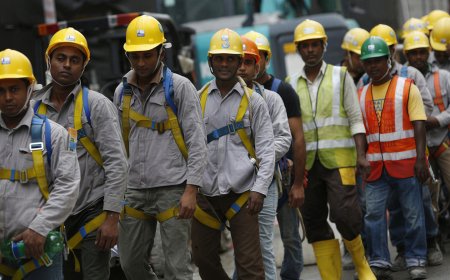
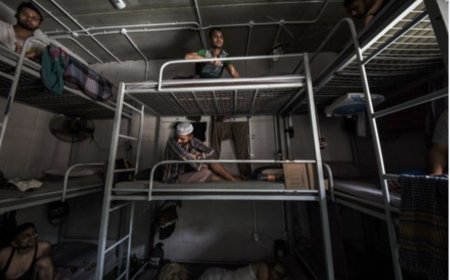
For low-income households, labor is generally their most important productive asset. With little land, limited savings, and restricted access to formal finance, their progress depends heavily on productive employment and rising real wages. Industrial expansion that generates jobs can benefit them directly. When opportunities increasingly depend on capital, property, or privileged access to finance, the resulting benefits become concentrated.
According to the World Bank assessment, Bangladesh’s income Gini coefficient rose from approximately 51 to 54 points between 2010 and 2022. Although poorer households also benefited, higher-income households gained disproportionately. Urban female labor force participation declined from approximately 34% to 24% over the same period. This reversal is concerning, given women’s contribution to earlier manufacturing-led poverty reduction and social progress.
Educational attainment has expanded, but qualifications do not automatically translate into productive employment. Graduates who cannot secure suitable jobs receive disappointing returns on their human capital investment, thereby weakening confidence in the promise of development.
Land ownership and access to finance create further inequalities. Landless households and those operating very small holdings struggle to benefit from agricultural modernization. Small enterprises often cannot obtain affordable institutional credit, while weak banking governance ties up resources in non-performing loans.
The October 2026 update reports that these loans accounted for 33.2% of total bank loans in June 2026, highlighting shortcomings in credit allocation and financial discipline that constrain productive investment and employment.
The problem, therefore, extends beyond the pace of growth to the mechanisms through which it generates income and opportunity. The growth-first argument assumes that investment and capital accumulation will eventually benefit poorer households through employment, wages, and demand. Investment and productivity growth are indeed essential; however, their benefits do not automatically reach everyone.
Hollis Chenery and colleagues’ influential 1974 work, Redistribution with Growth, proposed an alternative approach: Expand poorer households’ productive assets and earning opportunities alongside economic growth. Distribution should be incorporated into the production process rather than treated solely as a corrective measure after income has been generated.
For Bangladesh, this entails restoring employment-intensive growth, expanding access to productive resources, and ensuring that markets reward efficiency and enterprise rather than political connections.
Industrial diversification is essential. Although the garment sector will remain important, agro-processing, light engineering, leather products, and other labor-intensive industries can broaden employment opportunities. Reliable energy, functional infrastructure, predictable regulation, and access to export markets are necessary to attract investment.
Affordable childcare, safe transportation, improved working conditions, and equal access to training can help reverse the decline in urban employment opportunities for women. Stronger banking discipline, the resolution of non-performing loans, independent supervision, and access to credit for smaller productive enterprises would support growth and expand opportunity. Secure land tenure, transparent records, improved market access, and higher-value agricultural production can help rural households capture a greater share of economic gains.
Social protection remains essential. The poverty assessment reveals weaknesses in targeting: In 2022, only about half of households in the poorest fifth received social assistance, while 35% of those in the richest fifth did. Improved targeting could strengthen poverty reduction without requiring a corresponding increase in spending. A credible means test, supported by a unified national household registry, could direct benefits to poor families who are currently excluded.
However, transfers cannot substitute for productive employment. Sustainable development must enable households to earn adequate incomes through work, enterprise, and productive assets, while protecting those who are unable to do so.
Macroeconomic stability is equally indispensable. Inflation disproportionately affects poorer households because food, housing, transportation, and energy account for a substantial share of their budgets. Fiscal discipline, financial stability, reliable energy, and investor confidence are essential foundations for inclusive growth.
Bangladesh reduced poverty relatively rapidly between 2010 and 2016, as expanding economic activity created opportunities for workers and families. After 2016, employment creation slowed, and the benefits of growth became less evenly distributed. Recent shocks have exposed the fragility of this pattern.
The policy choice is not between growth and distribution, or between private investment and social protection. The challenge is to ensure that investment, productivity, employment, and broader access to productive resources reinforce one another. Bangladesh must restore the conditions that enabled growth to transform the lives of ordinary households.
The ultimate measure of development is the extent to which rising national income expands productive opportunities, improves living standards, and reduces insecurity. Growth matters most when the people who generate it also share meaningfully in its rewards.
Dr. Mohammed A. Rab is a US-based economist and a freelance consultant specializing in economic policy, banking, and financial risk management.