

























































The Creation of Moral Permission for Violence
Is coercive moral policing becoming normalized in Bangladesh’s public sphere?

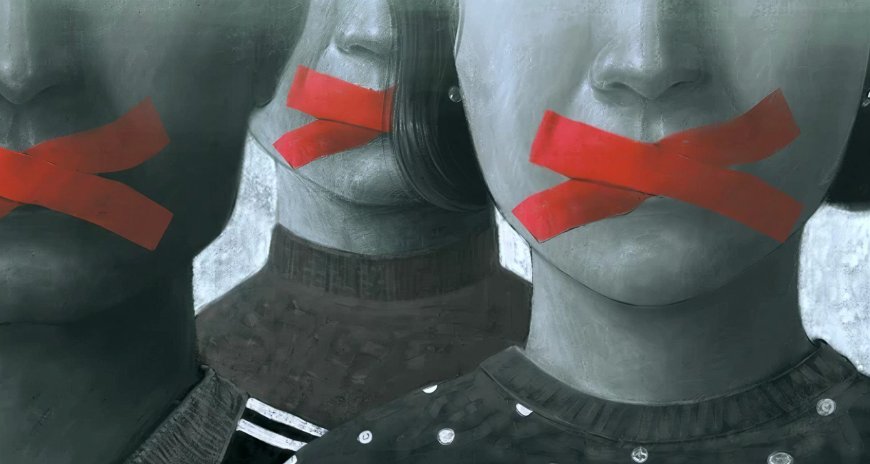
According to New Age, Islamic preacher Shaikh Dr Muzaffar Bin Mohsin said that people who do not perform their prayers should be killed. He reportedly spoke of hanging or beheading them with a sword, discussed whether they should receive ritual washing, a shroud or funeral prayers, and compared the disposal of such a body to that of a “dead dog," suggesting burial somewhere away from habitation.
After criticism followed, Muzaffar told New Age that his remarks had been taken out of context. He clarified that individuals were not authorized to carry out such punishments and that these rulings, in his interpretation of Islamic jurisprudence, could only be implemented by a legitimate “Islamic state or government.”
Well, that certainly clears things up.
Your neighbour cannot cut off your head because you missed your prayers. The state will do it instead.
What a remarkable upgrade for human rights.
Although, if such a policy were ever seriously implemented in Bangladesh, I suspect we would discover rather quickly that the country has considerably more heads than compliant prayer registers.
The clarification, however, raises a more serious question than it resolves: Which state, under which constitution, and under which law?
If we are talking about Bangladesh, the Constitution is not particularly ambiguous on the basic status of human life.
Article 32 provides that no person shall be deprived of life or personal liberty except in accordance with law. Article 27 guarantees equality before the law and equal protection of the law. Article 28 prohibits discrimination against citizens on grounds including religion, while Article 41 protects freedom of religion.
Nowhere, as far as I can see, is there a footnote saying: Terms and conditions apply: Constitutional rights subject to satisfactory attendance at five daily prayers.
That absurdity matters because it exposes the central problem.
Imagine a person who does not pray. He has murdered nobody, assaulted nobody, stolen nothing and violated nobody else’s rights. His “offence” is failure to perform a religious obligation. Yet we suddenly find ourselves discussing whether he should be hanged or beheaded, whether his body deserves a shroud, whether funeral prayers may be performed, and where his corpse should be buried.
At what point did a discussion about religious morality become a discussion about the state’s power to kill?
One is perfectly entitled to believe that abandoning prayer is a grave sin. A preacher may urge Muslims to pray, warn of spiritual consequences and teach whatever theological position he considers correct within the law. But the moment the discussion becomes whether a living person’s head should remain attached to his body, we have crossed from personal faith into the politics of coercion.
And adding “Shaikh” and “Dr” before one’s name does not reduce the responsibility that comes with such language. If anything, it increases it. Authority amplifies speech.
There is another reason this matters. Radicalization rarely begins with a weapon. Long before physical violence becomes possible, violence must often become morally imaginable.
The progression can be disturbingly simple. First, they are sinners. Then, they are apostates. Then, they are dangerous. Then, they do not deserve the same dignity as ordinary citizens. Eventually, their elimination is justified.
Somewhere further down that chain, a young listener may reasonably ask: if this person is morally deserving of death, what exactly would be wrong with carrying it out?
That is one of the most dangerous stages of radicalization: The creation of moral permission for violence.
The language surrounding the dead body is particularly revealing. Denying normal human dignity and comparing a corpse to a “dead dog” is not merely a discussion of punishment. It is a form of dehumanizing rhetoric.
Criminology and the study of political violence have long paid attention to dehumanization precisely because one of the strongest psychological barriers to harming another person is recognizing that person as fully human.
Reduce that humanity first and violence becomes easier to rationalize.
The related concept of moral disengagement helps explain the process. “I am killing another human being” is psychologically difficult to reconcile with one’s moral self-image.
“I am defending religion,” “I am punishing an apostate,” or “I am cleansing society of sin” can perform a very different psychological function. Violence is given a moral vocabulary through which the perpetrator can cease to experience himself as a perpetrator.
That is why the seeds of radicalization are not always planted in bomb-making rooms. Sometimes they are planted in front of microphones, on sermon stages and in Facebook Lives, particularly when someone invested with moral authority teaches an audience to imagine an entire category of people as legitimately killable.
Now place beside this another incident from Kishoreganj.
The band Ashes was scheduled to perform there, but the concert was reportedly cancelled following objections from groups described as the “Tawhidi Janata.” Before the cancellation, a religious figure wrote on Facebook: “If ASHES comes to Kishoreganj, they will truly be turned into ASHES” -- in other words, reduced to ashes. Beneath it came the approving “Inshallah.”
There is a very simple boundary here.
You dislike Ashes? Fine. Do not listen to them. Do not attend the concert. Criticize their music. Tell your children not to go. Organize a peaceful protest if you wish. These are all legitimate exercises of personal choice and expression.
But “we will turn them into ashes” is no longer cultural criticism. It is the language of intimidation.
And “Inshallah” is not punctuation for a threat. Placing religious vocabulary beside violent rhetoric does not sanctify the violence.
The problem becomes considerably larger when organized opposition or threats are followed by the cancellation of the event itself. Criminology has something useful to say here too: Behaviour is shaped by its reward structure. When a particular behaviour produces the desired result, there is an incentive to repeat it.
You threaten disruption. The authorities decide they do not want the risk. The event disappears.
What have you learned?
Quite simply: Threats work.
Why petition next time? Why make a legal challenge? Why persuade anyone? Gather enough people, use sufficiently intimidating language, create a sufficiently “sensitive situation”, and perhaps the state will do the censorship for you.
This is how informal censorship can flourish without a censorship law. No parliamentary vote is necessary. No government gazette is required. Organised outrage gradually acquires a de facto veto over public culture.
The irony becomes almost comic when the state responds by cancelling an otherwise lawful event “in the interests of public order”. Instead of dealing with those threatening disorder, it removes the activity they threaten to disrupt.
Imagine someone threatens to burn down your house. The police arrive -- not to deal with the person threatening arson, but to advise you: “Perhaps you should stop living in the house for now. That should prevent a fire.”
An innovative model of crime prevention, certainly.
Political theory has a useful expression for something close to this: The heckler’s veto. In simple terms, the person most willing to create disruption gradually gains the power to determine how much freedom everyone else may exercise. The peaceful citizen’s liberty becomes conditional on the tolerance of the least tolerant actor.
Whatever else we call that arrangement, democracy is not the obvious word.
Now consider the wider pattern. We have rhetoric describing people who do not pray as deserving death. We have threats to “turn into ashes” performers associated with a cultural event, followed by the cancellation of a concert. Earlier this year there have also been controversies surrounding film screenings, Baul performances and even the policing of music at weddings.
The actors, circumstances and legal facts are not identical, and it would be intellectually careless to pretend that every incident is part of one centrally organized conspiracy. But placing them beside one another raises a legitimate social question: Is coercive moral policing becoming normalized in Bangladesh’s public sphere?
This is where Bangladesh’s recent experience with mob culture matters enormously.
Mob culture does not begin only when a crowd physically beats someone in the street. It begins when organized intimidation becomes an effective alternative to lawful political action. Once people learn that sufficient numbers, sufficient outrage and sufficient threats of “an unstable situation” can make the administration retreat, the mob stops functioning merely as a crowd. It begins to function as an informal political institution.
That is precisely why the present government has a responsibility to establish a clear principle after the experience of the past year: A threat should trigger protection, not a veto.
If a lawful concert faces credible threats of attack, cancellation should not automatically be the state’s first response. The first response should be threat assessment, proportionate security, investigation and enforcement of the law. Otherwise, every successful act of intimidation teaches the next group the same lesson: Enough pressure works.
There is a constitutional dimension here as well. Article 39 protects freedom of thought, conscience and expression, while also permitting reasonable restrictions prescribed by law, including in relation to public order and incitement to an offence. That distinction matters enormously. Freedom of expression is not automatically a licence to incite criminal violence.
At the same time, “incitement” must never become a convenient label with which a government suppresses speech it simply dislikes. That would merely replace mob authoritarianism with state authoritarianism.
The answer is therefore neither selective censorship nor selective silence. It is the rule of law: Examine the full speech, its context, intention, audience, specificity and realistic potential to encourage violence; investigate credible threats; apply the same legal standard regardless of whether the speaker is a politician, preacher or cultural activist; and let due process determine whether the legal threshold has been crossed.
There is something particularly strange about the hierarchy of sensitivities developing around us. Music is played and suddenly everyone becomes sensitive. A film is screened and the “situation may become tense”. A wedding microphone can produce a moral emergency. Women’s clothing appears capable of generating endless national anxiety.
Yet if the language is “these people should be killed” or “we will turn them into ashes” -- and the state becomes remarkably philosophical -- then perhaps it is the state’s sensitivity meter that needs examining.
Freedom of expression must be protected. Religious freedom must be protected. The right to peaceful protest must be protected. But my religious freedom does not give me jurisdiction over your body. My freedom of expression does not provide unlimited immunity for incitement to violence. And my dislike of your culture does not give me a veto over your concert.
The arithmetic of constitutional democracy should really be that simple.
It is not the state’s job to determine who will enter heaven. Nor is it the state’s job to decide who may listen to Ashes. Its job is to ensure that the observant and the non-observant, the religious and the irreligious, the Ashes fan and the person who cannot stand their music can all live safely under the same law.
After all, Bangladeshi citizenship requires an NID. It does not require an Iman meter.
If the state cannot defend that simple boundary, then today it is a concert, yesterday it was a film, tomorrow it may be a book, and the day after that an opinion. Eventually, freedom will continue to exist beautifully in the statute books. In practice, however, before exercising it, citizens will first have to check whether the mob has granted permission.
Dr. Lubna Ferdowsi is an academic and researcher based in England.