
































![A Ledger of the Soul: Navigating the Allah-Bhagavant Nexus in a 19th-Century Puruṣākāra Jñāna Caupara [Gyan Chauper]](https://counterpointbd.com/uploads/images/202608/image_430x256_6a93baa3b09a7.jpg)



















Blame it on Jinnah
A common citizenship need not require a common mother tongue. Diversity, when constitutionally recognized, can strengthen a state; when suppressed, it can eventually break one apart.

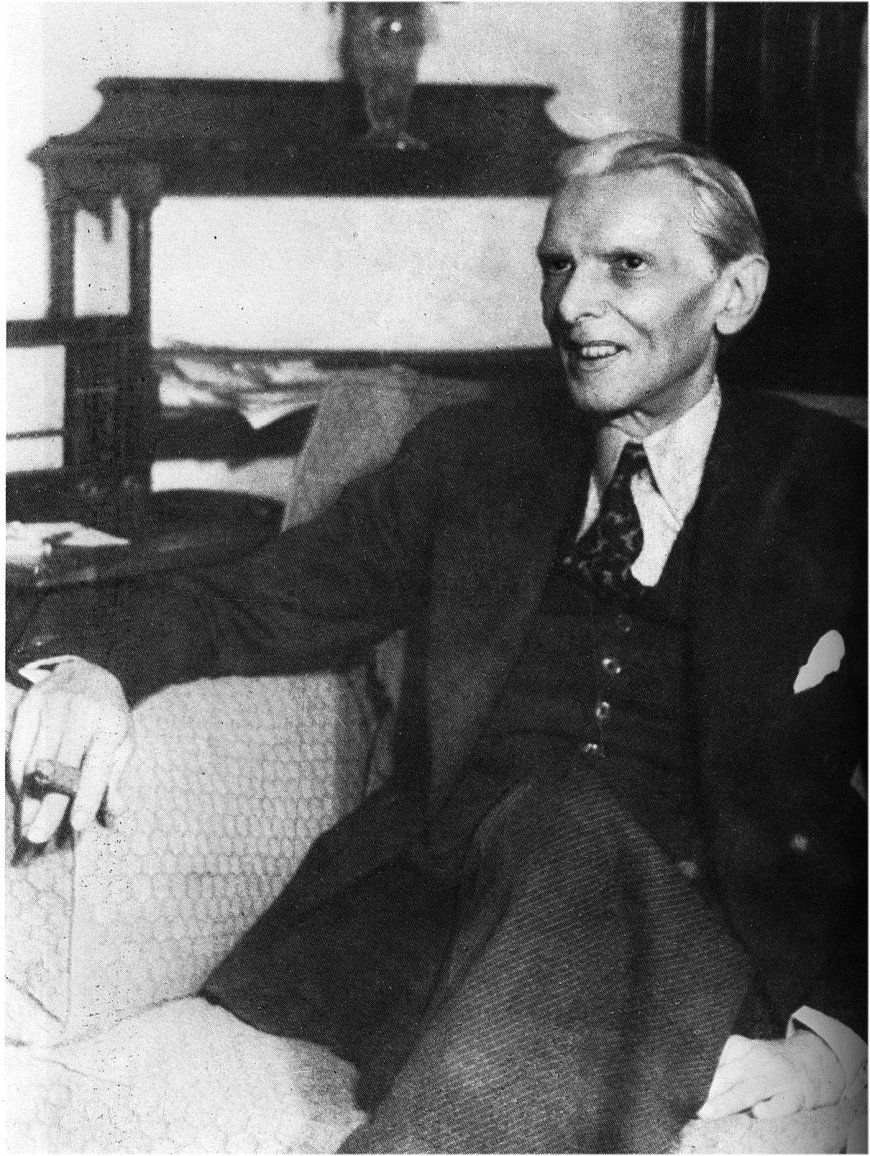
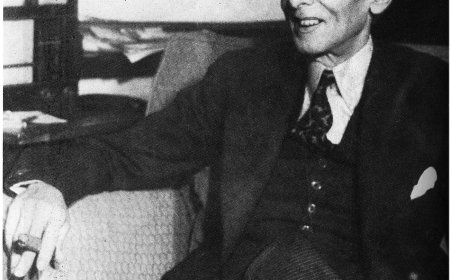
On the fateful day, March 21, 1948, Muhammad Ali Jinnah, the Father of the Nation of Pakistan, addressing a vast gathering at Dhaka’s Racecourse Maidan during his first visit to East Bengal, (in)famously declared:
“Urdu, and only Urdu, shall be the State Language of Pakistan.”
Three days later, at the University of Dhaka convocation in Curzon Hall, he reaffirmed this position -- provoking audible dissent from sections of the audience.
Less than four years later, on February 21, 1952, police opened fire on demonstrators demanding that Bangla be recognized as one of Pakistan’s state languages. Salam, Barkat, Rafiq, Jabbar and others became martyrs to a cause that would transform the political consciousness of East Bengal.
Ekushey February thereafter became Shaheed Dibosh: A day of mourning, remembrance and resistance. The Language Movement provided a moral and cultural foundation for the subsequent struggles for provincial autonomy, democratic representation and, ultimately, the independence of Bangladesh.
In 1999, UNESCO proclaimed February 21 International Mother Language Day, transforming a defining episode in our national history into a universal affirmation of linguistic dignity.
This is all history – well documented and widely publicized.
What seems to be less researched and very little understood is as to why an astute politician like Muhammad Ali Jinnah made such a consequential misjudgment and such a fateful announcement.
Muhammad Ali Jinnah was considered extraordinarily far-sighted and perceptive. He accurately recognized that a single democratic India would leave Muslims as a permanent minority at the mercy of a religious majority -- yet he could not fathom the sentiments of the Bengalis in Eastern Pakistan who were numerically a majority of the then Pakistan’s population.
Was the tragedy simply the result of one man’s obstinacy? Or did Jinnah’s declaration reveal a deeper contradiction within the political culture of the Pakistan Movement?
The answer lies partly in a fundamental mismatch: The All-India Muslim League’s conception of Muslim nationhood did not correspond to the linguistic realities of the country it created.
Urdu as a Political Symbol
Urdu was never the mother tongue of most Muslims in British India. It developed and flourished particularly in the urban centres of northern India -- Delhi, Lucknow, Aligarh, and other centres of Muslim literary and intellectual life. By the late 19th century, it had become an important language of Muslim literature, journalism, education, and political discourse.
Institutions such as Aligarh played a major role in elevating Urdu as a symbol of Muslim cultural identity. It became deeply associated with the Muslim political elite of northern India and, eventually, with the Pakistan Movement itself.
Yet most Indian Muslims spoke other languages: Bangla, Punjabi, Sindhi, Pashto, Gujarati, Kashmiri, Tamil, Malayalam, and numerous regional dialects. Even in the territories that constituted Pakistan in 1947, native Urdu speakers formed only a small minority.
Urdu, therefore, was not the “mother tongue of Indian Muslims.” It was more accurately the prestige language of an influential section of the Muslim political and intellectual elite.
This distinction is crucial. For Jinnah and many Muslim League leaders, Urdu represented Muslim nationalism, a common political inheritance and an identity capable of transcending provincial boundaries. They believed that a shared state language could help unite a new country divided not only by language and ethnicity but also by more than a thousand miles of Indian territory.
Jinnah himself was not the product of Urdu literary culture in the conventional sense. His mother tongue was Gujarati, while English was the principal language of his professional and political life. Reportedly he could neither read or write Urdu or speak it fluently.
His support for Urdu was consequently ideological rather than linguistic. Urdu mattered to him not because it was his own language, but because he regarded it as the symbolic language of the Muslim nation the League claimed to represent.
The problem was not the adoption of Urdu as a State Language. Urdu had an important place in Pakistan and could legitimately serve as one of its common languages. The fatal error was the insistence that it must be the only state language.
Pakistan was not the Muslim League
The Muslim League conducted its all-India politics largely through English and Urdu. English remained indispensable in administration, constitutional negotiations and legal affairs, while Urdu was prominent in political speeches, newspapers and mobilization among sections of the Muslim public.
Bengali Muslim politicians participating in all-India League politics naturally adapted to this environment. Many could communicate in Urdu and used English in official settings. But this did not alter the linguistic character of Bengal.
The Bengal Provincial Muslim League operated in a multi-lingual political world. Its mass meetings, village campaigns, and electoral appeals were overwhelmingly conducted in Bangla.
Leaders such as AK Fazlul Huq, Huseyn Shaheed Suhrawardy, Khawaja Nazimuddin, and Maulana Akram Khan were rooted, to varying degrees, in Bengali political society, even when they used English or Urdu in elite forums.
The distinction between the language of leadership and the language of the population was therefore already visible before Partition. The League’s central leadership nevertheless mistook its own political culture for the social reality of Pakistan.
Pakistan was not merely the Muslim League translated into state form. It was a multi-lingual federation in which Bangla speakers constituted the largest linguistic community -- and, indeed, a majority of the total population. Punjabi was the principal language of much of West Pakistan, while Sindhi, Pashto, and Balochi possessed their own histories and regional loyalties.
The demand for Bangla was thus neither a conspiracy against Pakistan nor a rejection of Muslim identity. Most Bengali Muslims saw no contradiction in being Bengali, Muslim, and Pakistani. Their demand was that the new state recognize these identities as compatible.
Central policy turned them into competing loyalties.
A Decision Made Before Dhaka
Jinnah’s declaration was not an impulsive remark made upon arriving in Dhaka. By early 1948, the central government had already aligned itself with Urdu as the sole state language.
On February 23, 1948, Dhirendranath Datta moved an amendment in Pakistan’s Constituent Assembly proposing that Bangla be permitted in its proceedings alongside English and Urdu. His argument was both democratic and practical: Bangla was spoken by the majority of Pakistan’s people. The government rejected the proposal.
The controversy, therefore, preceded Jinnah’s visit. His speeches in March 1948 were a defence of an established central position, not the beginning of a genuine consultation.
There is little evidence that Jinnah conducted a broad and systematic deliberation with East Bengal’s political leaders before committing himself publicly. He met provincial ministers, League leaders, university representatives and students during his visit, but these encounters appear to have been attempts to explain or defend the policy rather than opportunities to reconsider it.
Responsibility cannot, however, be placed on Jinnah alone. Several senior Muslim League leaders from East Bengal supported the central position, acquiesced in it or failed to challenge it publicly. Khawaja Nazimuddin and Nurul Amin, in particular, must be included in any honest examination of the political failure.
Their silence had several possible causes: immense reverence for Jinnah, fear of weakening a fragile new state, loyalty to party discipline, and the hope that the dispute could later be settled constitutionally. The Muslim League was also highly centralized, and Jinnah’s authority after the creation of Pakistan was almost unchallengeable.
Consequently, the earliest organized opposition came not from the established political leadership but from students, teachers, writers, and cultural organizations. They understood something the ruling elite did not: Language was not merely an administrative instrument. It was a source of dignity, opportunity, and political power.
Recognition affected who could enter the civil service, participate in the legislature, obtain higher education and communicate with the state. To exclude Bangla from the central institutions of a country whose majority spoke it was to place that majority at a structural disadvantage.
Why Did India Follow a Different Path?
The comparison with India is instructive, although it must begin with a correction. India did not constitutionally designate Hindi as its “national language.” Article 343 made Hindi in the Devanagari script the official language of the Union, while English was retained initially for a transitional period and subsequently continued by legislation.
Nor did India escape linguistic conflict. There were powerful anti-Hindi agitations, especially in Tamil-speaking Madras State. Movements demanding linguistic provinces arose among Telugu, Marathi, Punjabi, and other communities. At times, these conflicts became intense and disruptive.
The difference was not that Indians accepted Hindi while Bengalis rejected Urdu. The difference was that the Indian political system eventually accommodated much of its linguistic diversity.
The Indian National Congress possessed a more linguistically decentralized organizational tradition than the Muslim League. Its provincial committees had long operated through regional languages. Congress leaders were therefore compelled to recognize India not as a Hindi-speaking nation containing minorities, but as a union of major linguistic societies.
The retention of English prevented Hindi from immediately becoming the exclusive language of central power.
More importantly, beginning with the creation of Andhra State in 1953 and the wider reorganization of states in 1956, India accepted language as a legitimate basis for federal boundaries. Later resistance to Hindi produced further compromise and the continued use of English at the Union level.
India’s accommodation was neither immediate nor perfect. Language disputes persist there. But its federal structure created mechanisms through which linguistic identities could seek constitutional recognition without necessarily demanding separation from the Union.
Pakistan’s early rulers moved in the opposite direction. Faced with insecurity after Partition, they treated provincial identity as a potential threat. Centralization was regarded as essential to survival, and linguistic plurality was viewed with suspicion. Instead of making the federation stronger by recognizing its constituent peoples, the state attempted to manufacture unity from above.
Beyond Blaming One Man
Jinnah must bear responsibility for the absolutism of his declaration and for failing to comprehend the depth of Bengali sentiment. His warning that opponents of the one-language policy were being misled by Pakistan’s enemies was especially damaging.
It converted a legitimate constitutional demand into a test of patriotism -- a pattern that Pakistan’s rulers would repeatedly employ against East Bengal.
Yet “blaming it on Jinnah” is not a sufficient historical explanation.
The deeper failure belonged to a political class that confused uniformity with unity, loyalty with silence, and central authority with nation-building. Jinnah articulated that failure with unmatched authority, but the assumptions behind it were shared by much of the central Muslim League leadership and tolerated by influential politicians in East Bengal.
The great paradox is that the Language Movement did not begin as a separatist movement. It began as a demand for inclusion within Pakistan. Bengali students were not initially rejecting the state; they were asking the state to recognize them as equal founders and citizens.
By refusing that recognition, Pakistan’s rulers gradually transformed a linguistic grievance into a constitutional struggle, the constitutional struggle into a demand for autonomy, and the demand for autonomy into a movement for independence.
The enduring lesson of February 21 is therefore larger than the culpability of any one leader, Muhammad Ali Jinnah. It was failure of the political culture of the then Muslim League and its elite political class.
A nation cannot be held together by requiring its people to surrender the identities through which they understand themselves. A common citizenship need not require a common mother tongue. Diversity, when constitutionally recognized, can strengthen a state; when suppressed, it can eventually break one apart.
Jinnah believed Urdu would hold Pakistan together. His tragedy was that he failed to see how the insistence on Urdu alone would begin to tear it apart.
Mohiuddin Zaman is a retired Canadian banker of Bangladesh origin. Although living overseas for over 40 years he has remained deeply connected to his origins and now writes regularly in national newspapers and regional journals on topical and historical issues related to Bangladesh.