

































































Animal Welfare Across Daily Commerce and Festival Sacrifice
Growing up in Bangladesh, Qurbani Eid generally presented an unseemly sight. In the absence of centralized abattoirs, slaughtering occurred in building compounds, on public streets, or wherever space was available.

Upholding Islamic principles of animal welfare is a year-round mandate. Sacrifice is meant to align with stewardship during Eid al-Adha, along with a perennial commitment to animal well-being. The Lord of the universe has entrusted human beings with khilafah or stewardship over the creation.
Acting with ethics, balance, compassion and justice toward all creation is both a sacred trust and a religious obligation. On Eid al-Adha, Muslims who are financially able are required to sacrifice a lawful animal, ensuring that the process is carried out without subjecting the animal to torture or trauma.
For the intended sacrifice to be accepted by our Maker, animals must be treated with compassion; any cruelty or neglect is likely to render the act makrooh - an improper and discouraged deed in Islamic law. Some scholars even maintain that the flesh of animals subjected to suffering becomes haram or forbidden, regardless of the correct method of slaughter.
Islam emphasizes a profound duty of care towards animals. A Hajj pilgrim in the sacred state of Ihram must adhere to specific prohibitions, one of the most significant being a total abstention from harming any living creature, no matter how small.
Pilgrims are expected to exercise constant mindfulness, even taking care not to accidentally tread upon insects while walking. This ruling exemplifies the principle that all life is sacred and must not be desecrated.
The importance of animals in Islam is further highlighted by The Noble Qur’an, which features six chapters (Surahs) named after them: Al-Baqarah (The Cow), Al-An’am (Livestock), An-Nahl (The Bee), An-Naml (The Ant), Al-Ankabut (The Spider), and Al-Fil (The Elephant).
In Surah Al-An’am, a powerful verse states: “All the creatures that crawl on the earth and those that fly with their wings are communities like yourselves. We have missed nothing out of the Record -- in the end they will be gathered to their Lord” (6:38). This verse demonstrates that the lives and sustenance of all non-human creatures -- such as insects, beasts and birds -- are part of the Divine decree.
They will be brought back to life on the Day of Qiyamah (the Day of Gathering) just as humans will, and they will be recompensed for cruelty, whether inflicted by humans or by other creatures. The taking of animal life, even for species lawful for Muslims, is strictly forbidden if the purpose is anything other than consumption.
On Eid al-Adha, livestock are not sacrificed for sport or entertainment, but to follow the commandment of Allah Rabb al-Alameen as stated in The Qur’an: “It is neither their meat nor their blood that reaches God but your piety. He has subjected them to you ...” (Surah Al-Hajj, 22.37).
Consequently, killing wildlife for reasons other than provisions -- such as blood sports, trophy hunting, or animal baiting -- is prohibited, as is the unnecessary caging of birds. Traditionally, the meat from the Eid al-Adha sacrifice is distributed widely to reach the underprivileged, as well as relatives, friends, and neighbours.
Furthermore, it is recommended that the hides are not wasted but repurposed for beneficial use. Criticism is often directed at the inhumane conditions under which the event of Qurbani is frequently conducted.
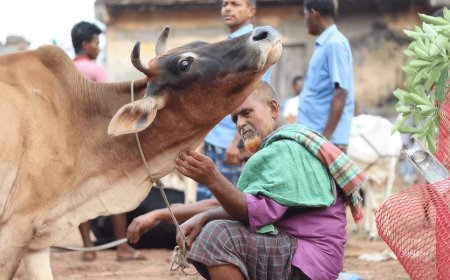
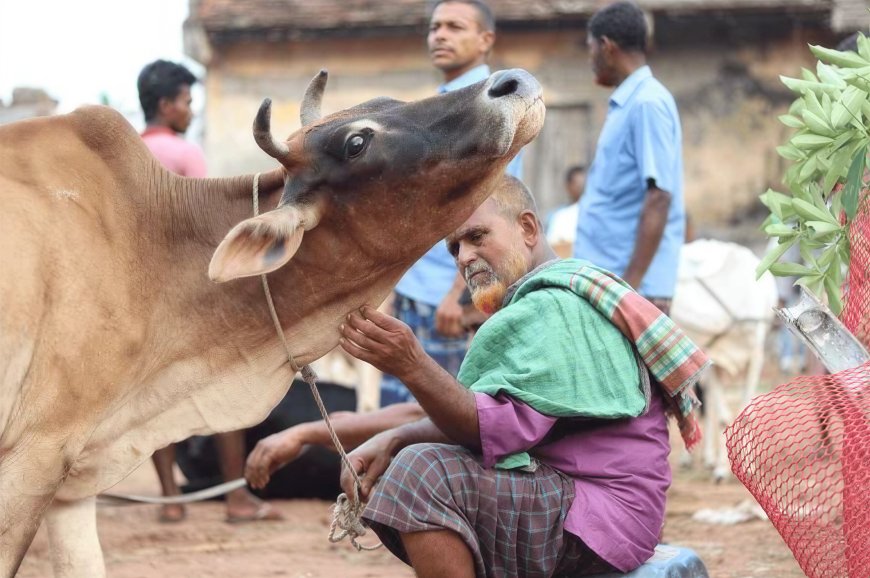
The temporary cattle markets set up for Qurbani Eid, popularly known as gorur haat in Bangladesh, are packed with sacrificial animals. Great care must be taken to ensure these animals are not restricted by short tethers; instead, they should remain unconstrained to prevent discomfort, provided with access to clean hydration so they never thirst for water, and given adequate shade to protect them from the heat and the monsoon rains.
Once bought and brought home from the cattle market, the animals need to enjoy a tranquil surrounding, well cared for with fodder and water. Acts of compassion -- a gentle touch or a reassuring pat -- are fundamental in establishing an emotional bond between an owner and their livestock.
The religious ideal for sacrifice is realized when the owner and their family experience a genuine sense of loss, reflecting the historical precedent set by Prophet Ibrahim, peace be on him. His willingness to sacrifice his son in submission to Divine Will, and his son’s steadfast encouragement to fulfil that commandment, serve as the ultimate model of devotion.
To honour this legacy of sacrificing what is most dear, many believing Muslims find that rearing an animal from birth or a young age fosters the necessary emotional attachment. While contemporary urban living often renders home-rearing unfeasible, city-dwellers may seek alternative arrangements to maintain this connection away from high-rise environments.
Furthermore, the environment surrounding the animal must remain serene to mitigate stress prior to the sacrifice. The animal should not be treated as a prisoner awaiting execution, nor subjected to the psychological torment of its impending end. As these are vulnerable creatures under human stewardship, it is a moral imperative to ensure their final moments are characterised by tranquillity and the absence of distress.
While competent butchers follow the Islamic guidelines for dhabihah or halal slaughter, on the day of sacrifice, many of them are overwhelmed by numerous appointments, driven by the need to get through their list of customers as quickly as possible.
Unfortunately, this rush often leads them to become desensitized to animal welfare; they frequently sharpen the blade callously within sight and earshot of the tethered animals, causing them unnecessary agitation. Knives should be pre-sharpened away from the animals’ presence.
The Messenger of Allah, upon him be blessings, likened sharpening a knife in the sight of an animal to killing it twice. Since this act earned his explicit disapproval, it should be abandoned altogether.
“Verily Allah has enjoined goodness to everything; . . . when you slaughter, slaughter in a good way. Every one of you should sharpen his knife, and let the slaughtered animal die comfortably” (Hadith Sahih Muslim).
A sharp blade ensures an instantaneous death, whereas a blunt one often delays the process and unnecessarily increases suffering. Furthermore, the knife must not be lifted during the procedure, as doing so is considered a separate act of slaughter. Islamic principles strictly prohibit subjecting a single animal to multiple slaughtering actions, ensuring the process remains as swift and humane as possible.
In large or extended families where multiple animals are sacrificed, the animals are often lined up to be killed sequentially in full view of one another. The terror in the eyes of those witnessing the slaughter of their fellow beasts is almost palpable, yet the lack of empathy shown is incomprehensible.
The guttural sounds and the sight of blood drainage completely traumatize the remaining animals; it is vital that they are not forced to witness the dispatching of others, thereby reducing anticipatory distress. Growing up in Bangladesh, Qurbani Eid generally presented an unseemly sight.
In the absence of centralized abattoirs, slaughtering occurred in building compounds, on public streets, or wherever space was available. Pools of blood collected in the roads, while the resulting stench and bacteria contaminated the surrounding environment.
These remains were often not promptly washed away, since street cleaners were generally on holiday for the festival. The provision of designated slaughter-spaces to mitigate odours and air pollution is therefore essential.
Outside the Eid season, it is equally important that Islamic principles concerning the welfare of livestock are upheld in a Muslim majority country like Bangladesh. In the livestock trade, ethical and religious standards must be maintained at any cost, namely in transportation, handling, processing for food production and culling.
It should be the remit of the relevant government department in a Muslim majority country to oversee the welfare process and appoint religious scholars who can select mature, prudent and diligent Muslim butchers; educate the butchers, farmers and animal handlers in the Islamic requirement of compassionate husbandry.
A strategic channel to reach out to a wider community is the use of Mosque-based Jumu’ah sermons to increase awareness of humane standards and principled management.
The Messenger of Islam, upon him be blessings, has the title of Rahmatun Lil’ Alameen or the blessing for the universe -- his blessings extended beyond humanity to encompass all animal species.
He has stated that a good deed done to an animal is as praiseworthy as a good deed carried out for a human being, while an act of cruelty to an animal is as blameworthy as an act of cruelty inflicted on a human being. He explicitly commands believers to “fear Allah in these mute animals,” stipulating they be ridden only when fit and permitted necessary rest.
The Blessed Messenger’s ﷺ numerous teachings established comprehensive principles for the compassionate treatment of animals, strictly forbidding acts of violence such as beating, branding, or marking their faces. Furthermore, he instituted systemic reforms against the cruel practice of severing tails and humps from living livestock for consumption.
He strongly condemned the painful custom of ear-notching and slitting, and the use of restrictive, agonizing neck rings on camels. Hadith Muslim narrates that the worst of shepherds is the uncaring who causes the beasts to crush or bruise one another.
This ethical framework extends to the logistical treatment of livestock. There is a clear mandate that animals must be provided with comfortable space when congregated for trade or transport. To align with these religious values, cattle markets and transportation methods must strictly avoid overcrowding and ensure proper ventilation in vehicles, prioritizing the well-being of the creatures at all times.
The long-distance trekking of animals is prohibited, as such journeys often lead to significant weight loss and unnecessary physical abuse. During transit, animals are frequently deprived of essential food and water, while the practice of tying animals of varying sizes and ages together in groups of two or four to minimize labour costs, inevitably results in exhaustion and injury.
Many are beaten or whipped to reach markets on time, even when they collapse. Ultimately, a prolonged multi-day transporting in harsh weather conditions, inflicts immense and needless suffering.
Guided by the Qur’anic command for balance and justice in all human actions (55:8-10), animal welfare remains a year-round Islamic obligation that necessitates robust government oversight, individual compassion, and comprehensive community education.
The Prophetic tradition reinforces this duty, urging us to show kindness to all living beings on earth to receive the mercy of Allah in return (Hadith Abu Dawud; At-Tirmidhi). Ultimately, Shariah principles mandate the conscientious stewardship of our natural resources, both during the Eid season and beyond.
Shiban Akbar is an academic, a consultant with a varied portfolio, and a writer. She was awarded an OBE for her services to the Muslim community in Great Britain.