




































































Citizens Until 10PM
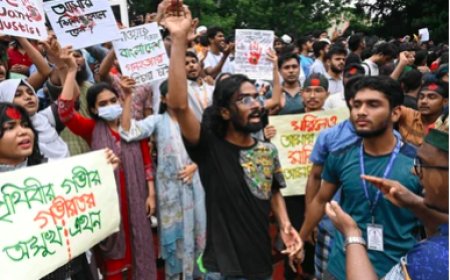
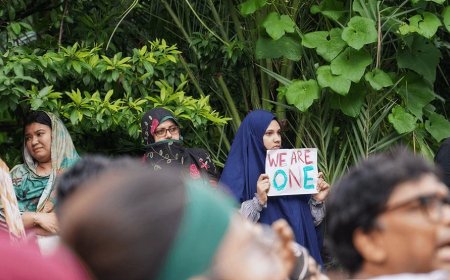
Had Begum Rokeya been alive to see the name “Oborodhbasini”, the platform through which female students are challenging these restrictions, perhaps she would have recognized the continuity before she noticed the novelty.


What does a university believe its adult female students to be: Autonomous citizens, or a category of people still under guardianship, whose movement may legitimately be controlled in the name of their own safety?
A remark attributed to Dhaka University’s acting proctor, Mohammad Israfil Prang, has made me think particularly hard about that question: “No woman in my family stays outside after 10pm.”
There is something curiously mysterious about 10pm. If a woman is a responsible adult citizen at 9:59, what constitutional transformation occurs at 10:01 that means she can no longer be trusted to decide when to return to her own hall of residence? Does the adulthood of Dhaka University’s female students expire when the clock strikes ten?
If so, perhaps the admission form should carry a small-print disclaimer: “Your adult citizenship is valid daily until 10pm.”
And if “the women in my family do not stay outside after ten” is to count as a legitimate basis for public policy, why burden the university with such an elaborate administrative structure at all? Academic Council, Syndicate, statutes, regulations and constitutional principles could be replaced by a compilation of administrators’ household routines.
One administrator’s daughters may not go out after ten; another’s may not wear jeans; a third’s may not have coffee with male classmates. The university could even give the resulting document an appropriately bureaucratic title: Personal Household Values-Based Higher Education Policy.
An individual is entitled to decide what values and routines are appropriate within his or her own family. But the time at which the women in a proctor’s family return home cannot become a principled, legal or constitutional standard for determining the freedom of thousands of adult women at a public university.
A university administration is not a family guardian. A proctor is not a student’s father, brother or husband. Female students did not enrol at Dhaka University in the relational category of "somebody’s mother or sister." They enrolled as students, adults and citizens.
The language of “our mothers and sisters” may sound affectionate and respectful, but it carries a deeply paternalistic politics. It has the sentimental quality of an old Shabana film: Protective, emotional, morally reassuring. Yet there is something remarkable about our cultural ability to transform an adult university student from a citizen into a “mother or sister” the moment her autonomy becomes inconvenient.
One of the great administrative tragedies of women’s freedom in Bangladesh is perhaps that women are sometimes “respected” so intensely that there is little room left for them to be free. We will place a woman on a pedestal, protect her, honour her and guard her -- we simply will not let her step down from that pedestal long enough to make decisions about her own life.
The constitutional issue is therefore not peripheral. Articles 27 and 28 of the Constitution of Bangladesh establish equality before the law and prohibit discrimination on grounds including sex; Article 28(2) specifically states that women shall have equal rights with men in all spheres of the State and public life.
Article 31 protects the right to be treated in accordance with law, Article 32 protects life and personal liberty, and Article 36 recognises freedom of movement, subject to reasonable restrictions imposed by law in the public interest.
Against that constitutional framework, an administrative argument that amounts to “but the women in our family do not go out after ten” would make a fascinating case study for law students: When governing a public institution, which should carry greater weight -- the Constitution or the house rules?
None of this means that residential halls should operate without rules. A university hall is not a hotel. Collective residential life requires access controls, visitor policies, identity verification, safeguarding arrangements and clear emergency procedures. But reasonable regulation and gendered paternalism are not the same thing.
If female and male students bear substantially different restrictions and burdens on their movement, the conversation cannot end with “that is the hall rule”. We should ask what objective purpose the distinction serves, whether it is necessary and proportionate, whether it is supported by evidence, and whether the same safety objective could be achieved through less restrictive means.
There is also a more basic question: What exactly happens after 10pm?
If safety is the genuine rationale, a curfew is a peculiar definition of protection. Closing a gate does not make a campus safe. Indeed, forcing a woman who returns late to wait outside a locked hall while hoping that a floor teacher or hall administrator answers the phone may increase rather than reduce her vulnerability.
A measure that makes a woman less safe in the name of keeping her safe deserves to be examined as a mechanism of control, not automatically celebrated as a safety policy.
Consider ordinary university life. One student may be in the library working on her thesis or research. Another may be rehearsing for a play. Someone may be taking part in a debating competition, attending a departmental seminar or working as a private tutor to finance her education.
Another may be doing journalism, participating in a political or cultural organization, or accompanying a sick friend to hospital. And then there is Dhaka traffic, a reality capable of defeating the most carefully planned timetable. Which of these activities suddenly becomes morally suspect after ten?
A male student at the same university may remain in the library late, spend time with friends, attend political meetings or take part in cultural activities. His nighttime campus life, friendships, networking, politics and intellectual exchange are understood as part of university life.
If a woman must organise her academic and social existence around returning to her hall by ten, however, we are not merely restricting her movement. We are narrowing her university experience, social capital, professional networks, cultural participation, political participation and citizenship in public space.
I say this not as an abstract observer. I studied at Dhaka University and lived in university accommodation. I understand why residential communities need rules.
But having lived within that institutional world also makes the distinction between regulation and guardianship particularly important to me. University residence should teach adults how to inhabit a community responsibly; it should not require women to rehearse permanent dependence.
Inequality does not stop at the hall gate. Its consequences can travel into future opportunities. Feminist geography has long drawn attention to a simple but powerful fact: space is never entirely gender-neutral. Power operates through who may go where, at what time, for how long, and who must explain or justify their presence.
If we accept “the night is unsafe for women” as an immutable social fact, we do not solve the problem; we institutionalise it. Instead of making public space safe for women, we remove women from public space.
Harassment? Send the woman indoors.
Unsafe transport? Tell the woman to return earlier.
Inadequate campus security? Lock the women’s hall gate.
The potential perpetrator’s mobility remains intact; the potential victim receives the curfew.
That is not the politics of safety. It is victim management.
This is where constitutional equality becomes especially important. If a public institution creates materially different degrees of freedom for women and men, formal equality -- “they are all university students” -- is not enough. We must examine who actually bears the burden of the institutional rule.
If one student’s university life is built around largely unrestricted adulthood while another’s adulthood is repeatedly made permission-dependent, equality is not merely an abstract legal question. It becomes an everyday institutional one.
This also brings me to my strongest objection concerning the role of a proctor. Dhaka University’s own published description of its proctorial system states that the Proctorial Team is responsible for the “discipline and conduct” of students on the university campus outside the residential halls.
The proctor’s institutional function is therefore about discipline, conduct and campus order. It is not to become the moral guardian of adult students or to determine the boundaries of their adulthood according to personal family norms.
The responsibility is even greater when the administrator is also a teacher. A university is where students should gradually learn to exercise judgement, question authority, manage disagreement and take responsibility for their own decisions. It is precisely the kind of institution in which guardianship should gradually give way to citizenship.
Dhaka University’s own historical account describes democratic norms and autonomy as integral features of the institution following the 1973 University Order. If, in 2026, an administrative argument about an adult woman’s freedom ultimately comes down to “the women in my family do not do this”, we should ask what we think a university is for.
Is it an institution for developing autonomous citizens, or an enlarged family home in which an administrator’s private household values determine the boundaries of adulthood, autonomy and freedom for thousands of other adults?
I would rather hear a proctor ask different questions.
Can female students return safely to their halls after ten? Which areas of the campus are poorly lit? Is there adequate security patrol? How can safe late-night transport be provided? Is the harassment-reporting system effective?
Why should emergency entry depend on whether a teacher happens to answer a telephone? Could digital access or registration be introduced for students returning from late academic, research or cultural activities? Could the university sit down with female students and design an evidence-based, gender-sensitive policy with them rather than for them?
Those are questions for a proctor. “What time do the women in my family come home?” is not.
Nor should blanket prohibition be the only administrative imagination available for female relatives visiting halls, students entering halls other than their own, or non-residential students seeking access.
Identities can be verified. Visitors can be registered. Designated common areas can be established. Emergency exceptions can be created. Digital entry records can be maintained. Risk management means identifying the source and degree of risk and responding proportionately. Locking everyone out is not sophisticated security policy.
Across South Asia, ideas of female respectability have long been tied to spatial discipline: where a “good woman” goes, whom she goes with, what she wears, how long she stays outside and when she returns home all become material for judging her character.
When a man comes home at midnight, the question may be, “Why are you so late?” When a woman returns at the same time, the question can quickly become, “What were you doing outside so late?”
The clock is the same. Citizenship is the same. The moral judgement is not.
We tell women: Study, research, lead, understand politics, debate, participate in cultural life, become public intellectuals, change the world. Then, at ten o’clock, we tell them: Come back to the gate; your allotted time for changing the world is over.
Had Begum Rokeya been alive to see the name “Oborodhbasini”, the platform through which female students are challenging these restrictions, perhaps she would have recognized the continuity before she noticed the novelty.
Once, women’s confinement to the inner quarters was justified through honour and safety. A century later, the vocabulary has been modernized: Policy, discipline, safeguarding, security. The software has been updated; the operating system looks remarkably familiar.
Concerned about women’s safety? Good. But why make women’s safety and women’s freedom adversaries?
Keeping women safe is the responsibility of the state and its institutions. Restricting women’s freedom as the price of that safety is not protection; it is control. If the night is unsafe for women, make the night safer. If there is harassment, act against harassers. If the campus is dark, improve the lighting. If transport is unsafe, provide safer transport. If security is weak, strengthen it. If emergency response fails, fix it.
Do not remove women from public space and then declare the space safe.
Closing a gate is easy administration. Making a campus safe is difficult governance. A teacher should not be remembered for closing doors on students; the intellectual purpose of teaching is to open them. And a proctor’s success should not be measured by how many women have been placed behind a gate by ten o’clock.
The achievement is something much harder: Whether, after ten, the university can still keep its female students safe, free and equal.
A curfew requires a clock and a lock.
A safe, equal and free university requires governance.
Dr. Lubna Ferdowsi is an academic and researcher based in England.