






























































The Missing Weapon in the Fight Against Crime
Creating jobs, then, isn’t only economic policy. Done alongside effective law enforcement, it is a policy for dignity, social stability, and ultimately crime prevention. One hand must enforce the law. The other must build something worth not risking.

There is a Bengali saying: “Abhabe manusher swabhab noshto hoy” -- poverty can corrupt human character. I would not take that literally. Poverty does not make people criminals and millions of Bangladeshis living in poverty prove every day that dignity, honesty and resilience have nothing to do with income.
But the saying captures something real: When people live under prolonged economic pressure and see few legitimate ways to improve their lives, the conditions that can increase the risk of crime get stronger. That is why Bangladesh’s debate about crime needs to move beyond policing and punishment.
Crime has many causes -- revenge, anger, substance abuse, family breakdown, peer influence, mental-health problems and weak enforcement. Economic deprivation and unemployment matter too, particularly for property and street crime.
A study of prisoners at Jamalpur District Jail, for example, found poverty, unemployment and inequality among the economic factors associated with criminality there. But the argument has to stay narrow.
Most poor people do not commit crimes and poverty cannot explain organized extortion, political violence, corruption or sophisticated criminal networks. Those involve power, institutions and enforcement failures that require a different kind of response.
What follows is a more modest claim: Expanding legitimate economic opportunity can be one layer, among several, of crime prevention.
Employment Problem a Social Problem
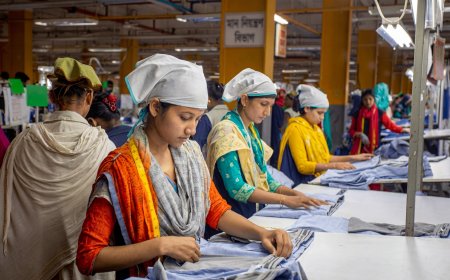
Bangladesh is facing a serious employment challenge. The World Bank’s Bangladesh Poverty and Equity Assessment 2025 found that half of young people aged 15–29 are working in low-paying jobs, pointing to a significant skills mismatch.
Manufacturing job creation has stagnated, while women and young people have been particularly affected.
The problem isn’t only that there are too few jobs -- it’s that the jobs being created often don’t match the skills people have, or the aspirations their education has given them.
Our education system has long rewarded academic credentials far more than practical skills. A university degree is often treated as a pre-requisite for social respect, while vocational training is treated as a fallback. That’s a mistake.
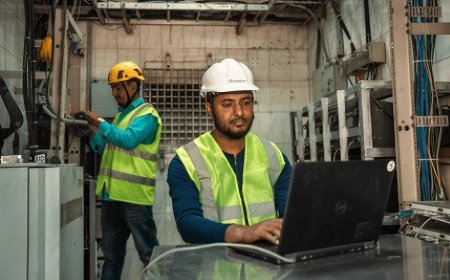
A young electrician or welder with steady work and a future is not less successful than a graduate holding a certificate with no marketable skill behind it often, the opposite is true.
But simply expanding technical and vocational education won’t fix the problem on its own. The deeper problem is the weak link between education, industry and the labour market. The World Bank has pointed to this mismatch, arguing that training needs to become more market-driven and job-relevant, with stronger collaboration between industry and training institutions and more apprenticeships.
We should stop measuring success by how many people finish a training course and start measuring it by how many are still employed six months or a year later. There is already evidence that this approach can work.
Under the World Bank-supported RAISE program, more than 17,200 young people had completed an apprenticeship by early 2025, and almost 90% of them were employed or running their own microenterprise.
The programme had also supported nearly 115,000 microentrepreneurs. That is the kind of employment policy worth scaling.
Take Opportunity Beyond Dhaka
Part of the solution is geographical. Too many opportunities remain concentrated in Dhaka. Young people leave villages less because they want to live in an overcrowded capital than because they see few alternatives.
Bangladesh needs to invest far more aggressively in productive rural economies not by pushing more people into low-productivity farming but by bringing landless and poor families into transparent schemes involving cooperatives, contract farming, modern cultivation and genuine market access.
Our neglected canals and water bodies are another underused resource. Restoring them could improve drainage and the environment while opening up opportunities in fisheries and aquaculture, provided local communities have a meaningful role and there are transparent rules to prevent elite capture.
There is also real potential in agro-processing. Instead of selling raw agricultural output for the smallest possible margin, rural communities could take part in processing, packaging, storage and distribution.
The principle is simple: people should not have to move to Dhaka simply to find a livelihood.
Give the Poorest a Way In
For the poorest citizens, the first step may not look like a conventional office job. Cities need cleaners, waste-management workers, maintenance workers and drainage crews.
Municipal governments could expand these services and, in doing so, create dignified work for people with limited formal education. But these programmes cannot become welfare schemes wearing a productivity costume.
They need training, clear responsibilities, fair wages and outcomes that can actually be measured. Small businesses offer another way out of extreme economic vulnerability -- a repair shop, a food business, a transport service or a small agricultural enterprise, built on some training, modest capital and access to a market.
But we should be wary of treating microcredit as a magic fix. Capital without skills, mentoring and market access can simply produce debt. Programs that combine training, finance and business support, as RAISE does, are far more promising than credit alone.
Good Ideas Can Fail Without Good Governance
There is an uncomfortable part of this discussion that cannot be skipped. Land given to poor families can become a vehicle for patronage. Public hiring can become political hiring. Canal restoration can become a procurement racket. Training programs can produce certificates instead of jobs.
These are real governance risks in Bangladesh. So job creation has to come with institutional reform attached:Transparent selection of beneficiaries, merit-based recruitment, publicly auditable contracts, training providers judged on actual employment outcomes, and communities with a meaningful ability to monitor publicly funded projects.
Without those safeguards, even a well-intentioned employment programme can become another way to move public money around without creating anything that lasts.
What About Crime Itself?
It’s worth separating different kinds of crime. A young unemployed person stealing or snatching for quick cash is not the same phenomenon as an organized extortion network controlling a neighbourhood. Poverty and unemployment may help explain the first far better than they explain the second.
Dismantling criminal syndicates requires stronger policing, intelligence, financial investigations, functioning courts and political accountability.
No employment programme will do that work. But that doesn’t make employment policy irrelevant to public safety. It simply means that crime prevention needs several tools working at different levels at once, rather than one lever pulled harder.
We Need Two Hands
Bangladesh needs effective police, functioning courts and predictable enforcement of the law. Criminal acts must have consequences.
But if the goal is to prevent more young people from drifting into petty and street-level crime, we also have to ask what legitimate alternatives actually exist for them.
A young person with a marketable skill, real access to employment, a realistic chance of starting a business and a genuine reason to believe that hard work can improve their life has more to lose by breaking the law than someone who has none of those things.
That is the opportunity worth building. Poverty doesn’t make anyone immoral and unemployment doesn’t make anyone a criminal. But prolonged deprivation and hopelessness can narrow the space in which people get to make choices.
Creating jobs, then, isn’t only economic policy. Done alongside effective law enforcement, it is a policy for dignity, social stability, and ultimately crime prevention.
One hand must enforce the law. The other must build something worth not risking.