

































































The World at War. And What it Means for Bangladesh.
Bangladesh has already felt this reality directly -- fuel prices have risen sharply, garment factories have faced shortages and canceled orders, and foreign-exchange pressure has intensified, all within the same few weeks.

In September 2026, the United States sanctioned Russia's VTB Bank, passed new legislation authorizing tariffs on major buyers of Russian energy, and watched Russia and China block a UN mechanism that had monitored sanctions on Iran.
Each of these events made headlines as a story about Washington, Moscow, Beijing, and Tehran. But the more important story is happening far from any of those capitals. It is happening in Bangladesh, where fuel prices have risen, garment factories have faced power shortages, and the foreign-exchange reserves needed to pay for imported energy have come under fresh pressure.
The lesson of September 2026 is not simply that Russia and Iran face new punishment. It is that geo-political conflict now travels through energy markets, banking networks, shipping routes, and insurance systems with a speed and reach that even bystander economies cannot escape.
For Bangladesh, a net energy importer with an export-driven economy, this is not an abstract risk. It is already a daily reality.
From country sanctions to network sanctions
The most significant feature of the current sanctions environment is that it no longer targets only the country in its crosshairs. It increasingly targets the financial, commercial, and logistical networks that keep a sanctioned economy connected to the rest of the world.
On September 14, the United States sanctioned Russia's VTB Bank for allegedly helping Iran evade its own sanctions, citing relationships with sanctioned Iranian banks and financial channels linking Moscow and Tehran.
VTB was already under heavy sanctions because of the war in Ukraine, so this new action shows something important -- sanctions are being layered, one on top of another, across an interconnected web of institutions. For Bangladesh, this distinction matters more than the VTB case itself.
Bangladeshi firms do not need to trade directly with VTB, Russia or Iran to feel the consequences of such measures. Risk can travel through correspondent banks, shipping companies, insurers, commodity traders, refineries and payment intermediaries; any link in a long chain that ordinary businesses rarely think about.
A Bangladeshi importer may be conducting a completely legitimate transaction and still discover that a bank somewhere in the payment chain has become cautious, or that an intermediary further down the line has some connection to a sanctioned entity.
This is a new kind of exposure. It is not about whether Bangladesh trades with a sanctioned country. It is about whether a transaction, several steps removed, quietly touches something sanctioned along the way.
The Russia-China veto of UN monitoring on September 17 adds another layer to this picture. Russia and China opposed continuing independent verification of Iran sanctions, while Western governments argued such monitoring remained essential.
For Bangladesh, the broader lesson is that international rules cannot always be assumed to operate uniformly across geopolitical blocs, a reality that argues for maintaining strong relationships across multiple centers of economic power, rather than allowing economic dependence to harden into political alignment.
A law that could reach beyond Russia
The second major development is legislative. On September 18, the United States passed a law giving the president authority to impose tariffs of up to 100% on countries that are major purchasers of Russian oil and gas, or that help Russia evade sanctions.
It is worth being precise about what this law does and does not do. It does not automatically punish every country that buys Russian energy. It gives the president the authority to do so. That distinction should not be a source of comfort.
For Bangladesh, the immediate question is not whether it will be hit with a tariff tomorrow; Bangladesh buys very little Russian energy and is not a likely early target. The deeper question is whether the global economy is shifting toward a system in which energy-purchasing decisions can generate consequences far beyond the energy sector itself.
A country might buy fuel from a particular supplier for entirely rational commercial reasons, only to find itself facing pressure in a completely different market- its garment exports to the West, for instance- because of that supplier's identity.
For an economy like Bangladesh's, where competitiveness depends heavily on continued access to Western markets, this is a new category of strategic risk.
Why energy is the strongest transmission channel
Of all the ways this new sanctions architecture could affect Bangladesh, the strongest channel may well be energy prices rather than banking rules. Russia remains one of the world's largest energy producers, and the Middle East remains central to Asian oil and gas supply.
When geopolitical tension disrupts either of these systems, the effect on prices is immediate. Reuters reported that Asian LNG prices climbed to nearly $30 per million British thermal units in mid-September, driven by disruptions connected to the Gulf and the Strait of Hormuz.
This matters enormously for Bangladesh because imported energy is not confined to one sector of the economy. It powers electricity generation, manufacturing, transport, agriculture, logistics and household consumption all at once.
A rise in the international price of oil or LNG therefore does not stay contained as an "energy problem." It becomes an inflation problem, a foreign-exchange problem, an industrial-competitiveness problem, and a fiscal problem, all at once, because so much of the economy depends on the same imported input.
Geography is destiny
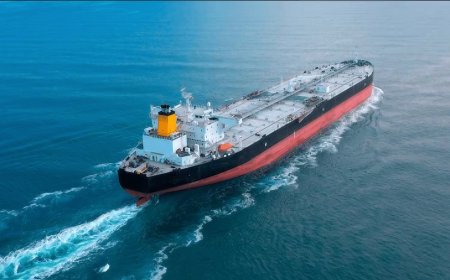
Bangladesh's vulnerability becomes especially clear when the conversation turns from suppliers to routes. Bangladesh's energy minister said in April 2026 that roughly 20 to 23% of the country's imported fuel passes through the Strait of Hormuz, with crude oil drawn mainly from Saudi Arabia and the UAE.
Even if these suppliers remain entirely willing partners, a disruption along the maritime route connecting them to Bangladesh can raise freight costs, increase insurance premiums, or delay shipments outright.
This distinction between supplier diversification and route diversification deserves far more attention than it currently receives in Bangladesh's energy planning; a country can diversify its supplier list and remain dangerously exposed if all of them rely on the same vulnerable shipping corridor.
Bangladesh's location between South and Southeast Asia does offer real alternatives here; its existing fuel trade already draws on India, China, Singapore, Malaysia, Indonesia and Gulf suppliers; but realizing that advantage requires deliberate investment in ports, storage, pipelines and regional trading arrangements, not simply hoping the geography works itself out.
LNG - a compounded and shifting vulnerability
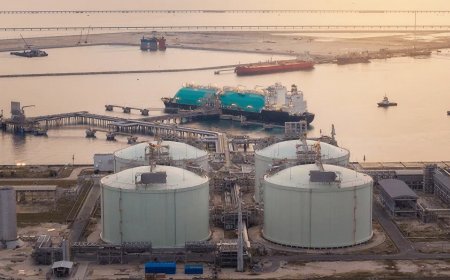
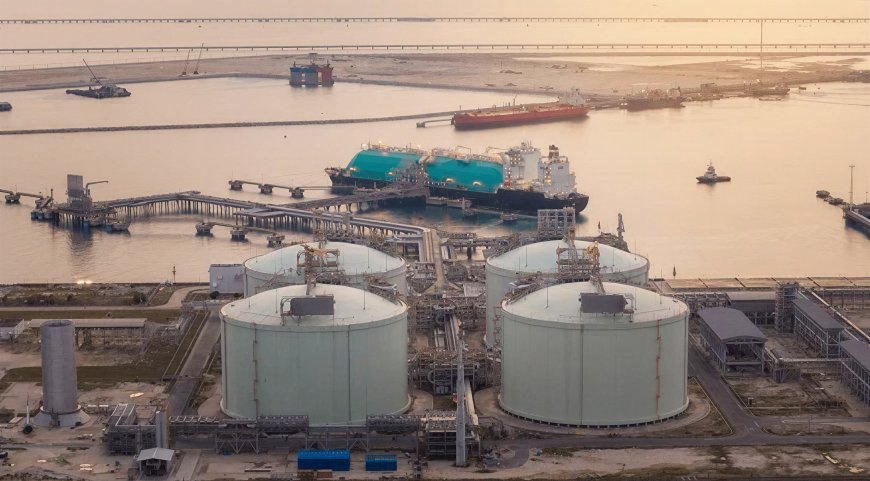
If oil represents one axis of Bangladesh's exposure, liquefied natural gas represents a more complicated one. As domestic gas production has declined, Bangladesh has grown steadily more reliant on imported LNG to keep its power plants and factories running.
The World Bank has flagged that this reliance, combined with global market volatility, pressures both supply reliability and foreign-exchange reserves, a concern already realized when an LNG terminal shutdown coincided with the wider Middle East crisis to produce real domestic gas shortages.
Bangladesh's energy security now rests on several moving parts - physical infrastructure, foreign currency, international shipping, contract terms, terminal capacity, and geopolitical stability.
A weakness in any one can ripple through the entire system. There is a structural response already underway globally that offers Bangladesh both opportunity and complication.
Buyers across Asia are increasingly looking beyond traditional Middle Eastern suppliers toward North America, Australia, West Africa and Indonesia, and Reuters reports Bangladesh is among the countries exploring greater supplier diversity. But LNG from more distant suppliers often means longer shipping distances and higher baseline costs.
Bangladesh needs to clearly distinguish what is cheap under normal circumstances from what is resilient during a crisis. The cheapest supplier on paper is not necessarily the lowest-cost option once disruption, insurance, shipping delays and emergency spot-market purchases are factored in.
What India's dilemma teaches Bangladesh
India offers the clearest regional illustration of the tension this new sanctions architecture creates. Russian crude now accounts for more than forty percent of India's oil imports, according to Reuters, placing India in a genuinely difficult position between the economic benefits of continued Russian purchases and the risk of tariff exposure to its substantial trading relationship with the United States.
India's public response has been notable for its balance -- officials have emphasized the government's responsibility to protect the energy security of its population, while signaling they are carefully examining the new US law rather than treating it as forcing an immediate break with either Moscow or Washington.
This illustrates an important principle - preserving policy space and avoiding premature commitment to a single geopolitical position, without lapsing into passivity. India has continued to defend its interests and engage Western partners simultaneously, rather than simply staying quiet.
A second, more technical lesson is that diversification is not the same as sudden substitution. India's large-scale Russian oil purchases have been built up around specific refinery configurations, pricing arrangements and established commercial relationships over time.
Removing that source abruptly could raise costs even where alternative crude is technically available, because the infrastructure and contracts built around the existing relationship do not disappear overnight.
Bangladesh's situation differs in scale; its oil imports already come from a mix of Middle Eastern and Asian suppliers, and refined products arrive from Singapore, Malaysia, India, China, Indonesia and others.
The lesson for Bangladesh is therefore not to copy India's specific approach toward Russia. The broader principle is that Bangladesh should avoid becoming structurally dependent on any single source, route, currency, or market mechanism, because unwinding that dependence under pressure is far costlier than never allowing it to form.
When energy insecurity becomes industrial insecurity
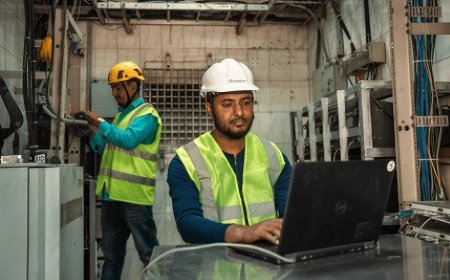
The consequences are not theoretical for Bangladesh's manufacturing base. Reuters reported that 78% of surveyed knitwear factories experienced partial stoppages amid recent energy shortages, and that 55% had experienced canceled or reduced orders.
Given that the garment sector accounts for more than eighty percent of Bangladesh's export earnings and employs roughly four million workers, this is not a marginal statistic.
It is a direct line from geopolitical sanctions policy in Washington to a shortage of gas pressure on a factory floor in Bangladesh, and from there to a lost export order and a worker's reduced income.
Bangladesh cannot afford to treat sanctions and geopolitical energy disruption as distant foreign-policy matters. In practical terms, energy security and export strategy are the same policy problem viewed from two different angles.
The hidden foreign-exchange dimension
There is a further vulnerability that deserves more attention than it usually receives -- Bangladesh pays for nearly all of its imported energy in foreign currency, primarily dollars.
The World Bank has specifically identified energy-market volatility as a source of pressure on Bangladesh's reserves and public finances. This creates a self-reinforcing mechanism during a crisis.
Geopolitical disruption pushes up oil and LNG prices. Higher prices increase Bangladesh's import bill. The larger bill increases demand for dollars. Tighter foreign-exchange availability makes it harder to finance the next round of energy imports. And expensive energy then raises domestic production and transportation costs across the wider economy.
Energy diversification, in other words, cannot be separated from foreign-exchange risk management. They are, in effect, the same exercise viewed through different ministries.
Sanctions compliance as national capability
The VTB case illustrates a structural shift in how sanctions are enforced -- banks are increasingly used as the instruments through which geopolitical restrictions are applied.
For Bangladesh, this creates a genuine need for stronger sanctions-compliance capacity across banks, exporters, importers and shipping companies.
A Bangladeshi firm could be conducting an entirely ordinary commodity transaction and still encounter payment delays or insurance complications simply because of an intermediary elsewhere in the chain.
Trade compliance, once treated as a narrow regulatory function, is becoming a genuine component of national economic security.
A framework for diversification that actually works
Bangladesh does not need to build resilience from zero. Its existing procurement structure already draws refined fuel from China, India, Malaysia, Indonesia, Thailand and the UAE, and it has shown the ability to increase purchases from alternative suppliers during past disruptions.
The task is to convert this improvised diversification into something permanent and structured. That means measuring exposure not just by counting suppliers, but by tracking concentration across shipping routes, refineries, LNG terminals, currencies, financing institutions and export markets simultaneously, supplier, route, contract, infrastructure, financing and technology diversification together, rather than separately.
It also means evaluating energy procurement on a risk-adjusted basis rather than by lowest price alone. A cheap supply route that depends on a single vulnerable chokepoint can become extraordinarily expensive precisely when a crisis hits; a cheap spot-market cargo can become unavailable exactly when it is needed most.
Factoring in shipping cost, insurance, route vulnerability, sanctions exposure and the probability of disruption gives policymakers a legitimate basis for paying a modest premium for resilience, rather than discovering the true cost only after a crisis has already begun.
Strategic reserves are central to this logic. Bangladesh moved in July 2026 to procure an additional 480,000 tonnes of fuel oil, working toward a ninety-day reserve target, reserves that function not as an emergency stockpile alone, but as a macroeconomic shock absorber that buys time to negotiate alternatives rather than forcing purchases at the worst possible price.
Renewable energy as geopolitical insurance
The current crisis also changes how Bangladesh should understand renewable energy in its strategic thinking. Bangladesh cannot eliminate its reliance on imported hydrocarbons immediately. Still, every unit of reliable domestic solar, wind, or storage capacity that displaces imported fuel reduces the country's exposure to international commodity prices and geopolitical disruption.
Reuters has already highlighted a Bangladeshi garment supplier that maintained uninterrupted production during the recent crisis partly through its own solar generation.
The strategic case for renewables in Bangladesh should therefore extend well beyond emissions reduction.
Domestic renewable generation functions, in effect, as a form of geopolitical risk insurance - the greater the share of energy Bangladesh produces at home, the less vulnerable its industrial economy becomes to sanctions, shipping disruptions, foreign-exchange shortages, and international price shocks. T
rade policy cannot be separated from energy policy. The new US sanctions architecture matters for Bangladesh's trade strategy as well as its energy strategy, because the two are becoming inseparable.
If secondary tariffs begin to target countries that purchase energy from sanctioned states, countries with substantial export relationships with the United States must increasingly weigh the interaction between energy procurement decisions and market access.
Bangladesh therefore needs a more integrated approach, one in which energy policy, export policy, sanctions compliance, foreign-exchange management and diplomacy are designed together rather than in isolation.
The garment industry illustrates this clearly -- it can be affected simultaneously by domestic energy prices, international shipping costs, exchange-rate movements, and market-access conditions abroad.
Economic security, in this environment, increasingly requires treating all of these as one interconnected system.
Energy security is now national economic security
The events of September 2026 demonstrate that the architecture of international economic coercion has become genuinely networked. The United States is targeting not only sanctioned states but the financial intermediaries and third-country purchasers connected to them.
Russia and China are resisting elements of Western sanctions enforcement through the United Nations. India is working to protect its own energy and economic interests while managing exposure to the American market.
Global energy markets are absorbing the consequences through higher prices, disrupted shipping, and intensified competition for alternative supplies. This is neither full globalization nor full decoupling; it is a fragmenting system in which middle-sized, trade-dependent economies like Bangladesh can be squeezed by great-power competition without being a party to it.
For Bangladesh, the fundamental lesson is that energy security can no longer be understood narrowly, as simply the task of securing enough oil, gas, or LNG.
It is now a question of securing the country's foreign exchange, manufacturing capacity, export competitiveness, transportation system, banking channels, and diplomatic policy space, all at once. This does not mean Bangladesh must choose between Washington, Moscow, Beijing or Tehran, few expect, or need, that kind of stark choice.
It means ensuring that no single supplier, route, bank, currency or geopolitical relationship becomes so indispensable that it constrains Bangladesh's ability to protect its own interests when the next crisis arrives.
Bangladesh has already felt this reality directly -- fuel prices have risen sharply, garment factories have faced shortages and canceled orders, and foreign-exchange pressure has intensified, all within the same few weeks.
The task now is to convert that lived experience into a durable, integrated national strategy, rather than treating each new shock as a surprise to be managed after the fact.
Simon Mohsin is a Political and International Affairs Analyst and a Research Fellow at Bangladesh Neeti Gobeshona Kendra.