
































































The Useful Idiots of Empire
When Global South outlets amplify that framing without question, they become complicit in a propaganda architecture they did not build and do not control.

It is 12:50 PM in a newsroom somewhere in the Global South. The screens glow. A Reuters wire drops. The headline: "How a billion-dollar sanctions dodge kept Chinese goods flowing to Iran." An editor, pressed for time and short on foreign desk staff, does what comes naturally. Copy. Paste. Publish. The reflex fires before the brain catches up.
This scene repeats itself thousands of times a day, in Dhaka and Dakar, Jakarta and Johannesburg, Karachi and Kathmandu. It is not a story about one newspaper. It is a story about a structural condition that has colonized the editorial instincts of an entire hemisphere. And it is time we named it.
The Omission That Should Stop You Cold
Consider what that Reuters headline erases. The piece, and every Global South outlet that ran it without a second thought, conveniently forgets one verifiable, legislated fact: China's Anti-Foreign Sanctions Law of 2021 explicitly prohibits Chinese entities from complying with foreign unilateral sanctions.
Article 12 states clearly that no organization or individual may execute or assist in the execution of discriminatory restrictive measures taken by foreign countries against Chinese citizens or organizations.
This is not opinion. It is statute. It is enforceable. Chinese courts have already accepted jurisdiction over such claims and established enforceable precedent.
Then came May 2026: China's Ministry of Commerce issued its first-ever blocking order under the Rules on Counteracting Unjustified Extra-territorial Application of Foreign Legislation. The order required five Chinese firms, targeted by US sanctions over alleged Iranian oil ties, to not recognize, not enforce, and not comply with those sanctions.
What Western wires call a "secretive mechanism" or a "sanctions dodge" is, in Chinese legal reality, a lawful sovereign countermeasure. The framing is not accidental. It is foundational.
The Theory They Don't Teach You
Western media operates on an unspoken axiom: US unilateral sanctions are international law. Anything that circumvents them is, by definition, illicit. The possibility that a sovereign nation might legally prohibit compliance, that its domestic courts might actively nullify foreign extraterritorial jurisdiction, is not merely unthinkable within this framework. It is invisible.
This is media imperialism in its purest form. Scholars have documented it for decades: Western newswires dominate global information flows, and Global South newsrooms, starved of resources, bureaus, and training, republish the copy verbatim, absorbing Western frames as their own.
The result is news dependency becoming cultural imperialism. Parachute journalism strips complexity. Local context dies. The audience never learns that China's trade with Iran is not a dodge. It is compliance with Chinese law, which mandates non-compliance with foreign sanctions.
The mechanism is subtle but relentless. A wire story is not just a report. It is a frame. It tells you what to notice, what to ignore, what to fear, and what to normalize.
When a newsroom in the Global South republishes a Western wire that frames lawful sovereign countermeasures as criminal evasion, it does not just misinform. It teaches readers that their own nations' legal systems are subordinate to Washington's. It normalizes the idea that resistance to hegemony is inherently illicit.
Narrative Kills
This is not an abstract debate about media ethics. Narrative shapes reality. Narrative colonizes minds. Narrative kills.
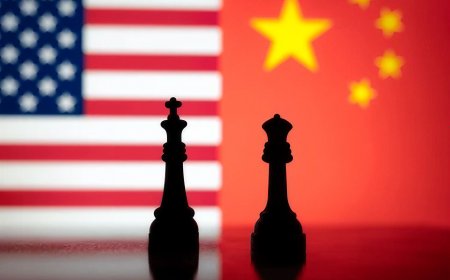
When Western wires frame Iran-China trade as a "secretive dodge," they lay the discursive groundwork for escalation: For sanctions, for interdiction, for military confrontation.
When Global South outlets amplify that framing without question, they become complicit in a propaganda architecture they did not build and do not control. The pen does not just describe reality. It builds it. And when the reflex is automatic, the empire writes your story for you.
The alternative is not complicated. It requires only that editors ask a single, verifiable question before hitting publish: Did we check whether Chinese compliance with US sanctions is legal under Chinese law? Or did we just copy-paste?
That question, simple, factual, grounded in statute, is the first step toward epistemic sovereignty. It is the refusal to let the wire service think for you. It is the recognition that the Global South does not need to see itself through the lens of the empire that once colonized it.
The Reflex Can Be Broken
The Pavlovian reflex is not inevitable. It is a habit, and habits can be unlearned. It begins with resource allocation: Investing in regional correspondents, building syndication networks among Global South outlets, and treating non-Western wires like Xinhua, Anadolu, and PTI as legitimate sources rather than curiosities.
It continues with editorial courage: refusing to run wire copy that erases the legal and political realities of the nations it claims to describe.
Most of all, it requires a shift in consciousness. The Global South is not a passive audience for Western narratives. It is a producer of its own reality.
The question is whether its newsrooms will continue to function as distribution nodes for empire, or whether they will finally become what they were always meant to be: The storytellers of their own sovereign futures.
The reflex fires. Copy. Paste. Publish. But it does not have to.
Zakir Kibria is a Bangladeshi writer, policy analyst, and entrepreneur based in Kathmandu. His email address is [email protected].