

































































The Signature That Costs More Than It Says
A nation that had waited 50 years for its first nuclear power plant was, at last, watching it breathe. Five months later, in a New York conference room, a very different signature was being applied.
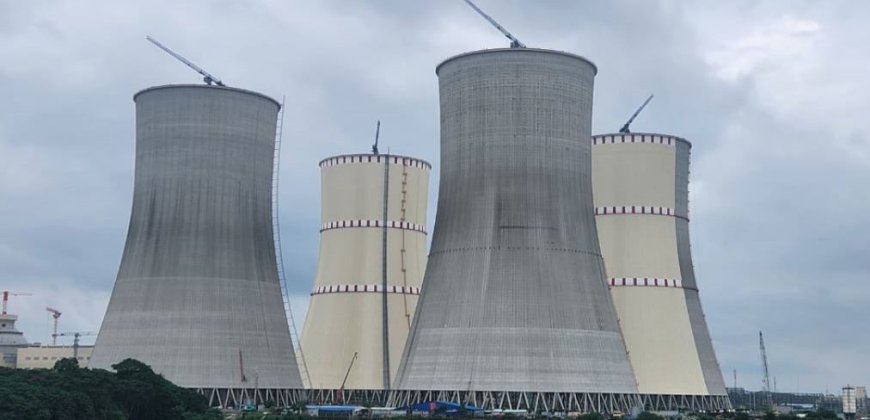
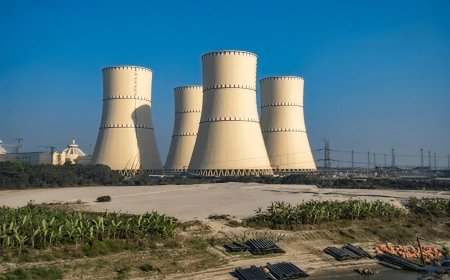
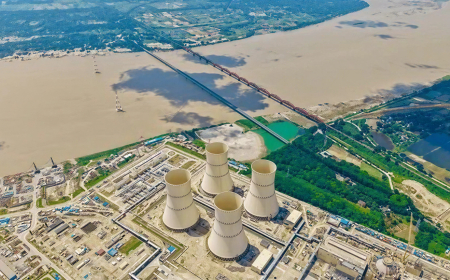
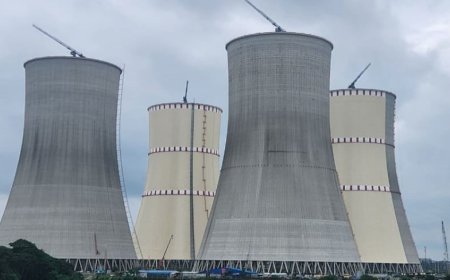
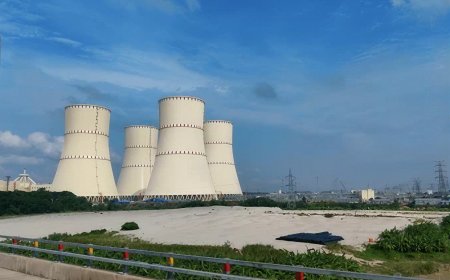
The rain came down in sheets over Ishwardi that April morning when the first fuel assemblies were lowered into the Rooppur reactor core. Green and red flags snapped in the wind. Officials in dark suits stood on a concrete viewing platform, watching the future of Bangladeshi energy descend, rod by rod, into a Russian-designed vessel on the banks of the Padma.
A nation that had waited 50 years for its first nuclear power plant was, at last, watching it breathe. Five months later, in a New York conference room, a very different signature was being applied.
Bangladesh and the United States signed a five-page memorandum, non-binding and innocuous in its language. It speaks of cooperation, of safety standards, of small modular reactors and nuclear liability. It creates no obligations. That is precisely the point.
The Lever and The Fulcrum
To understand what happened, one must understand the mechanics of leverage. A lever is useless without a fulcrum, a fixed point against which pressure can be applied. The September MOU is the lever. Rooppur is the fulcrum. And Bangladesh, for all its rhetoric of sovereignty, is the weight being moved.
The MOU itself does not halt Russian fuel shipments. It does not order the shutdown of Rooppur. It does not even mention Russia by name. But read alongside the February 2026 trade agreement, a different architecture emerges.
Under that agreement, Bangladesh secured a tariff reduction from 20% to 19% on exports to the United States, a savings of roughly $85 million annually on $8.5 billion in exports. The price of that relief is buried in the fine print: Bangladesh has agreed to limit nuclear procurement from countries that "jeopardize essential US interests."
This is not a partnership. It is a permission structure. And permission structures are not built for partners. They are built for clients.
The Grammar of Dependency
Rooppur is Bangladesh's single largest infrastructure investment: $12.65 billion, with 90% financed through a Russian loan, generating 2,400 megawatts -- enough to power 15 million households. The reactor is a VVER-1200. Its fuel assemblies are Russian-designed.
Western reactors use different geometries and enrichment specifications. Conversion is technically conceivable but economically prohibitive, requiring years of re-engineering and billions in additional capital.
The fuel contract is not a one-time purchase. It is a periodic renegotiation. Every 12 to 18 months, fresh fuel assemblies must be ordered, manufactured, shipped, and installed. Each reload is a new negotiation.
Under the new trade framework, each of those negotiations can be leveraged by Washington. The MOU does not create a veto. It creates a veto point -- a moment where Bangladesh must seek acquiescence from a third party to keep its own nuclear plant running.
When Rooppur's Unit 1 approaches its first fuel reload cycle in 2027 or 2028, Dhaka will face a choice that no sovereign nation should have to make: Negotiate with Moscow as a buyer, or with Washington as a supplicant.
The Doctrine and The Deed
Consider, for a moment, the language of the "Bangladesh First" doctrine. It was unveiled as the guiding principle of a new foreign policy: Sovereignty, dignity, development. A strategy of "active hedging," its architects declared, extracting benefits from all major powers while avoiding binding alignment with any.
India, Indonesia, Vietnam, Brazil: These are the models. Keep your options open. Give ground rhetorically but never structurally. The February trade agreement is not hedging. It is alignment.
It commits Bangladesh to purchase $3.5 billion in US agricultural products, $15 billion in US energy products, and 14 Boeing aircraft. It restricts defense procurement from certain countries. It creates a nuclear procurement mechanism that effectively excludes Russia and China from future expansion.
And it does all of this in exchange for a one-percentage-point tariff reduction and a conditional zero-duty window on garments made from American cotton.
The arithmetic is almost insulting in its asymmetry. A 1% tariff cut for the strategic freedom of generations.
The World Is Hedging. Why Isn't Dhaka?
The global order is not what it was. The definitive study on how emerging powers navigate this moment, The Hedgers, published by Cambridge University Press in March 2026, analyzes eight states from India to Indonesia, Saudi Arabia to South Africa.
Their strategy is consistent: extract benefits from all major powers while avoiding binding alignment with any. India, the "Hedger-in-Chief," imports discounted Russian oil despite US pressure, maintains its Russian nuclear and defense relationships, and simultaneously deepens technology and defense ties with Washington. It gives ground rhetorically but never structurally. It keeps its options open.
Prime Minister Tarique Rahman's first major bilateral visit was to Beijing, not New Delhi -- a deliberate signal of strategic independence. His government speaks of converting geographic vulnerability into sovereign advantage, of a "third way" that refuses to see Dhaka as a pawn. The rhetoric is elegant. The China visit was symbolically powerful. But symbols do not fuel reactors.
While the government speaks of balance, the February trade agreement and the September MOU are locking Bangladesh into a structure that makes balance impossible. When the next fuel reload comes due, Bangladesh will not be balancing. It will be asking permission.
The Physics of Sovereignty
A reactor core is a controlled chain reaction. Neutrons strike uranium atoms, splitting them, releasing energy and more neutrons. The reaction sustains itself only if the geometry, the moderation, and the absorption are precisely calibrated. Remove one element, and the chain breaks. The reactor goes dark.
Sovereignty works the same way. It is not a declaration. It is a chain reaction of capabilities: the ability to choose suppliers, to negotiate terms, to walk away from a bad deal and find another. Bangladesh's chain is being slowly broken, link by link, in the name of tariff relief and strategic partnership.
The Rooppur plant will hum to life in the coming months. Its turbines will spin. Its lights will come on. And when the first reload comes due, its fuel will depend not on the deal Bangladesh signed with Moscow, but on the permission Bangladesh seeks from Washington.
The Rogue Hegemon and The Cost of Trust
We know the United States. We have seen this film before. From the 1971 genocide, when Nixon and Kissinger sent the USS Enterprise into the Bay of Bengal to intimidate a newborn nation, to the decades of structural adjustment programs that hollowed out our public services, to the contemporary use of sanctions as a weapon of coercive diplomacy -- the pattern is not subtle.
Washington does not build partnerships. It builds hierarchies. It does not seek mutual benefit. It seeks leverage. The February trade deal and the September MOU are not aberrations. They are the latest iteration of a long tradition: extract concessions under the guise of cooperation, then use those concessions as choke points when the client state steps out of line.
The "rules-based international order" is a phrase that sounds noble in a UN General Assembly hall. In a bilateral negotiating room, it translates to: Do as we say, or we will make your economy scream.
The question for Dhaka is not whether Washington is a rogue hegemon. The evidence is overwhelming, and the historical record is clear. The question is: Why are we still signing?
A nation that has waited 50 years for a nuclear plant should not hand over the keys to its fuel cycle in exchange for a 1% tariff cut. A government that speaks of "Bangladesh First" should not be drafting MOUs that put the nation's energy future in the hands of a power that has never hesitated to use hunger, debt, and isolation as instruments of policy.
The reactor will run. The turbines will spin. The lights will come on. But the signature on that September MOU will outlast the fuel assemblies. And the question that will haunt Dhaka for decades is not whether the United States is a rogue hegemon -- it is whether Bangladesh dared to say no.
Zakir Kibria is a Bangladeshi writer, policy analyst, and entrepreneur based in Kathmandu, Nepal. He can be reached at [email protected]