



































































How Farmers Lost Their Freedom
To save agriculture, we must bring back the farmer's lost traditional wisdom. Establishing community-based seed banks at the village level to preserve indigenous seed varieties is the ultimate demand of the hour.

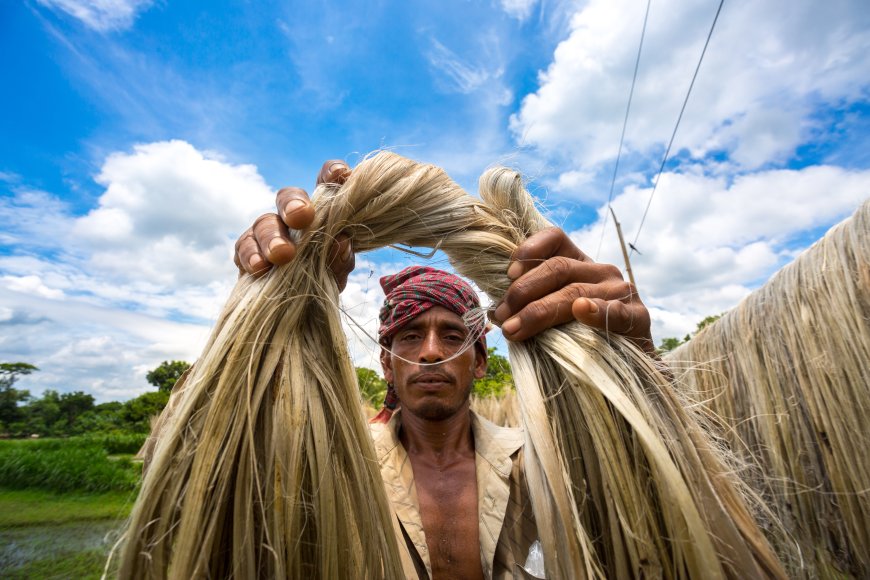
Due to various work assignments, I have been traveling across the roads and fields of the Kolkond char in Rangpur for the past few months. As I move along the paths cutting through the green fields, a sharp chemical odor constantly hits my nose.
Whenever I look at the crop fields hoping for a soothing sight, I see someone spraying fertilizers and pesticides. When asked, they say crops are highly prone to diseases, making this chemical usage necessary. They believe it causes no collateral damage.
Who is actually fooling these simple farmers?
Looking back a little, we can understand that there is no similarity left between the farming of our forefathers' era and the current system. The land deed might be kept safely in the farmer's own box. However, he no longer has any control over what he will sow on that land or what he will spray for pest control.
Once, farmers carried seeds saved from their own granaries; today they rush to corporate dealer shops. The independent farmer on his own land is practically a hostage to multi-national companies today. The vicious cycle of hybrid seeds, chemical fertilizers, and pesticides has trapped agriculture in a new chain of subjugation.
Not too long ago, the farming methods of our ancestors were entirely eco-friendly and self-reliant. Farmers had barns full of cows and granaries full of paddy.
Cow dung, water hyacinth, ash, and green leaves were applied to the land as natural manure. Earthworms and beneficial microorganisms organically dug through the soil and increased its fertility. Mixtures of neem leaves or ash were used for pest control.
One crop was sown in between another to maintain the nutritional value of the soil. The entire agricultural system was a self-sustaining cycle. In this process, farmers hardly had to spend money buying anything from the outside.
The farmer's knowledge was his biggest capital. In the name of modernization, we have dismissed that traditional wisdom as obsolete.
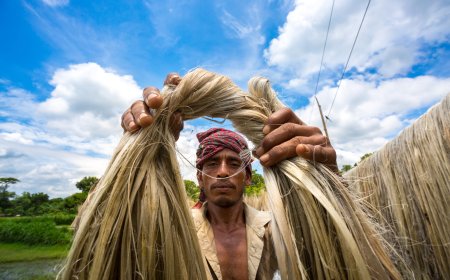
Once, a farmer's biggest strength was his seedbed. Indigenous seeds had their own vitality. After harvesting, the most nutritious part of the crop was saved for the next season. This centuries-old traditional knowledge and culture of seed preservation is almost extinct today.
Hybrid seeds have now taken full control of that space. Seeds saved from these hybrid crops lose their vigor in the next generation.
Yields fall so sharply that farmers find them effectively unusable for replanting. Consequently, farmers are forced to buy new seeds at high prices every season. Seed preservation was the main key to the farmer's self-reliance. That key is now locked in the hands of corporate syndicates.
Seeds are merely market-dependent commodities now. Taking advantage of this, a handful of multi-national companies have completely monopolized the seed market.
Modern hybrid seeds bring along a massive demand for chemical fertilizers and pesticides. One of the char residents even told me how much pleading and negotiation it takes to get fertilizer. In the neighboring area, the fertilizer crisis had even escalated into fights. As she tells me this, she lets out a deep sigh.
The vibrant soil of our forefathers' era is now addicted to chemicals. Denying the natural fertility of the soil, this process of artificially increasing yields is drying up the earth's lifeblood. Indigenous crop varieties had their own inherent immunity against diseases. Hybrid crops, however, are highly vulnerable to insects.
As a result, farmers are forced to apply expensive and toxic pesticides. Looking at marginalized farmers, it becomes evident that they often lack the minimum safety preparation for applying these chemicals. They are facing severe long-term health risks due to this toxic exposure. In many cases, once chemical fertilizers and pesticides are applied, the soil's natural fertility begins to decline.
Farmers often find they must increase the dosage each season just to sustain the same yield. By trapping the soil in these toxic chains, companies are prospering, while the marginalized farmers are becoming destitute.
The farmer's production cost is skyrocketing today. Where cultivation used to rely entirely on domestic cow dung and granary seeds, every single step now requires spending cash.
On one hand, seed prices are rising; on the other, fertilizer and pesticide costs are moving far beyond the farmer's reach. During the Boro paddy harvesting season, farmers work tirelessly in open fields, risking fatal natural disasters like lightning strikes. Even then, the sword of debt hangs heavily over their heads.
At the end of the day, when the crop hits the market, the farmer does not get a fair price. Farmers take the biggest risks in the entire crop production process.
Yet, the largest share of the profit effortlessly goes into the pockets of companies and middlemen. Despite shedding sweat on their own land, farmers' actual income is constantly decreasing. Thousands of farmers are getting entangled in insurmountable debt. Independent farmers are slowly turning into agricultural slaves of corporations.
Climate change is deepening this crisis of subjugation. Hybrid crops are easily destroyed in extreme natural disasters like droughts, excessive rainfall, flash floods, or sand deposition in riverine char areas. Our indigenous crop varieties, conversely, had much higher climate resilience.
We had hundreds of local varieties capable of surviving severe floods or droughts. By becoming completely dependent on corporate seeds, we have lost that natural protective shield. Using climate change as a convenient excuse, companies are now bringing in climate-resilient seeds in new packaging.
They have turned the farmer's crisis into a lucrative new weapon for their businesses. This is essentially a masterful corporate trade exploiting the farmer's sheer helplessness.
The path to liberation from this agricultural invasion is not entirely unknown to us. To save agriculture, we must bring back the farmer's lost traditional wisdom. Establishing community-based seed banks at the village level to preserve indigenous seed varieties is the ultimate demand of the hour.
Instead of chemical poisons, integrated pest management and eco-friendly farming practices must be widely adopted. There is no alternative to focusing on organic fertilizers to restore the natural fertility of the soil. We must awaken anew to save the very roots of our agriculture.
The farmer's liberation is not limited merely to getting a good price for their crops. Owning the land does not make a farmer free unless he has absolute rights over his seeds. Food sovereignty for farmers can never be ensured within the rigid framework dictated by multinational companies.
Now is the exact time to liberate agriculture from this market-dependent neo-colonialism and return it to true self-reliance.
AL Sharia is a columnist, environmental activist, and student of Disaster Science and Management at Begum Rokeya University, Rangpur.