























































Before Another Child Becomes a Headline
A nation is not protected merely by police stations, courtrooms and prison cells. Its deepest security is found in the trust between a child and the adults around them. If that trust collapses, no number of arrests after a tragedy can repair it.
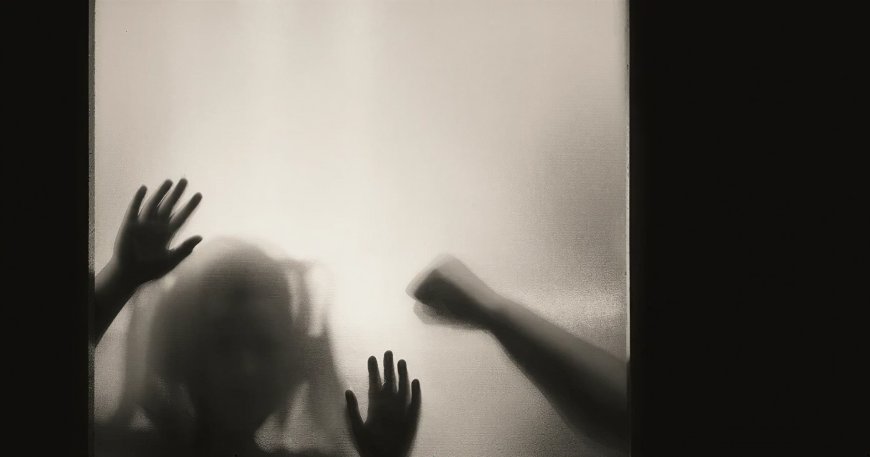
There are some deaths that do not allow a society to return comfortably to its normal life. The killing of a child is one of them. When an adult is murdered, we ask what happened, who did it and why. When a child is brutally killed, however, another question should haunt us: What kind of society allows a child to remain so unprotected?
The recent killings of children in Cumilla and Dhaka, along with repeated reports of abuse in madrasas and other institutions, should therefore not be treated merely as a series of horrifying crimes.
Each incident is different, but together they reveal something disturbingly familiar. We keep discovering, after the fact, that a child was vulnerable, that warning signs existed, that adults failed to notice them, and that institutions were often better prepared to protect themselves than the children entrusted to them.
This is perhaps the most uncomfortable truth about child safety in Bangladesh. The greatest danger to a child does not always come from a dark alley or an unknown stranger. Sometimes it comes from the person who knows the child, enters the home, teaches at the institution, lives next door or is trusted by the family.
A Daily Star report based on the 2025 News-Based Child Rights Monitoring Report found that around nine in ten documented child sexual abuse and rape cases involved familiar figures such as neighbours, relatives, teachers and religious teachers.
It also found that 66.12% of 124 documented child murder cases and 59.09% of 308 sexual abuse cases occurred inside the home or family environment. These figures should change the way we imagine danger. A child protection policy that teaches children merely to fear strangers is protecting them from only part of the problem.
The numbers tell an even larger story. Police Headquarters reported that 15,717 children were reported missing between January and July this year. Of them, 13,679 were rescued or returned to their families, while 2,038 remained untraced.
The police have also cautioned that the figures need context, particularly because online general diary services have made reporting easier and because many children are subsequently found. That caveat matters. Statistics should not become instruments of panic. But neither should statistical complexity become an excuse for complacency.
2088 children remaining untraced is not merely a number on a police spreadsheet. Behind every unresolved case is a family living with uncertainty.
Perhaps the more revealing statistic is one that receives far less attention because it does not produce a dramatic headline. UNICEF's Bangladesh MICS 2025 found that 85.7% of children aged 1 to 14 experienced violent discipline in the month preceding the survey.
This means the problem begins long before a child appears in a crime report. Violence can enter childhood through the ordinary rituals of upbringing: Shouting, humiliation, hitting and the conviction that adults possess an unquestionable right to discipline children as they please.
This is where our understanding of child protection needs to become more sophisticated. Murder, rape and abduction are the visible cliffs. Beneath them lies a much larger landscape of everyday fear, neglect, humiliation and silence.
The philosopher John Locke famously described political society in terms of a social contract designed to protect life, liberty and security.
Children, however, do not enter that contract as equal participants. They depend almost entirely on adults to uphold it on their behalf. A child cannot file a complaint, hire a lawyer, move out of an abusive household or simply decide to leave an unsafe institution.
That dependence creates a special moral obligation. When adults fail to protect children, the failure is not merely personal. It is institutional.
Hannah Arendt's reflections on responsibility are also relevant here. Societies often become accustomed to wrongdoing when responsibility is dispersed so widely that nobody feels personally responsible.
The family assumes the school will notice. The school assumes parents will know. The madrasa assumes the community will supervise. The community assumes the police will intervene. The police arrive after the crime. And the state eventually announces an investigation.
Meanwhile, the child remains somewhere in the middle of this chain.
This is why punishment, although essential, cannot be the entire philosophy of child protection. We have become accustomed to demanding exemplary punishment whenever a horrific crime occurs. That demand is understandable. Justice matters, and impunity is dangerous.
But a society that measures child protection only by the number of perpetrators arrested after a child has been killed is measuring the efficiency of its reaction, not the success of its protection.
The more important question is whether the crime could have been prevented.
Could a teacher have recognized a change in a child's behaviour? Could a health worker have identified repeated injuries? Could a neighbour have known where to report a suspicion? Could a school or madrasa have had an independent complaint mechanism? Could a social worker have intervened in a family under extreme stress? Could a child have spoken to someone without fearing punishment, disbelief or shame?
These questions take us beyond the familiar vocabulary of law and order and into the architecture of society.
Technology can help build that architecture, but technology cannot replace conscience. A properly governed national child protection information system could allow authorised professionals to identify patterns across schools, healthcare services, social workers, police and courts.
But such systems must be designed around privacy, consent, security and human oversight. A machine should never decide that a child is dangerous or disposable. It should help a trained human notice what might otherwise remain invisible.
More importantly, Bangladesh needs to make it easier for children to speak and harder for adults to silence them.
Every school and madrasa should have a credible safeguarding policy, accessible reporting mechanisms and clear procedures for responding to allegations.
Institutions should not be allowed to treat abuse as an internal disciplinary matter simply because disclosure might damage their reputation.
Families should not be pressured into silence to preserve honour. And children should never be made responsible for protecting the dignity of the adults who failed them.
The media, too, must resist the temptation to turn children's suffering into spectacle. A murdered child should not become merely another photograph, another shocking headline, another day of public outrage.
Journalism should ask what happened before the crime, what warnings were missed, which institutions failed, what happened to previous complaints and whether the same circumstances remain in place for other children.
Tagore imagined a country where the mind is without fear. For a child, that idea begins much closer to home. It begins with being able to sleep without fear, go to school without fear, speak about an uncomfortable touch without fear, make a mistake without being beaten and tell an adult that something is wrong without wondering whether the adult will believe them.
Perhaps that is the standard we should set for Bangladesh: not whether children survive their childhood, but whether they can actually feel safe while living it.
A nation is not protected merely by police stations, courtrooms and prison cells. Its deepest security is found in the trust between a child and the adults around them. If that trust collapses, no number of arrests after a tragedy can repair it.
The real test of Bangladesh's civilisation, therefore, is not how loudly we mourn a dead
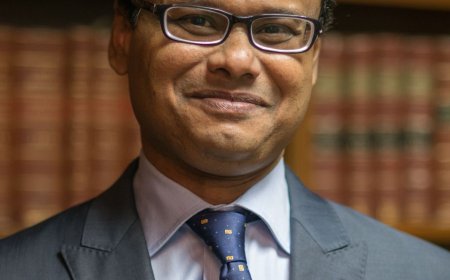
H. M. Nazmul Alam is an Academic, Journalist, and Political Analyst based in Dhaka, Bangladesh. Currently he teaches at IUBAT. He can be reached at [email protected]