




































![A Ledger of the Soul: Navigating the Allah-Bhagavant Nexus in a 19th-Century Puruṣākāra Jñāna Caupara [Gyan Chauper]](https://counterpointbd.com/uploads/images/202608/image_430x256_6a93baa3b09a7.jpg)





















Development Aid Is Not Dead. The Delivery Model Is.
Development has delivered. But its purpose has shifted. We must acknowledge the shift and use the new age of development capital to build solutions that are built by us, owned by us, and that work for us. This is not a dying industry’s last rites. It is a graduation, and we should conduct it like one.
A former member of my team called last month to ask for a job reference. She was not calm. “Aid is dead,” she said. “It is a dying sector.” She is one of thousands who can no longer find work in what we call international development. As the call ended, I wondered: Is development aid dead?
The concern about development aid money drying up has been there for the last two decades. But it got its fuel when in January 2025 the United States, under the Trump administration, suddenly declared the closure of USAID.
In 2024 the United States had given $63.3 billion in official development assistance, about 30% of what the OECD donors gave, most of it through USAID. In 2025 the agency was dismantled and American aid fell by 57%.
The OECD’s preliminary figures for 2025 show total aid down 23%, the steepest fall on record, with the United States alone accounting for three quarters of that decline.
Britain cut 11% and Germany 17%. Bangladesh felt it directly. American assistance to Bangladesh was $371 million in fiscal 2024.
Caritas counted more than a hundred suspended projects worth around $550 million in total project value over multiple years and estimated that 20,000 development workers lost their jobs. Switzerland then announced that it would close its bilateral program in Bangladesh by 2028, and began withdrawing funding by mid 2025.
Seen through that lens, development aid indeed looks dead as a doornail. But these facts describe one channel of a larger system, and the system is changing shape, not shrinking.
The World Bank committed a record $117.5 billion in its 2024 financial year and the Asian Development Bank $24.3 billion, and reforms to their capital rules will add several hundred billion dollars of lending capacity over the decade.
The Gulf funds and the Islamic Development Bank now lend more than $10 billion a year into Africa, twice their 2015 level. Bangladesh’s own accounts tell the same story: $8.6 billion of external assistance disbursed in the last fiscal year, 94 percent of it loans, against a debt service bill that has passed $4 billion.
The shape of the change is clear. The money that finances development a state owns -- roads, ports, power and embankments -- has grown, as loans.
The money that has shrunk is the grant money that paid for the layer between donor and household: the projects, the sub-grants, the country offices and the training contracts.
That layer is where my former colleague worked. So the question is not whether aid is dead but what that layer delivered, and whether its work is still relevant.
Since 2004 I have worked in different layers of development aid funding, first with aid money channelled to the private sector to build institutional capacity and create jobs, and later applying the same systems lens to extreme poverty, women’s empowerment and climate resilience.
While I have worked across the globe, I focus here on Bangladesh, where I found that development aid was doing two kinds of work.
Some was substitution: It paid for what the country could not, and its value lasted exactly as long as the money did.
Some was scaffolding: It held a function in place while a permanent owner, a ministry, a market or an institution, grew strong enough to carry it.
Scaffolding is judged by one question: When the money stopped or was withdrawn, did a Bangladeshi owner keep owning and scaling the solution, or did the solution stop altogether?
Run that test across five decades of aid-led development in Bangladesh and a pattern appears.
In the years after 1971, food aid kept the country alive, and in 1974 it taught us the price of dependence. Washington held back committed grain shipments as Bangladesh was selling jute sacks to Cuba, and by the time the ships from America resumed, the famine had taken its worst toll.
Learning from this, over the next two decades the state built its own procurement and distribution system and drove agricultural intensification until food security was domestic.
That was the first and the largest development function transferred to local institutions. We were no longer reliant on aid for food.
In the 1980s donors financed the research at icddr,b that produced oral rehydration solution, and BRAC taught twelve million mothers to mix it at home.
Donor-financed immunization rose from about 2% coverage in the mid-1980s to over 60% by the early 1990s. By then it was delivered and owned by the government.
From 1990 the money moved to last-mile social delivery where the state’s capacity was thin. Some of it built the institutional capacities of market actors.
Much more went to health, water and sanitation, nutrition, skills, women’s empowerment, gender-based violence, and climate resilience, all of which relied on aid-led service delivery. There was no institutional taker for these. They were deemed cost centres, social and not viable under commercial delivery models.
As the economy grew, exports and remittances pushed aid below 2% of GDP, and as Bangladesh approached middle-income status, bilateral agencies began to shift their cooperation strategy to aid for trade. This meant that their aid would have to bring a reciprocal trade benefit to their own people and businesses.
In my reading, most bilateral agencies were already moving this way, and the Trump administration’s withdrawal from USAID accelerated the push. But it came without a transition plan, and that is what left us scrambling for ideas.
Donor budgets redirected to defence and to Ukraine deepened the shock. The transition became too fast and too complex to navigate.
Bangladesh took pride in its immunization campaign. But in 2026 measles came back. By September the country had recorded around 170,000 suspected cases, nearly 20,000 confirmed and about a thousand suspected deaths, most of them children.
The virus found children who had not been vaccinated as the measles vaccine, with five others, had run out by March. The chain of omissions is a matter of record.
The fourth health sector program ended in June 2024. The interim government scrapped its successor in March 2025 and folded the operational plans into regular government programs.
It approved the bridging projects only in November and split vaccine procurement between UNICEF and open tender. A measles campaign due in 2024 never ran.
It took an emergency campaign with UNICEF, WHO and Gavi in April 2026 to reach 1.2 million children. The lesson is not that aid should have stayed. The lesson is that the transfer has to cover funding, procurement, and monitoring, not delivery alone.
Delivery transferred in the 1990s. The rest never did. Bangladesh leaves Gavi’s support in 2029 and still relies on the Global Fund for much of its tuberculosis budget. Without that transfer, we will have more cases like measles.
How do we proceed from here? We must understand that development aid is not dead but the delivery model we relied on is dying. Take stock of what stopped in Bangladesh when USAID stopped and what did not.
The garment factories, the remittances, the seed dealers, and the village para-vets carried on. The donor-designed projects stopped. In my first job, on agricultural value chains, we treated the poor as economic agents held back by markets that served them badly.
They bought poor quality seeds, borrowed from a mohajan and visited a quack to treat their livestock, and we connected market actors to those underserved markets. When seed companies found that training rural retailers to give cultivation advice sold more seed, the advice outlived the project.
On the river islands of the north, the livestock service providers kept vaccinating cattle after the programme closed as farmers paid them. These interventions transferred aid money into local institutional capacity, and they survived the cuts.
What is changing is the direction of the money. With the global economy ailing and geopolitics more complex than ever, development money no longer flows one way, from the Global North to the Global South. Capital, knowledge, and technology now move in all directions, and the delivery model is changing with them.
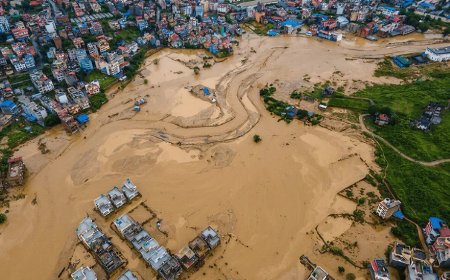
But this transactional model cannot solve every crisis, and Bangladesh must decide which donor to approach for what type of capital and result. Markets will not fund climate adaptation at the scale of embankments, drainage and planned relocation; it is a burden on Bangladesh, but Bangladesh did not cause it.
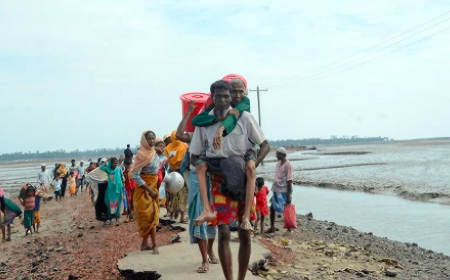
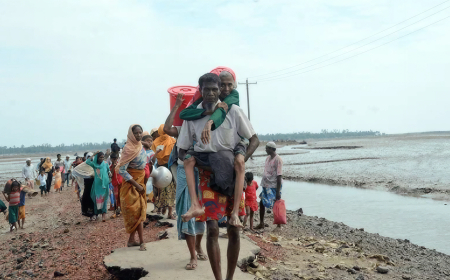
The cost of hosting a million Rohingya is an international obligation and the world should commit funds to manage the crisis. Humanitarian aid has to be sustained.
Climate adaptation and mitigation need both a market-led approach and a grant-funded approach. Health systems need grant finance for critical service delivery and for innovation, while the market uses technology to make health more affordable.
Skills, education and infrastructure should become the focus of the government and be financed through the aid-for-trade arrangements the bilateral donors now prefer.
LDC graduation is deferred, but these are exactly the areas where we need to prepare before it lands.
The task of the government is simple: categorize the development needs and define the business model for each, what problem it will solve, who will eventually own it and by when, what capacities are required for the transfer from aid reliance to a viable commercial model, and what the pathway is to reach there.
Development practitioners should understand that their skills are being repriced, not retired. Demand for last-mile delivery, community institutions and credible measurement has moved to government, climate finance, supply-chain compliance and regional work, and the way to follow it is to sell functions that work after you leave rather than workshops and reports.
Funders should judge a project by whether its work continued under a Bangladeshi owner after the money ended, not by how many people it reached. They should put their grants directly into the ministries, national NGOs, and domestic firms that will own the work.
Fifty years ago this country was called an international basket case by the same capital that is now cutting its aid. That judgement mistook a moment for a destiny, and “this is a dying sector” is wrong in the same way.
Somewhere on a char this morning a livestock worker set up by a long-closed project is vaccinating cattle for a fee, and in Cox’s Bazar refugees and their hosts are drying seaweed for a value chain that did not exist two years ago.
Development has delivered. But its purpose has shifted. We must acknowledge the shift and use the new age of development capital to build solutions that are built by us, owned by us, and that work for us. This is not a dying industry’s last rites. It is a graduation, and we should conduct it like one.
Md. Rubaiyath Sarwar is the Managing Director of Innovision Consulting and a Trustee of Panam Institute.