


























































Honouring Mohammad Rafique
While his record suggests he wouldn’t make the current team, his attitude suggests he’d be the first one picked. For cricket isn’t always just about statistics, and sometimes it is about who can move and inspire, and who can give it their all.

I have been writing about cricket since I met Indian champion Sunil Gavaskar during the 1999 World Cup, and he got me a job working for a magazine called Sportstar.
While I didn’t write a lot for Sportstar, as they only published four articles of mine in four years, it nonetheless got me started on a 27-year journey, which saw me write for magazines in India, Pakistan, England and Australia, and I also had articles appear in newspapers in New Zealand and Bangladesh, with television stations speaking about what I said in both Australia and, again, in Bangladesh.
Thus, while I’ve never written for Bangladesh before, I have some degree of connection.
Bangladesh was a country that I felt, in cricketing terms, was mistreated. I watched the 1999 World Cup match that launched Bangladesh cricket, which saw the Tigers beat a then-undefeated Pakistan, and my honest impression was that Pakistan were saving themselves for the Super 6 stage, and the upset wasn’t anywhere near as important as some within Pakistan and Bangladesh cricket, and world cricket as a whole, suggested it was.
The 1999 World Cup was set up so that the Super 6 stage would only carry forward points and net run rate from matches involving other teams who qualified for the Super 6 stage, meaning that Pakistan could lose to Bangladesh with no consequences whatsoever, and that context was somehow missed by those who celebrated the win so much that they thought that Bangladesh deserved Test status, which was granted within a year of the victory.
It’s not that Pakistan did anything wrong by slacking off in the match. It was a normal thing to do at that stage, as players were preparing for the more important Super 6 stage. In the same tournament, Australia had done a go-slow against West Indies so as to maximize their Super 6 chances, which was, of course, undone by New Zealand batting quickly enough to erode all of that effort.
To say that Bangladesh entered Test cricket prematurely is an understatement. While today they most definitely deserve to be there, in 2000 they didn’t, and it showed in their performances, when they lost to all and sundry, over and over again.
Most teams struggle when they enter Test cricket, of course, but for most teams the response would be to simply not play against them; but, thanks to Sri Lanka’s lingering disappointment at being ignored soon after they had been granted Test status, the newly empowered International Cricket Council (ICC), which had only been granted governance of the game a few years earlier in 1993, insisted that all other teams were forced to play against Bangladesh over and over again.
To say that this was bad for Bangladesh cricket, and cricket as a whole, is also an understatement, as teams sent A teams to face Bangladesh, full of their players who weren’t quite Test level, players who increasingly ended up with statistics that were boosted. Sri Lankans Kumar Sangakkara and Muttiah Muralitharan benefited from it more than most, as Sri Lanka faced and defeated Bangladesh over and over again by increasingly large margins.
If we had it to do again, we probably would have waited a few years to grant Bangladesh Test status, perhaps until 2006 or even 2008, and, once they were granted Test status, we would have naturally grown their exposure to the highest form of the game.
Just the same, it’s done now, and we have to deal with the consequences.
However, in amongst my complaints of Bangladesh being granted Test status too early, and being forced to play far too often, there were some highlights.
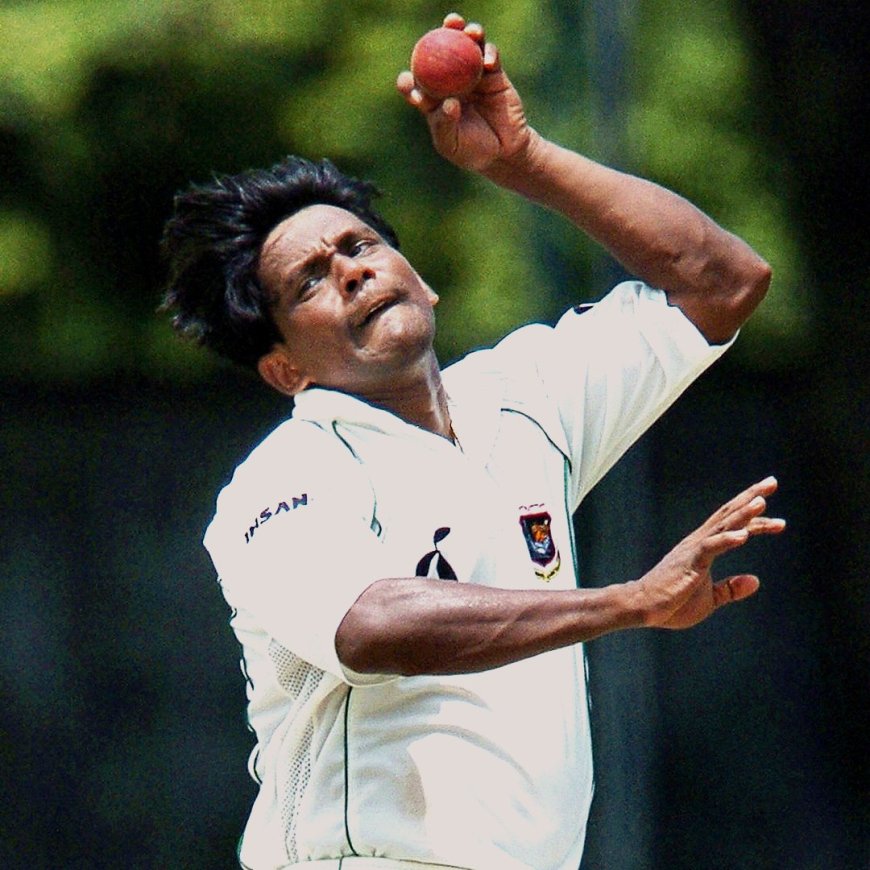
One of which was Mohammad Rafique, who turned 56 five days ago. When I first saw him play, he looked the real deal, spinning the ball with a smile on his face. He was never frustrated, never bothered, and just kept on plying his trade, often with unhelpful pitches and with a team, most of whom believed that they would lose before the game had even begun, probably because, statistically, they probably would.
The problem with losing 200 matches in a row by increasing margins is that it is hard to get motivated. And when even Bangladesh’s one great triumph, against an Australian ODI team at their peak, was overshadowed by the reality that Australia’s star player Andrew Symonds turned up drunk on the morning of the match, you know that there are problems.
Bangladesh could do well if everything went right, and it was as if they were waiting for the stars to align, when their defeatist attitude would suddenly disappear, and they would play properly.
But Rafique never acted like that. While shoulders were slumped and all around him were players who gave up, Rafique never did.
When fielders would drop his catches because mentally they weren’t really there, Rafique would smile and carry on.
His record makes him look quite ordinary, but in context he was actually quite good.
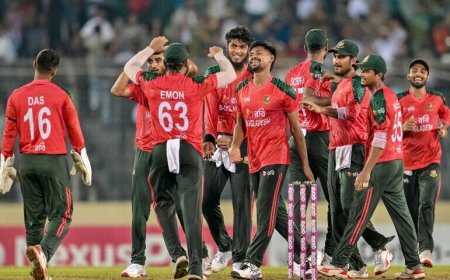
He was the kind of player that inspired others, one of the ones the team could build around. Mashrafe Mortaza was another one, and eventually Tamim Iqbal, before their greatest-ever player, Shakib Al Hasan, transformed the team, but before all of that was Rafique, a guy who just kept on smiling.
He once met the Bangladesh Prime Minister and was asked if he wanted anything, and he asked for a bridge to be built in his home village to help to take care of his people.
While some of the Bangladesh players that would follow were arrogant and self-centred, making demands and always thinking of themselves, Rafique never was.
While his record suggests he wouldn’t make the current team, his attitude suggests he’d be the first one picked. For cricket isn’t always just about statistics, and sometimes it is about who can move and inspire, and who can give it their all.
I wonder how many of the recent stars owe their own performances to the inspiration that was Mohammad Rafique.
Happy birthday, legend.