



































































Navi Pillay and the Politics of Peace
Do we seek accountability when the evidence implicates someone we admire? Do we oppose genocide consistently, or only when its perpetrators belong to the other side? The answers matter more than the ease with which we endorse justice in principle.

Does peace return when a war ends? Or does war sometimes end only on the battlefield, while the politics of power sustains its consequences through distorted history, impunity and the enforced silence of those who suffered?
For someone whose family has been killed, whose body and daily life still bear the injuries of violence, what exactly are we offering when we speak of peace? Those responsible may remain secure behind state authority, political influence or international alliances. Does peace mean the absence of gunfire, or the obligation to stop speaking about injustice?
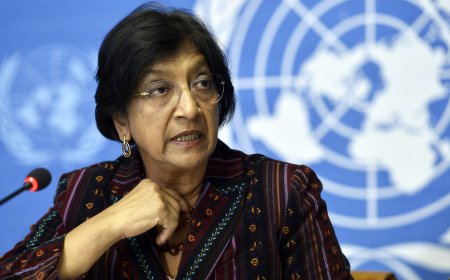
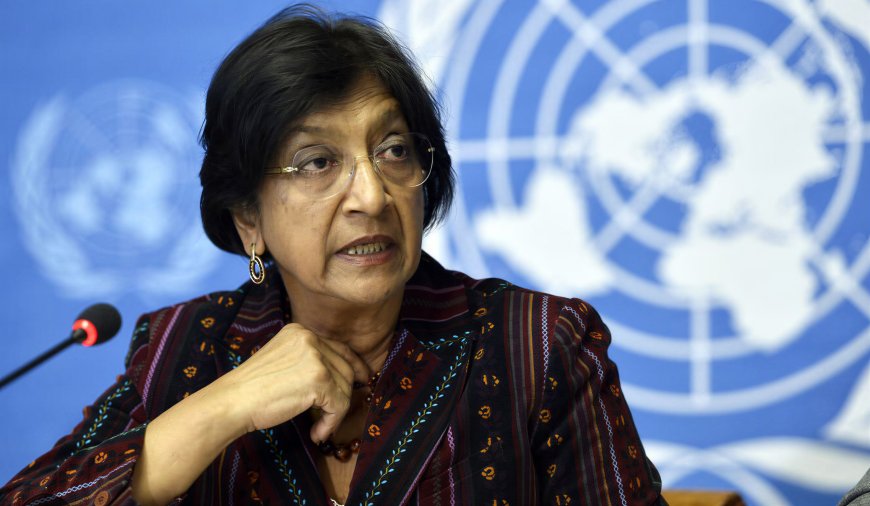
Navi Pillay’s 2026 Nobel Peace Prize brings these questions into focus. The South African jurist of Indian origin has spent much of her career working to uphold human rights and establish accountability for international crimes. In announcing the award, the Norwegian Nobel Committee highlighted her role in ensuring that war crimes, crimes against humanity and genocide are prosecuted.
Her work makes clear why peace is a political and ethical question as well as a matter of diplomatic agreement or ceasefire. Ending hostilities does not end injustice if power remains unaccountable, the facts of the crime go unacknowledged, and survivors cannot exercise their right to justice. An agreement can settle relations between political leaders while leaving the people they claim to represent profoundly unsafe.
The announcement has particular significance for me because one of my current research projects concerns the 1971 Bangladesh genocide, the politics of genocide denial and their contemporary political afterlives. This work repeatedly brings me back to the struggle over what violence is allowed to mean after it has occurred.
Genocide destroys lives, but it also leaves subsequent generations confronting political battles over those deaths. People are killed; later, their identities may be erased, the perpetrators’ intentions disputed, or those responsible recast as patriots.
Survivors’ memories can become inconvenient to a political settlement. The question of what happened becomes entangled with the question of who is entitled to govern the present.
Historical inquiry must remain open to new evidence and critical examination. Denial is a different undertaking. It seeks to remove responsibility without confronting the evidence that establishes it. When testimony is discredited and the purpose of violence concealed, the consequences reach beyond an inaccurate account of the past. They affect whose suffering is recognized and whose authority can be restored.
This is how denial can continue the political work of violence. It reasserts the power to decide which lives matter, which deaths deserve acknowledgment and which histories of suffering may be rewritten for the convenience of the state. The perpetrator’s account gains protection while the survivor must prove, repeatedly, that the injury happened at all.
Whenever I read histories of mass violence, I am struck by the distance between knowing the death toll and understanding the lives destroyed. Numbers are essential to establishing the scale of an atrocity. Yet each number also represents a family, unfinished hopes and relationships that cannot be repaired. Those who survive wait for more than sympathy. They seek acknowledgment of what happened and accountability for those responsible. These are claims to rights, not requests for generosity.
One of the most consequential chapters in Pillay’s judicial career was her work at the International Criminal Tribunal for Rwanda. In 1998, she sat on the three-judge panel in the Akayesu case, which produced the first international court conviction for genocide. The judgment also established that rape and sexual violence could constitute acts of genocide when committed with the intent to destroy a protected group, wholly or in part.
The significance was legal and deeply political. Wartime sexual violence has often been treated as an inevitable consequence of conflict, as though men conduct wars and women’s bodies simply absorb their cost. That assumption makes violence appear unavoidable and diverts attention from the people who commit, organize or permit it. It also pushes survivors’ experiences to the margins of the historical account.
The Akayesu judgment helped challenge that marginalisation. Sexual violence could be examined as part of the destruction of a community, with an intention and a responsibility that demanded judicial scrutiny. Taking such crimes seriously means refusing to let the authority of the perpetrator eclipse the experience of the person harmed.
These questions have particular force when I think about 1971. The sexual violence committed during Bangladesh’s Liberation War belongs within the wider history of domination and the suppression of a population.
Its meaning cannot be confined to private injury or the supposed shame of the woman subjected to it. My concern is how denial and political retelling can diminish those experiences, while making room for the rehabilitation of people associated with the violence.
A society must ask what its priorities reveal when it struggles to respect survivors but readily finds a language of accommodation for perpetrators. Commemorating women’s suffering is not enough if their voices, security and claims to justice remain peripheral. Public honour can coexist with profound failures of recognition in everyday life.
This is where the relationship between peace and justice becomes unavoidable. Fear can outlast gunfire. Without accountability, what grounds do people have for trusting that the same violence will not return?
A state may announce that normal life has resumed while a witness still cannot speak safely. The reassurance means little unless we ask whose life has become normal again.
No judgment can bring back the dead, erase every injury or end the trauma carried across generations. But a fair trial can establish that a crime cannot be dissolved into a politically convenient interpretation of history.
State office, military rank, religious identity and public popularity do not extinguish criminal responsibility. For survivors, that acknowledgment can also affirm that the wrong was done to them and that its burden of blame belongs elsewhere.
International justice must earn the trust such an undertaking requires. If scrutiny depends on the victim’s nationality or the perpetrator’s alliances, the promise of universal law becomes difficult to defend. States cannot credibly demand accountability from their adversaries while insulating themselves and their allies from investigation. The law must be capable of reaching those whose power makes its application politically uncomfortable.
Consistency also requires fair procedures. Evidence, independent investigation and the rights of the accused are essential to a credible verdict. The Akayesu case itself included acquittals as well as convictions. Demanding justice for an atrocity and demanding a fair trial are compatible obligations. Political allegiance must not determine which one we choose to defend.
In South Asia, discussions of historical violence must confront another danger: the portrayal of accountability as revenge and impunity as a necessary contribution to national unity. We should ask who pays for that unity.
If survivors must surrender their testimony so that influential people can recover their standing, the settlement preserves the imbalance that made abuse possible. Reconciliation needs room for truth, recognition and remedy; it cannot be sustained by requiring the injured to disappear from the argument.
My respect for Pillay’s work lies in her contribution to a legal space where survivors’ experiences can help establish judicial truth alongside, and sometimes against, the accounts offered by states and powerful institutions. I congratulate her on this recognition.
Its most meaningful celebration would involve applying the same scrutiny to our own political commitments. Do we seek accountability when the evidence implicates someone we admire? Do we oppose genocide consistently, or only when its perpetrators belong to the other side? The answers matter more than the ease with which we endorse justice in principle.
A state can declare a war over. It cannot alone determine that peace has been secured. Survivors’ testimony, the record of those killed and future generations’ right to know what happened belong in that judgment too.
Granting perpetrators immunity while counselling survivors to remain peaceful protects a particular distribution of power. Before calling it peace, we should ask what it leaves intact, and whom it leaves vulnerable to the next injustice.
Dr. Lubna Ferdowsi is an academic and researcher based in England.