
























































The Next Threat to Bangladesh
Bangladesh survived many mistakes during the past several decades because growth was strong enough to absorb them. The next decade may be different. The countries that prosper in this new world will not necessarily be those with the smartest experts.

A day is still twenty-four hours. Consumers still have limited money. Resources remain finite. What has changed is the ability to allocate them.
Artificial intelligence (AI) helps investors, corporations and governments understand the economy with unprecedented speed.
Wall Street is building increasingly sophisticated models of the world using alternative data, machine learning and computational power.
Large corporations are doing the same. Supply chains are now leaner. Procurement is smart. Capital, thus, is more selective.
The result is simple. The global economy is now less forgiving. Bangladesh does not face an isolated AI problem though. It faces a world where AI has become the primary engine of optimization.
The code itself is not the threat. The hyper-efficiency it enforces is. Every unnecessary cost becomes visible.
Every weak assumption is exposed. Every inefficiency eventually becomes a target. Many Bangladeshi businesses still respond to mounting pressure by blaming bad luck or demanding fiscal support.
They may be misreading the environment. Something that worked in the past may not continue to work in the future. The world is changing.
The punishment for ignoring that reality is increasingly inevitable. Businesses often complain that government borrowing crowds them out.
Yet crowding out is only part of the story. In a capital-constrained economy, capital is a scarce resource. If firms cannot demonstrate productive uses for that capital, they should not be surprised when governments, banks or investors allocate it elsewhere.
Every taka invested in one project is a taka unavailable to another. The question is no longer who needs capital. The question is who can justify its use most convincingly.
The age of optimization asks everyone the same question. What is the return? What is the risk? What is the alternative? Factory closures, mergers and business failures are therefore not always signs of economic decline.
They are often signs of economic selection. The solution to scarce capital is not always more capital. Sometimes it is better use of the capital already available.
For decades Bangladesh benefited from a world with room for error. The next decade may offer far less. Bangladesh's current economic difficulties are frequently described through inflation, reserves, exchange rates and sovereign debt.
Those are important indicators. They are also symptoms. The deeper challenge is that the country's traditional growth model is entering a more demanding world.
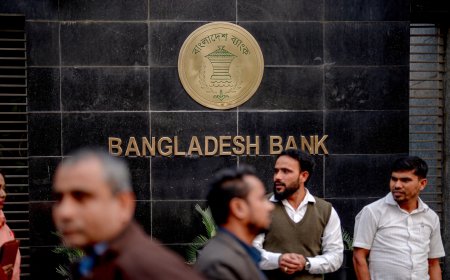
A Bangladesh Bank Governor traditionally has a lowkey job. Balance the economic holy trinity: inflation, interest rates and external stability.
Solving today's emergency does not automatically solve tomorrow's constraint. While policymakers focus on inflation, reserves and debt servicing, another set of questions is quietly approaching.
What happens if global capital becomes permanently more selective? What happens when technology allows the same service to be delivered with fewer people? What happens if Bangladesh's education system continues preparing students for jobs that are disappearing?
What happens if AI changes who earns, who spends and who consumes across the world?
These are not immediate crises.
They are future constraints. Unfortunately, future constraints have a habit of becoming present emergencies. Bangladesh is trying to attract foreign capital during an era when much of the world is trying to keep capital at home. that is an uncomfortable starting point.
For years, emerging economies benefited from abundant global liquidity and investors searching for yield. The US Federal Reserve raised its policy range to 3.75-4.00% in September 20265.
The Bank of England held Bank Rate at 3.75%6. The European Central Bank raised its deposit facility rate to 2.50%7.
Even Japan, the great exception of global monetary policy, raised its short-term policy rate to around 1.25%, the highest level since 19958.
Global capital can now earn respectable returns closer to home. Bangladesh therefore must compete for money in a world where money no longer has to travel far to be rewarded.
Now that capital has become more selective, Bangladesh has become more dependent on attracting it. Investment summits and promotional campaigns may improve visibility.
They cannot change the underlying arithmetic. Capital rarely travels because it is inspired. It travels because the math works. The age of roadshows is ending.
Investors do not arrive because a country wants investment. They arrive because they see consumers, technology, resources or productivity. Bangladesh's challenge is that labour cost alone is becoming a weaker differentiator.
Cheap labour may open the door. Increasingly, it does not guarantee anyone walks through it. The numbers show how little has walked through: net FDI was only $1.69 billion in FY259.
Bangladesh's economic resilience rests on an unusual foundation. The country is not primarily powered by consumer debt. Nor is it powered by massive foreign capital inflows. It is powered by exports, remittances and a remarkably persistent savings culture. Households save. Migrants save. Businesses save.
That habit helped cushion the COVID shock. It also explains why Bangladesh often appears more stable than its income level might suggest.
Resilience, however, comes with a trade-off. The same savings culture that protects households during difficult times can also make Bangladesh a less obvious consumption story for foreign investors.
Bangladesh therefore faces a difficult question. If cheap labor is becoming a weaker differentiator and domestic consumption is not its primary attraction, what will drive the next wave of investment?
That question becomes even more important if the country hopes to sustain ambitious growth targets in a world where global capital is becoming increasingly selective.
Bangladesh often treats foreign-exchange stability as an achievement.
Increasingly, it is becoming a requirement. The country’s external account follows a familiar rhythm. In recent monthly data, exports have often been around $3.5-4.0 billion, imports closer to $5.5-6.0 billion, and remittances around $2.5-3.0 billion.
The exact numbers change, but the logic does not. Dollars leave to pay for energy, machinery, industrial inputs and consumer goods. Dollars return through exports. Remittances help bridge the crucial gap.
When remittance inflows exceed expectations or imports are compressed, reserves improve. When remittances disappoint or import demand rises, pressure returns.
This cycle is so routine that it is sometimes mistaken for progress. It is not. An airline does not celebrate that its engines remained attached during a flight. That is what the engines are supposed to do.
Likewise, a country should not judge its economic success solely by whether it managed to maintain reserves, service debt or stabilize the exchange rate. Those are increasingly the minimum requirements for participation in the global economy.
The real question is whether Bangladesh is becoming more productive, more competitive and more adaptable than it was five years ago.
The benchmarks that mattered during an era of easy growth may not be sufficient in an era of optimization.
AI may create another uncomfortable reality.
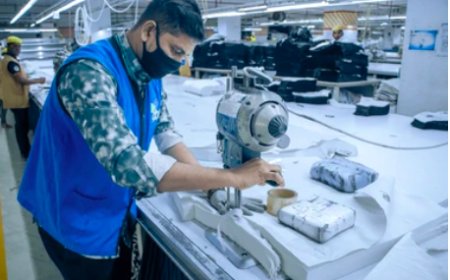
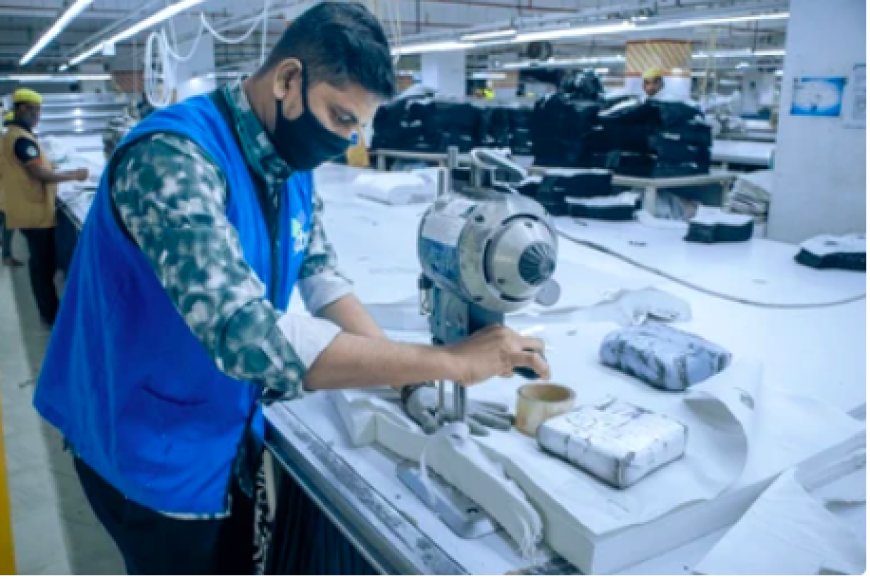
Bangladesh's exposure to AI is more complicated than it appears. The country does not primarily export luxury. It exports affordability.
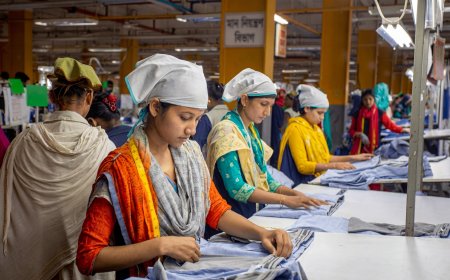
Millions of workers depend on consumers in Europe and North America purchasing reasonably priced clothing, footwear and household products.
The future of Bangladesh's export sector therefore depends not only on technology, but also on the purchasing power of the global middle class.
If AI CAPEX delivers extraordinary productivity gains while concentrating wealth in fewer hands, Bangladesh may face stronger competition, more automated supply chains and weaker mass-market demand.
If AI disappoints, the outcome could be different. Labor may remain more valuable. Middle-class consumption may remain stronger.
The global economy may continue demanding exactly the type of products Bangladesh has spent decades learning to produce.
Bangladesh's future may depend less on AI itself than on what AI does to the global middle class.
The domestic labour market presents an equally difficult challenge. Bangladesh's education system was largely designed for a world that is disappearing. Students are still being prepared to solve yesterday's problems.
Employers are increasingly paying for tomorrow's skills. Every year thousands of graduates enter the labour market expecting credentials to translate into opportunity. Increasingly, the economy rewards capabilities rather than certificates.
This creates a dangerous gap.
The mismatch is already visible. Recent reporting has cited graduate unemployment in Bangladesh rising to around 14% in 2024, nearly double the level in 2017, while more than 700,000 graduates enter the labor market each year.
A nation can tolerate unemployment. It struggles to tolerate educated underemployment. Historically, the government also acted as an absorber of labour.
Public-sector employment provided stability, consumption and social mobility. In many cases, the objective was not simply productivity. It was social cohesion.
That model is becoming harder to sustain. Pension obligations are rising. Fiscal pressures are increasing. Efficiency demands are growing. Eventually, the finance minister is in a tough spot.
There is another question Bangladesh will increasingly need to ask. What happens after consumption? A citizen spends 100 taka. The transaction is recorded. The VAT is collected. The company earns a profit.
The consumer receives a product. The economy moves on. Or does it? The more important question is where that 100 taka ultimately ends up.
How much returns to Bangladeshi workers through wages? How much returns through local suppliers? How much returns through domestic shareholders? How much leaves the country permanently? In an era of AI and global optimization, these questions become increasingly important.
Countries that thrive will not merely maximize consumption. They will maximize the share of consumption that recirculates through their own economy.
The challenge is not simply creating jobs. It is connecting jobs to spending. A healthy economy creates a loop. Citizens consume. Businesses profit. Businesses invest. Workers are hired. Workers consume.
The cycle continues. When that loop weakens, growth becomes increasingly dependent on external demand, remittances or debt. Those are useful supports. They are poor foundations.
Citizens cannot spend a memorandum of understanding. They spend wages. Bangladesh should celebrate factories, not pledges. Payrolls, not press releases. Young people understand this intuitively. They do not care only that a company earns money. They care whether that success creates opportunities for them.
If a business in Bangladesh earns 50 taka after taxes, how much of that eventually returns to Bangladeshi citizens through wages, reinvestment or ownership? That question will become increasingly important in an age of optimization.
Governments around the world are being forced to justify expenditure more rigorously than before. Bangladesh is unlikely to remain immune and have taken the notes already.
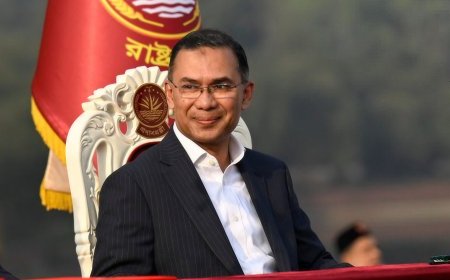
The Prime Minister is leading the effort13. This does not mean catastrophe. It does mean adjustment.
The country's capital markets reveal another structural weakness. Bangladesh's economic ambitions increasingly resemble those of a middle-income economy.
Its capital markets often resemble those of a much smaller one. The result is an uncomfortable imbalance. The state is large. The market remains shallow.
The imbalance becomes clearer when compared with public debt. IMF data put Bangladesh's general government gross debt at about 41.8% of GDP14, while CEIC puts listed market capitalization at about 6% of GDP.
On that basis, the listed equity market is only about one-seventh the size of public debt. Put differently, Bangladesh's public obligations have grown much faster than the public's opportunity to own productive assets.
That is not a technical detail. It is a development constraint. The development of Bangladesh's capital markets is often discussed as a technical issue. It is not. It is ultimately a question of ownership. The Finance Ministry has spoken about democratizing the economy.
The phrase deserves attention. A healthy market allows citizens to participate in the success of the companies they interact with every day.
A worker buys a product. A family uses a service. A saver owns a small piece of the business providing both. Consumption and ownership become connected.
The same economy that extracts spending also distributes wealth. Many of Bangladesh's largest businesses remain private, family-controlled and largely inaccessible to ordinary citizens. That may have been sufficient during an earlier stage of development.
The next stage may require something different.
Too often, public scrutiny was avoided through private credit. Non-performing loans piled up. Losses were socialized. Profits remained private. Survival became an entitlement. Closure became a national tragedy.
Failure became negotiable. Economic resources were repeatedly diverted toward preserving the past rather than building the future.
Before Bangladesh can democratize its economy, it may need to democratize its understanding of failure. Not every struggling business should survive.
Not every existing use of capital deserves preservation. Democratizing the economy therefore requires more than expanding the stock market. It requires ending the era of consequence-free corporate debt.
Public markets do more than raise capital.
They impose discipline. They expose assumptions. They create accountability. Most importantly, they allow economic growth to be shared beyond a narrow group of owners. An economy becomes healthier when more citizens can honestly say: I buy the same products as my portfolio.
A country cannot finance twenty-first-century ambitions indefinitely through twentieth-century financial architecture. This brings us to a more fundamental problem.
Bangladesh's problem is not an absence of expertise. It is an excess of isolated expertise. We have become very good at analyzing individual problems. One only needs to observe debates in Parliament, policy seminars, television talk shows or newspaper columns.
There is rarely a shortage of experts. There is rarely a shortage of recommendations. Yet we remain surprisingly poor at understanding how those problems interact.
A transport expert may be correct. An energy expert may be correct. A banking expert may be correct. The country can still be wrong.
Modern economies fail less from a lack of knowledge than from a failure to connect knowledge. A new highway changes land values. Land values affect housing. Housing affects wages. Wages affect competitiveness. Competitiveness affects exports.
Exports affect foreign reserves. Foreign reserves affect exchange-rate stability. Yet these issues are often discussed separately. The country experiences them simultaneously.
That distinction matters. For decades, the Pentagon has relied on war games not because it can or want to predict the future, but because it understands that preparation requires simulation.
Different actors are given different objectives. Different scenarios are explored. Weaknesses emerge before they become real.
Bangladesh needs the economic equivalent. A Bangladesh Model. Not a forecast. A sandbox. A living simulation of the country itself built on data, alternative data and continuously evolving assumptions. A place where competing assumptions are forced to meet.
A Bangladesh Model cannot become another report sitting on a shelf. It must become part of how the country thinks. Perhaps that means a modernized research wing inside the central bank.
Perhaps it lives elsewhere. The institution matters less than the habit. The objective is to create a place where economists, engineers, technologists and policymakers are forced to confront one another's assumptions before reality does. Parliament can debate outcomes. The model must test assumptions.
Many of the country's strengths are beginning to collide with one another. Savings helped Bangladesh survive shocks. Growth increasingly requires investment and consumption. Employment creates stability. Productivity often reduces the need for labour.
Public-sector hiring helped absorb economic pressure. Fiscal discipline demands efficiency.
Foreign investment is needed to sustain ambitious growth.
Domestic ownership is needed to ensure that growth is widely shared. AI may increase global productivity while reshaping the global middle class. None of these objectives are wrong.
Many of them are individually desirable. The challenge is that they do not always move in the same direction.
A Bangladesh Model would make those trade-offs visible.
It would allow policymakers to see not only what a policy achieves, but also what it costs elsewhere in the system. What happens to employment?
What happens to inflation? What happens to reserves? What happens to energy demand? What happens to public finances?
Most importantly, what happens when one solution creates a new problem somewhere else? The purpose would not be prediction. The purpose would be preparation.
The purpose would be to force assumptions to collide before reality forces them to. The world is entering an age of optimization. The optimization knife cuts everywhere. It cuts costs. It cuts inefficiencies. It cuts waste. It also cuts error margins.
Bangladesh survived many mistakes during the past several decades because growth was strong enough to absorb them. The next decade may be different.
The countries that prosper in this new world will not necessarily be those with the smartest experts. They may be those that are best at helping those experts think together.
The next threat to Bangladesh may not be a crisis. It may simply be a world that becomes harder to impress.
Ali Ahmad is a Ph.D. Candidate at Rutgers University.