





































































Why Students Need A Better Understanding of the Constitution
Incorporating constitutional education into all faculties could play a significant role in developing informed, responsible, and constitutionally aware citizens.

The Constitution is the supreme law of a country that governs the state, but most of us are not aware of this. If we ask someone, especially those students who are currently studying at the college or university level, how a state is run, they may not be able to provide a proper answer, and most would probably respond without mentioning the Constitution.
Therefore, it is high time to raise awareness among students in educational institutions. As Thomas Jefferson stated: “An informed citizenry is at the heart of a dynamic democracy.”
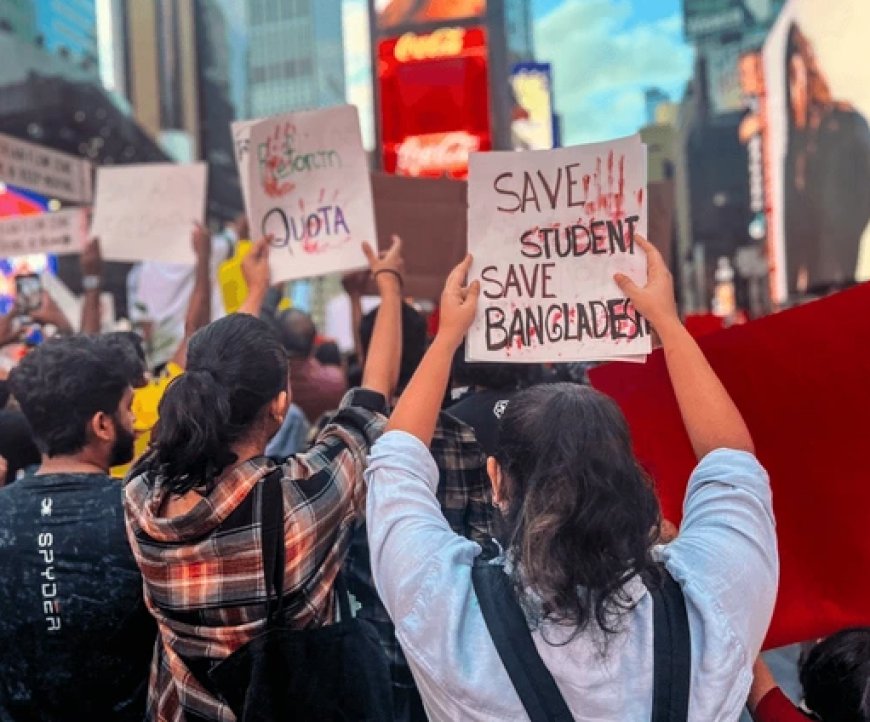
Looking back at the historical events of Bangladesh, every event has included students from universities and colleges protesting against injustices and inequality according to the constitution. Some were driven by passion or genuine interest, it was outside the syllabus, but after achieving their goals, they turned against the constitution for their own benefit.
This happened because of a lack of awareness of constitutional overview. If someone does not understand the constitutional framework, they would be provoked to change it and misguided by any parties or particular members. If such a misguided person is a political leader driving a mass revolt against the democratic process, it is not a blessing for the nation.
In universities, a few faculties teach constitutional subjects, such as Political Science, Public Administration, Journalism, and Bangladesh Studies. The Law Faculty provides the most comprehensive constitutional education; however, this is not sufficient to create widespread constitutional awareness among university students. Therefore, I personally suggest that constitutional lessons should be included in every semester across all faculties.
At the HSC level, colleges teach only a few chapters related to the constitution, covering topics such as elections, the judiciary, and politics. However, these chapters are insufficient, as students read them merely to pass their examinations rather than to gain genuine understanding.
Furthermore, there is a lack of qualified experts who can teach constitutional subjects effectively and make them understandable to students. On the other hand, most students do not care about these topics and are often unaware that they form a part of the Constitution of Bangladesh.
While this attitude may be somewhat acceptable from a student's perspective, the greater concern lies with the teachers themselves, as most college teachers are also unable to teach constitutional subjects properly or raise awareness among students. This situation is common across most institutions, with only a few exceptions such as Cadet Colleges and selected government colleges.
Revolution is not built day by day; it happens unexpectedly. But when it occurs through a democratic process, it is acceptable. On the other hand, when a democratic process is driven by religious demands, it becomes problematic, and its outcome resembles the 2013 Shapla Chattar incident.
We know that Madrasah students are innocent and talented; however, there are significant gaps in their academic system that need to be addressed through government initiatives or international perspectives, such as those of the UN or OIC. Modern political systems, public administration, and constitutional lessons are not taught in these institutions.
As a result, students are unable to distinguish or compare the differences between these important concepts. Consequently, they are shaped entirely by their teachers' thoughts and driven by their own beliefs, which can ultimately lead them toward dangerous movements, as seen in the 2013 Hefazat-e-Islam incident at Shapla Chattar, Dhaka. Therefore, the government should take some necessary steps to help Madrasah students understand the constitution and to protect them against the illegal beliefs of their teachers.
Both Ali Madrasa and Qawmi Madrasah share a similar situation, as there is no meaningful difference in their constitutional education curriculum. This situation also applies to Islamic Studies and Arabic Departments at public universities.
Looking at Western and South Asian countries, constitutional education and civic awareness are often regarded as essential components of higher education, as they help students understand the structure of the state, citizens' rights and responsibilities, democratic values, and the rule of law. Thus, incorporating constitutional education into all faculties could play a significant role in developing informed, responsible, and constitutionally aware citizens.
It is not the objective of this article to discuss the constitution in its entirety, but to limit the discussion to a few chapters which are particularly necessary to highlight. These selected provisions represent the foundational framework within which every citizen and most critically, every student, must orient their civic understanding.
The Fundamental Principles of State Policy establish the ideological and administrative direction of the state. Article 12 on Secularism prescribes that religion shall not be used for political purposes, serving as a safeguard against communal conflict.
Article 17 on Compulsory Education mandates the state's obligation to provide free education to children, an enforceable constitutional commitment, not merely a welfare provision.
Article 18 on Public Health obliges the state to raise standards of nutrition and healthcare, enabling students to hold institutions accountable for systemic neglect.
Article 19 on Equality of Opportunity guarantees equal opportunity in employment and public service, a provision especially significant for students from marginalised backgrounds who may otherwise silently accept discrimination, unaware of their constitutional entitlement.
II. Fundamental Rights and Key Constitutional Articles
Chapter 3 constitutes the most personally significant dimension of the constitution for any student, enumerating rights the state cannot lawfully violate, including equality before law, right to life and liberty, freedom of thought and speech, and the right to enforce fundamental rights. Without internalizing these provisions, students cannot identify when their rights are being infringed upon, transforming a rights-bearing citizen into a passive subject.
Beyond these, Articles 49, 52, 70, 77, 81, and 93 govern executive discretion, parliamentary conduct, ombudsman authority, and budgetary accountability, tools essential for critically evaluating state power. Articles 101–108 define the structure and jurisdiction of the Supreme Court and subordinate courts, without which students cannot navigate the justice system with informed agency.
Articles 141 and 142, governing emergency powers and constitutional amendments, are among the most consequential provisions, and a student body unaware of these cannot resist unconstitutional alterations to the governance structure.
III. Consequences of Constitutional Illiteracy:The failure to equip students with constitutional knowledge produces profound consequences at both individual and societal levels. Students unaware of their fundamental rights become easy targets of institutional abuse and state overreach. Ignorance of sedition law under Article 7(Kha) may lead students to unknowingly transgress legal boundaries during protests, or leave them unable to challenge unlawful charges against them.
Unfamiliarity with Articles 2 and 12 leaves students susceptible to religious and political manipulation, which can escalate into communal conflict. Those unaware of Article 19 may silently accept inequality in admissions and employment, mistaking structural injustice for natural circumstance. Most consequentially, students ignorant of Articles 141 and 142 cannot serve as an informed check against authoritarian governance, and democracy ultimately depends upon a citizenry capable of recognising and resisting its subversion.
From this overview, it can be said that the government should take some effective steps for student communities, as students constitute a major part of our population; therefore, the issue cannot be denied. The suggestions are:
- To arrange a constitutional Olympiad every year at the regional level.
- To call for research articles every year from students studying at universities.
- To arrange a national constitutional Olympiad.
- To provide training programs with scholarships for outstanding students.
- To organize constitutional awareness workshops and seminars in educational institutions.
- To establish constitutional study clubs in universities and colleges.
- To include constitutional education in extracurricular activities.
- To arrange debates, quizzes, and essay competitions on constitutional topics.
- To publish student-friendly guidebooks and learning materials on the Constitution.
- To conduct participatory programs to enhance constitutional awareness among students.
- To provide grants and awards for outstanding research on constitutional studies.
- To introduce online platforms and courses for constitutional education.
- To develop academic collaborations and exchange programs on constitutional studies with foreign institutions.
- To celebrate Constitution Day through academic and cultural programs in educational institutions.
Mizan Rehman is a student at the University of Chittagong.