











































































Bangladesh Must Not Be Drawn Into the Yemen War
Participation in an emerging regional security architecture should strengthen Bangladesh’s strategic autonomy, not turn its armed forces into an instrument of another country’s foreign policy.
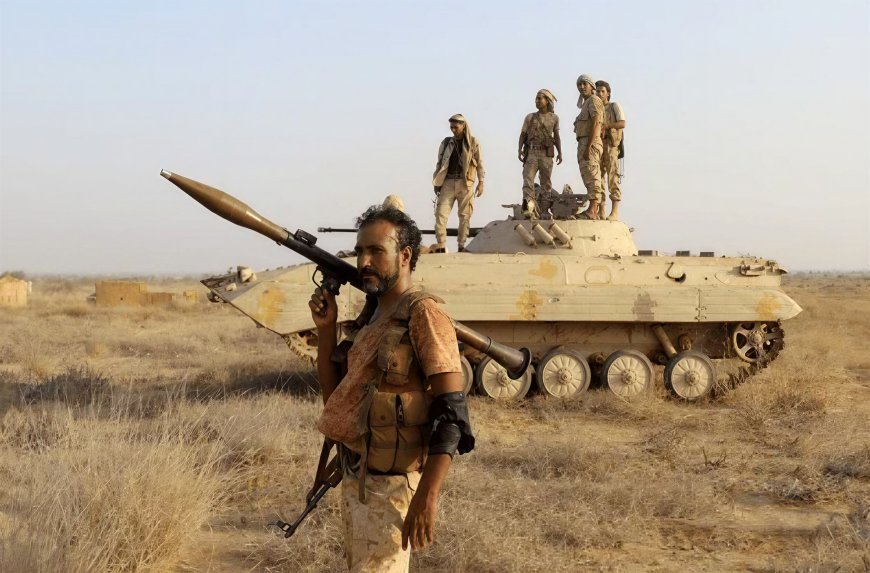
Bangladesh may be approaching a consequential foreign policy decision: Whether to commit its armed forces to a conflict in Yemen that has already exacted a devastating humanitarian toll.
Whatever the diplomatic or financial incentives that may be offered, such a deployment would be a strategic mistake of historic proportions.
Bangladesh has legitimate interests in maintaining close security ties with Saudi Arabia and other partners in the Muslim world. Yet there is an important distinction between defending a partner against external aggression and becoming entangled in its regional military campaigns. It is a distinction that Dhaka cannot afford to lose sight of.
When the Mecca Joint Defence Agreement was first announced and Bangladesh expressed interest in joining, I adopted a wait-and-see approach. The proposed arrangement was still largely hypothetical, and its potential benefits and liabilities remained uncertain.
Nevertheless, I was cautiously optimistic. In an increasingly multi-polar and conflict-prone international environment, new security arrangements such as the Mecca JDA could offer countries like Bangladesh valuable opportunities to diversify defence partnerships, strengthen military capabilities, and reduce their dependence on any single major power.
It could also serve as a concrete and much-needed security manifestation of South-South cooperation and pan-Muslim solidarity and unity.
However, the crucial question was always what such an arrangement would actually do. Would it provide a credible framework for collective defense, security cooperation, and military modernization?
Or would it become an instrument through which its most powerful members could advance their own regional ambitions?
Recent developments surrounding Yemen have made that question considerably more urgent. When Saudi Arabia initially sought to invoke the arrangement in connection with its confrontation with Yemen's Ansar Allah-led de facto authorities, Pakistan and Türkiye reportedly resisted extending their commitments to pre-existing conflicts.
Some commentators ridiculed that position as evidence that the emerging alliance was little more than a paper tiger. I saw it differently.
An arrangement that facilitates intelligence sharing, joint exercises, defense-industrial cooperation, and collective deterrence would already offer considerable value to its members.
Its credibility should not be measured by its willingness to intervene in every conflict involving its wealthiest participant. Rather, the ability to say no to an ill-advised military intervention is actually a sign of institutional maturity rather than weakness.
Yet reports of growing Turkish and especially Pakistani support for Saudi operations in Yemen raise concerns that the arrangement could evolve in precisely the direction I had hoped it would avoid. More troubling still is the possibility that Bangladesh could be drawn into the conflict.
A Bangladeshi state minister for foreign affairs recently indicated that the country stands ready to defend Mecca and Medina. The precise meaning of that statement, and whether it reflects a settled government policy, requires clarification.
Defending Islam's holiest sites is a responsibility that resonates deeply with Muslims around the world, including Bangladeshis. Yet there is an important question that must first be answered: What credible evidence exists that Ansar Allah poses a serious and imminent threat to Mecca or Medina?
The question becomes particularly pertinent when considering the nature of Ansar Allah itself. Although rooted in Yemen's Zaydi Shia tradition, Ansar Allah is not an exclusively Shia movement.
Its political and military alliances extend across sectarian lines, including to Sunni Yemenis, and its governing authority encompasses much of Yemen's predominantly Muslim population. Religious identity remains central to its political legitimacy and mobilization.
A deliberate attack on either of Islam's holiest cities would therefore carry extraordinary political and religious costs. It could alienate not only Muslims across the world, but also Sunni constituencies whose cooperation or acquiescence helps sustain Ansar Allah's authority.
It would also hand Riyadh a powerful casus belli for escalating military operations and mobilizing international support. Indeed Riyadh has also accused Ansar Allah of targeting Mecca provinces in 2016 and 2019.
None of this makes such an attack impossible, nor does it excuse Ansar Allah's attacks on civilian airports. Harrowing footage of attacks on airports in Jeddah and Riyadh, including scenes of women and pilgrims in ihram scrambling for safety, understandably resonates deeply with Muslim publics in Bangladesh and beyond.
Their fear and suffering should not be minimized. Yet these scenes also offer a sobering glimpse into the terror that Yemeni civilians have endured for more than a decade, as numerous airports, schools, mosques, weddings, and camps for displaced people have been struck during the conflict.
The suffering of civilians should command our concern regardless of which side of the border they happen to live on.
There are nevertheless legitimate questions about Ansar Allah's incentives and the credibility of claims that it intends to target the holy cities themselves.
Allegations of threats to sacred sites carry enormous emotional and political weight, particularly in Muslim-majority countries. Without independently verifiable evidence of a serious threat, invoking the defense of Mecca and Medina risks transforming a deeply held religious obligation into a justification for military objectives that have little to do with protecting the holy cities.
Bangladesh should not commit its armed forces to war on the basis of religious sentiment or unsubstantiated security claims. The protection of sacred sites may command broad public support. Military intervention, however, demands demonstrable threats, a clearly defined mission, and a compelling national security rationale.
Bangladeshi soldiers should not be placed in harm's way to advance another state's military objectives, particularly in a conflict where the humanitarian consequences have already been catastrophic and the prospects for a decisive military victory remain remote. This is not an argument against Saudi Arabia, nor against closer defense cooperation with Riyadh.
Rather, it is an argument for ensuring that Bangladesh's armed forces serve Bangladesh's national interests.
For me, this question is also personal. Military service runs through my family's history, from relatives who fought as Mukti Bahini guerrillas during the Liberation War to those who subsequently served in senior positions in Bangladesh's armed forces, including as defense attachés, brigadier generals, and a Chief of Army Staff.
I know several serving or recently retired officers in the Bangladeshi military, and all are courageous and selfless warriors and conscientious citizens.
I have never served in uniform, and I write as a member of the Bangladeshi diaspora. That distance affords me a perspective, though certainly not a monopoly on judgment, on the military's complicated place in Bangladesh's national life.
The institution has a mixed domestic legacy. Its history includes repeated military coups, inter-forces violence, systemic corruption, and persistent concerns about accountability, institutional reform, and its increasingly privileged position within the state.
Yet it has also earned considerable respect. Its roots in the Liberation War, extensive contributions to United Nations peacekeeping, the courage and skill of its pilots and volunteers in various Arab-Israeli conflicts, and its unparalleled expertise in humanitarian assistance and disaster relief have helped establish an international reputation that Bangladesh should be determined to protect.
That reputation is a strategic asset. Bangladesh's peacekeepers have served under an international mandate, contributing to missions intended to preserve stability and protect vulnerable populations. Deploying troops into a regional conflict in support of one belligerent would represent a fundamentally different undertaking.
Pakistan's military history offers a cautionary example. Its involvement in Jordan's confrontation with Palestinian armed organizations in 1970 remains a controversial episode, illustrating how military commitments undertaken in support of foreign partners can acquire political and reputational consequences far beyond their original purpose. Bangladesh should avoid creating a comparable legacy in Yemen.
Even a seemingly limited deployment would carry significant risks. Bangladeshi troops might be assigned to protect installations, infrastructure, or other strategic sites rather than conduct offensive operations.
Yet such assignments could still expose them to attack, entangle Bangladesh in the conflict, and potentially free other forces in the coalition for combat operations in Yemen.
A mission described as defensive on paper may have offensive consequences in practice, even without the possibility of mission creep.
Moreover, Bangladesh would have limited control over the wider conduct of a war in which its personnel might become implicated. The actions of its partners, including any violations of international humanitarian law, could generate political and reputational costs for Dhaka regardless of whether Bangladeshi troops were directly involved.
There are, admittedly, substantial interests at stake. Saudi Arabia is an important economic partner and home to a large Bangladeshi expatriate workforce whose remittances support families and communities across Bangladesh.
Riyadh may also be able to offer financial assistance, defense cooperation, or other inducements at a time when Bangladesh faces considerable economic pressures, including those arising from wider regional instability.
These considerations cannot simply be dismissed. Yet neither should they be confused with a compelling national security justification for military intervention. The protection of Bangladeshi workers, preservation of bilateral ties, and pursuit of economic opportunities are legitimate foreign policy objectives.
None inherently requires sending Bangladeshi soldiers into Yemen's conflict.
Indeed, the interests of Bangladeshi expatriates could themselves be jeopardized by an escalation that transforms Bangladesh from a relatively neutral partner into an identifiable participant in regional hostilities.
There is also the question of strategic opportunity costs. Bangladesh faces pressing security challenges much closer to home. As the country continues to grapple with reintegrating police in the aftermath of the 2024 uprising, crime rates continue to rise.
Instability in the Chittagong Hill Tracts continues to demand attention, while the deteriorating situation across the border in Myanmar's Rakhine State threatens further displacement, cross-border insecurity, and additional pressure on communities already hosting large numbers of Rohingya refugees.
Meanwhile, Bangladesh must continue modernizing its armed forces, strengthening institutional capacity, and developing credible deterrence against potential threats in its immediate neighborhood. These priorities require sustained investment, meticulous planning, deft diplomatic maneuvering, and strategic discipline.
Deploying troops to Yemen would divert attention and resources from these challenges while exposing Bangladesh to risks over which it would exercise limited control.
Nor is there a persuasive military endgame. Yemen's conflict has repeatedly demonstrated the limits of military force in resolving deeply entrenched political and territorial disputes. However the balance of power shifts, a durable settlement will ultimately require negotiation and political compromise.
Bangladesh has little to gain from becoming another military actor in a conflict that cannot be sustainably resolved through force alone.
There is a better path. Dhaka should continue exploring defense cooperation with Saudi Arabia, Pakistan, Türkiye, and other interested partners, but insist that any new security architecture be governed by clear mandates, transparent decision-making, and respect for the sovereign interests of every participating state.
Collective defense must not become a euphemism for underwriting individual members' regional interventions. Bangladesh could also offer diplomatic support for de-escalation, contribute humanitarian assistance, and lend its voice to efforts toward a negotiated settlement in Yemen. Such contributions would be far more consistent with its international reputation and long-term interests.
Above all, the government should make clear that any proposal to deploy Bangladeshi military personnel into an active regional conflict would require a publicly articulated national security rationale, rigorous assessment of the risks, and appropriate democratic oversight.
Bangladesh's armed forces have spent decades building an international reputation through peacekeeping, humanitarian service, and professional military cooperation. That reputation should not be traded for short-term financial incentives or diplomatic favor.
The country can be a dependable partner to Saudi Arabia without becoming a participant in its wars. It can support the security of Islam's holiest sites without accepting an open-ended military commitment in Yemen. It can contribute to an emerging regional security architecture without surrendering its strategic autonomy.
The test of a credible security partnership is not whether Bangladesh is willing to fight another country's battles, but whether Bangladesh retains the freedom to decide which battles are truly its own.
Atif Choudhury is Founder and CEO of the US-Bangladesh NextGen Fellowship & Policy Institute.