




































































Bangladesh Cannot Afford to Dismiss the Warning Before Reading It
When the minister responsible for internal security dismisses a terrorism warning before reading the report, the greater concern is no longer only the warning itself, it is the state’s capacity to respond to one.


Terrorism does not begin on the day a bomb explodes. The explosion is usually the final scene.
Long before that moment comes radicalization, recruitment, ideological indoctrination, financing, encrypted communication, logistical preparation, propaganda and the formation of small networks that may operate below the state’s radar for months or even years.
Bangladesh has already learned this lesson at considerable cost.
Jama'atul Mujahideen Bangladesh did not suddenly appear on August 17, 2005, when hundreds of bombs exploded almost simultaneously across 63 districts.
The militants who attacked Holey Artisan Bakery on July 1, 2016 did not become extremists that morning.
And the murders of bloggers, publishers and secular activists between 2013 and 2016 demonstrated how ideological dehumanization can gradually move from rhetoric to targeted violence.
This history matters because Bangladesh is once again confronting an early warning, this time concerning Al-Qaeda in the Indian Subcontinent, or AQIS.
What the UN Report Actually Says
The 38th report of the United Nations Security Council’s Analytical Support and Sanctions Monitoring Team, which monitors ISIL and Al-Qaeda-related threats, raises concern about AQIS attempting to establish cells in Bangladesh.
The wording matters.
The report does not declare that Bangladesh has become an Al-Qaeda base. Nor does it establish that a fully operational AQIS infrastructure already exists in the country. It is a threat assessment, not a criminal conviction.
But the report places the Bangladesh concern within a broader regional assessment. It describes AQIS as evolving from a fragmented organization towards a regional terrorist entity, developing logistical and financial networks while relying increasingly on decentralized, small and dispersed cells.
That is precisely why the warning deserves investigation.
Modern terrorist organizations do not necessarily require enormous training camps, hundreds of visible fighters or a headquarters carrying their name. A few radicalized individuals, an organizer, secure digital communication, modest financing and access to logistical resources can be sufficient to create a dangerous operational cell.
Bangladesh should therefore not be looking for the AQIS of 2026 through the organizational template of JMB in 2005.
The Minister Who Had Not Read the Report
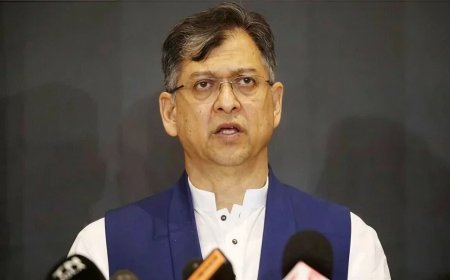
Against this background, Home Minister Salahuddin Ahmed’s response is extraordinary.
He described the UN warning as essentially “assumption-based” and indicated that the government was not taking it into consideration. Yet, in the same interaction, he acknowledged that he had not read the report and had only heard about it.
The sequence is difficult to defend: conclusion before reading, assessment before verification, dismissal before examination.
If this is to become a new methodology of intelligence analysis, Bangladesh may have inadvertently invented a new field: Counter-terrorism by hearsay.
There is nothing wrong with challenging a UN assessment. Governments should challenge intelligence. The United Nations is not infallible, member-state reporting may be incomplete, and threat assessments necessarily involve uncertainty.
But there is an enormous difference between saying: “We have examined the evidence and cannot corroborate this assessment,” and saying: “I have not read the report, but I understand it is based on assumptions, so we are not taking it seriously.”
The former is evidence-based scepticism. The latter is premature denial.
And in counter-terrorism, that distinction can become deadly. Intelligence is supposed to work before the explosion. Counter-terrorism threat assessment and criminal proof serve different purposes.
A court asks whether an offence occurred, who committed it and whether the evidence establishes guilt according to the applicable legal standard.
Intelligence analysis asks something else: What indicators suggest that a threat may be developing before the offence occurs?
If governments waited for 100 per cent proof before investigating terrorism threats, intelligence agencies would have little purpose. Forensic investigators could simply arrive after the explosion.
The entire purpose of preventive intelligence is to identify patterns while they remain incomplete: recruitment activity, unusual financing, connections between actors, movement across borders, propaganda networks, weapons acquisition or encrypted operational communication.
That does not justify arresting people on suspicion alone. It does justify investigation.
Bangladesh's history makes casual dismissal particularly uncomfortable. During the rise of Bangla Bhai and militant organizations in the early 2000s, reports about extremist networks were at times publicly played down. Then came the coordinated bombings of August 2005.
The lesson should have been permanent: a terrorist network does not cease to exist because the state refuses to recognize it.
Holey Artisan reinforced the same lesson. The attack became visible in one horrifying evening. The radicalization and networks behind it had developed beforehand.
The Questions Dhaka Should be Asking
Instead of debating whether the UN should be believed automatically, Bangladesh should be asking what intelligence produced the warning.
What is the Bangladesh-specific evidentiary basis of the assessment? How many member states supplied relevant information? Has Dhaka requested further intelligence through appropriate channels? Have the CTTC, Anti-Terrorism Unit and national intelligence agencies independently corroborated any operational, financial or communications links?
Is there evidence of attempted recruitment? Are financial facilitators or propaganda networks operating inside Bangladesh? Are there connections with regional networks elsewhere in South Asia?
Those questions do not assume that the UN is correct.
They are how a competent state determines whether it is correct.
The appropriate official response could therefore have been remarkably straightforward: the government has received the assessment; relevant agencies are examining its evidentiary basis; Bangladesh will seek additional information where necessary; and credible threats will be investigated and disrupted according to law.
No panic. No surrender of national judgement to the UN. But no denial before verification either.
Bangladesh Sits in a Dangerous Neighbourhood
The warning must also be understood geographically. To Bangladesh’s northwest lies the Afghanistan-Pakistan security environment, shaped by the Taliban’s return to power and the continuing activities of TTP, Islamic State Khorasan Province, Al-Qaeda-linked networks and other armed actors.
To the east lies Myanmar, where central state authority has weakened dramatically and armed organizations increasingly exercise territorial power.
Between these theatres sit India, Bangladesh and the Bay of Bengal. That geography means Bangladesh cannot afford to regard transnational militancy as somebody else’s domestic problem.
Nor should political tensions between Dhaka, Delhi or Islamabad be allowed to paralyse counter-terrorism intelligence cooperation. Terrorist networks do not suspend recruitment because neighbouring governments are quarrelling.
Regional intelligence cooperation should therefore be treated as a security necessity rather than a diplomatic favour.
The Digital Battlefield Has Changed
The contemporary radicalization environment also looks different from that of two decades ago. The same UN reporting discusses the growing role of online recruitment and movement from open social-media environments into encrypted communications platforms.
This does not mean that using encrypted messaging is suspicious. Millions of ordinary citizens use such applications legitimately.
The intelligence question is behavioural rather than technological: who is recruiting whom, what material is circulating, whether ideological relationships are developing into operational ones, how money moves and whether online networks are creating offline capabilities.
This is where Bangladesh needs stronger digital intelligence capacity -- not indiscriminate surveillance, but targeted, lawful and technically sophisticated network analysis.
The Holey Artisan attack should have permanently destroyed another comforting stereotype: that terrorism belongs exclusively to the poor, uneducated, or socially marginal.
It does not.
Educated, urban and middle-class people can radicalize too. Extremism has no dependable dress code, social class or educational résumé.
The Unresolved Post-release Question
There is another issue deserving scrutiny.
The European Union Agency for Asylum’s 2025 Bangladesh country assessment reported allegations of increased organizational activity by radical groups after August 2024. More concretely, citing Bangladesh prison authorities, it reported that 174 prisoners associated with militant outfits had been released on bail between 5 August and 5 December 2024. That figure must be interpreted carefully.
Release on bail does not establish guilt, and executive authorities cannot disregard judicial decisions merely because an individual was previously associated with a security investigation.
But from a counter-terrorism perspective, the return of a significant number of previously flagged individuals to society creates an obvious risk-management requirement.
Where individual evidence justifies it, Bangladesh needs lawful post-release risk assessment, rehabilitation, disengagement programmes, psychological assistance, credible religious counselling, employment support and proportionate monitoring of possible reconnection with extremist networks.
The relevant question is therefore not whether these individuals should have been denied their legal rights. It is whether the interim government, and subsequently the current government, established adequate mechanisms to assess and manage identifiable risks following their release.
That deserves a transparent institutional answer.
Neither Denial nor a Return to Authoritarian Counter-terrorism
There is an equally important warning on the other side.
Taking terrorism seriously cannot become an excuse for indiscriminate arrests, political repression, extrajudicial violence or treating religious identity as evidence of extremism.
Bangladesh's previous counter-terrorism experience cannot be separated from allegations that national-security institutions and narratives were sometimes abused for political purposes.
But the logical conclusion from abusive counter-terrorism is not that terrorism no longer exists.
The answer is better counter-terrorism: lawful, intelligence-led, proportionate and judicially accountable.
No political opponents manufactured into terrorists. No entire religious communities treated as security suspects. No mass surveillance without legal safeguards.
But equally, no dismantling of professional counter-terrorism capacity merely because previous governments misused parts of the security architecture. No network blindness. And no romantic belief that extremism disappears when governments stop discussing it.
Follow the Network and the Money
Bangladesh now needs an integrated threat-assessment architecture connecting the CTTC, Anti-Terrorism Unit, relevant intelligence agencies, Border Guard Bangladesh, cyber-intelligence capabilities and the Bangladesh Financial Intelligence Unit.
Terrorist financing requires particular attention. Where intelligence provides reasonable grounds, authorities should examine hundi networks, suspicious cross-border transfers, cryptocurrency, misuse of charitable structures and small-scale logistical financing.
Again, precision matters. Counter-terrorism that investigates networks can protect democracy.
Counter-terrorism that profiles identities can damage it, and may ultimately contribute to the grievances on which extremist recruiters thrive. The objective must therefore be disruption without collective suspicion.
The Most Dangerous Period Comes Before the Blast
The most troubling aspect of the Home Minister’s response is ultimately institutional.
A minister does not speak merely as an individual commentator. His words travel downward through the bureaucracy. When the person responsible for internal security publicly trivializes a potential threat before verification, subordinate institutions may reasonably interpret that as a signal about political priority.
That is precisely the signal Bangladesh should avoid. A mature government has more than two choices between accepting every terrorism warning unquestioningly and dismissing it as alarmism.
There is a third option: Verify it.
Ask for the evidence. Test the intelligence. Map the networks. Examine financing. Strengthen regional cooperation. Assess recruitment patterns. Investigate credible indicators. Disrupt operational capability where the law permits. Then tell the public what can responsibly be disclosed.
That is not panic. That is not authoritarianism. That is statecraft.
Bangladesh has already paid an extraordinarily high price for learning that terrorist organizations are built before they become spectacular.
The most frightening sound in terrorism is therefore not necessarily the explosion.
Sometimes it is the silence before it, the period when people are being recruited, ideology is being normalized, money is moving, networks are connecting and warning signs are accumulating while the state reassures itself that nothing has yet been conclusively proven.
A United Nations warning should never be treated as gospel truth. But it should be investigated before it is dismissed. Because proving a warning wrong after examining the evidence is competent government. Declaring it wrong before reading it is something else entirely.
Dr. Lubna Ferdowsi is an academic and researcher based in England.