

































































No, the Mecca Pact is not Muslim NATO
The Mecca Agreement will be remembered less as a wartime alliance against a weakened Iran and more as the founding document of a new, durable axis within the Muslim world, one whose rivalries with Israel, the UAE and India will define regional politics for a generation.

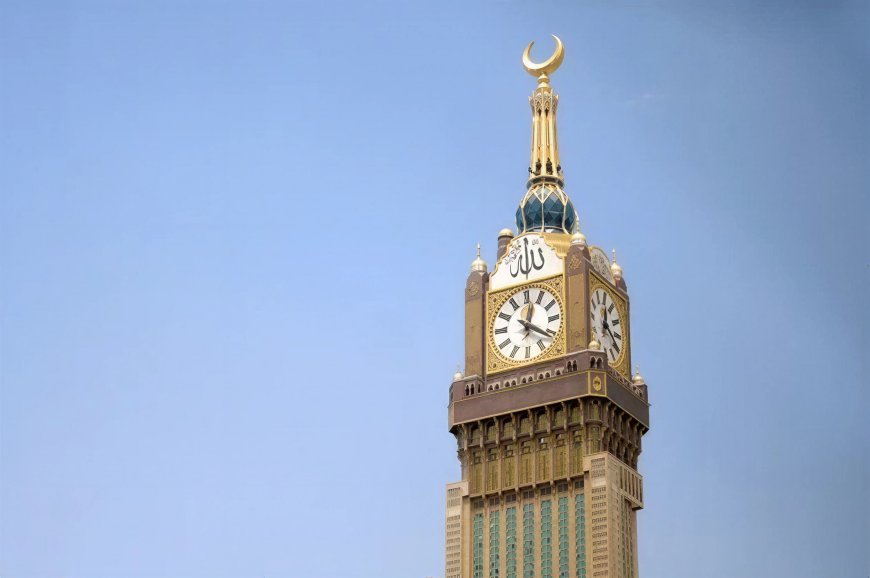
On August 7, in Islam’s holiest city, the leaders of Saudi Arabia, Turkiye, and Pakistan signed the Mecca Joint Defense Agreement: a mutual defense pact declaring that an attack on any one signatory will be treated as an attack on all three.
Within days, headlines around the world had settled on a clickbait label: A new "Middle Eastern NATO" assembled to contain Iran. That framing is clickbait friendly because it is simple, but it misses what is actually happening. This agreement is not primarily targeted at Iran. It is the visible tip of a much larger and long running realignment of the Muslim world, one that will outlast the current Iran war by decades and reorganize alliances across three continents.
What the Agreement Actually States
Stripped of commentary, the Mecca Agreement mirrors NATO's Article 5 logic: collective defense, combined defense policy, and new mechanisms for the three country’s defense ministers, foreign ministers, and military chiefs to coordinate directly.
The signatories commit to joint military exercises across land, air and sea, and to cooperation on air defense, artificial intelligence, electronic warfare and unmanned systems. Their defense industries will work more closely on research and production. On paper, this is a conventional mutual defense pact, and its precise mechanics are, frankly, the least interesting part of the story.
The Pakistani Nuclear Equation is Missing
What is genuinely notable is what the agreement omits. There is no explicit reference to Pakistan's nuclear arsenal, and no formal extension of a nuclear umbrella to Saudi Arabia or Turkiye, unlike NATO's structure, which extends America's nuclear guarantee to its members.
Anonymous Saudi and Pakistani officials have suggested privately that such an umbrella is implied, while publicly denying it outright. Riyadh has coveted nuclear protection since the 2010s, partly to balance Iran and partly to hedge against Israel.
For now, ambiguity suits everyone, much as Israel's undeclared arsenal has functioned as a stabilizing fiction for decades. But if that ambiguity is ever resolved into an explicit commitment, it would mark one of the most consequential proliferation moments in modern Middle Eastern history.
Anti-Iran Alliance is the Wrong Framing
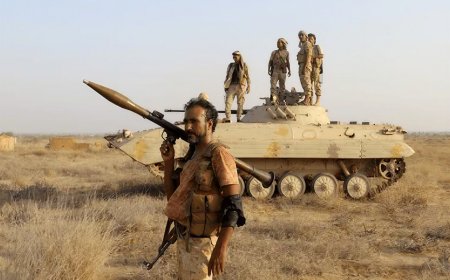
The obvious reading is that Saudi Arabia, under sustained attack from Iran and Iran-backed Houthi forces in Yemen, has recruited Turkiye and Pakistan to help it fight back. Sceptics point out that neither Ankara nor Islamabad has joined the fighting directly, and conclude the pact is toothless.
Both the framing and the skepticism are premature. The agreement is barely two weeks old; large-scale military coordination takes months to organize, not days.
More importantly, Pakistan and Saudi Arabia had already signed a bilateral security arrangement in September 2025, under which Pakistan quietly deployed roughly 8,000 troops, an air force fighter squadron and air-defence batteries to Saudi soil well before the Mecca signing.
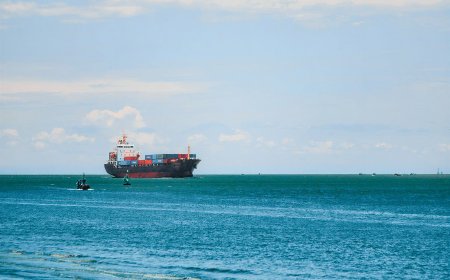
Turkiye has since committed to a Red Sea maritime coalition alongside Saudi Arabia to counter Houthi attacks on shipping. The support exists, it is simply calibrated to avoid open war with Iran, a war none of the three countries wants.
More tellingly, this axis was taking shape long before the current Iran war began. Analysts were already discussing an emerging Saudi-Pakistan-Turkiye-Egypt grouping months earlier, driven not by Tehran but by a rival coalition quietly forming among the United Arab Emirates, Israel, Morocco, Ethiopia and India.
These two blocs represent the real story: a set of overlapping regional rivalries, Turkiye against Israel for influence in Syria, Saudi Arabia against the UAE over Yemen and economic primacy in the Gulf, Pakistan against India as ever, that are now consolidating into two coherent camps.
Iran, remarkably, sits outside both, an isolated actor whose relevance has been inadvertently amplified by the very war meant to weaken it, since its grip on the Strait of Hormuz still gives Tehran leverage no one can ignore.
What the Reactions Reveal
If the agreement were truly aimed at Iran, Tehran's reaction would be the one to watch. Instead, Iranian officials responded with something close to indifference, with one spokesman suggesting the pact might even help "strengthen security" against what Iran calls Israeli overreach.
It was Israel and the UAE that reacted with alarm.
Israel's Minister for Diaspora Affairs called the deal "very dangerous and very troubling," and reportedly urged Israel to deepen ties with Greece, Cyprus, the UAE and Somaliland in response, a direct acknowledgement that Jerusalem sees itself, not Tehran, as the agreement's implicit target. That reaction tells us more about the pact's true purpose than any of its official text.
An Alliance for the Future, not Headlines
The agreement remains open to new members, and both Turkiye and Pakistan have signaled interest in bringing in Egypt, Qatar, Kuwait, and potentially Syria, Jordan, and Azerbaijan. Egypt's absence so far appears to reflect Saudi wariness of Cairo's closeness to the UAE, and Turkiye is actively lobbying to change that calculus.
Over the coming years, expect this bloc to expand gradually rather than dramatically, forming the backbone of a wider coalition across the Islamic world, one built less around fighting Iran and more around out-competing Israel, the UAE and India across economic, technological and proxy battlegrounds from Syria to Sudan to Somalia.
The lesson for anyone trying to understand the Middle East's trajectory is this: Today's headlines about an Iran war are the opening chapter of a much longer story, not its climax.
The Mecca Agreement will be remembered less as a wartime alliance against a weakened Iran and more as the founding document of a new, durable axis within the Muslim world, one whose rivalries with Israel, the UAE and India will define regional politics for a generation. Readers who file this pact away as merely another twist in the Iran conflict will misunderstand the decade ahead.
Shafqat Aziz is a barrister (Lincoln’s Inn) and an accredited Civil-Commercial Mediator (ADR-ODR International).