



























![A Ledger of the Soul: Navigating the Allah-Bhagavant Nexus in a 19th-Century Puruṣākāra Jñāna Caupara [Gyan Chauper]](https://counterpointbd.com/uploads/images/202608/image_430x256_6a93baa3b09a7.jpg)


















When the Army Enters the Classroom
When an institution that possesses the legitimate instruments of force also begins accumulating authority over the definition of morality, citizenship and national identity, the balance can become fragile.

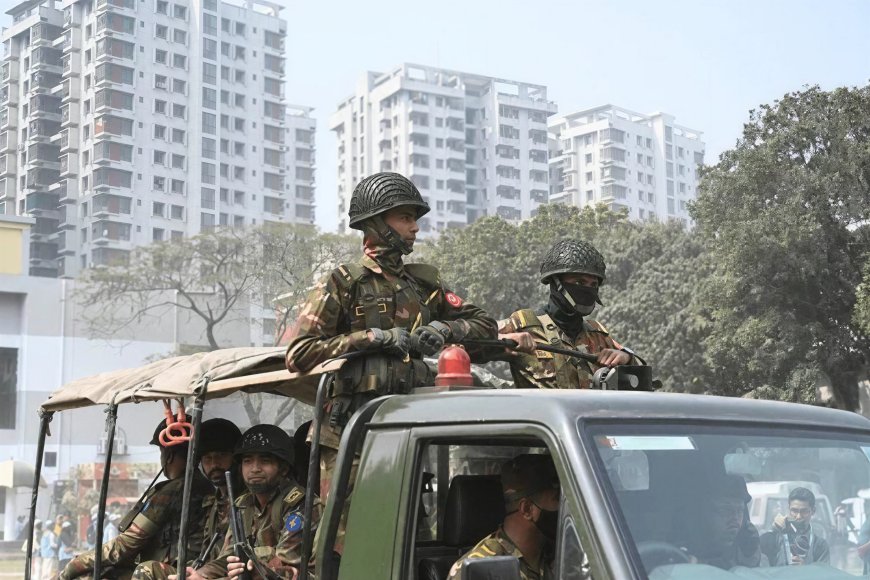
The remarks of Army Chief General Waker-Uz-Zaman will undoubtedly sound reassuring to many. According to him, modern education suffers from a deficit of Islamic values, while Islamic education often lacks modern knowledge and skills.
By bringing the two together, he hopes Bangladesh can produce a “healthy and ideal nation” over the next 30 years. In his formulation, modern education combined with Islamic values can produce citizens who are moral, capable, disciplined and socially responsible.
At the same time, he inaugurated the Army International Islamic Institute and laid the foundation stones for seven more such institutions across the country.
My first question is straightforward: since when did the army begin assuming functions that ordinarily belong to the Ministry of Education? Or have I somehow missed a constitutional amendment?
The more important question is deeper. Who has the authority to decide what an “ideal nation” or an “ideal citizen” of Bangladesh should look like in 2056? And why should the military take an institutional role in defining that ideal?
The word that matters here is “Army”.
What is the proper role of the military in a democratic state? Where does the mandate of a professional national army end, and where does an ideological or religious state-building project begin? Is the function of a professional military to defend sovereignty and national security, or to become an institutional architect of the future citizen’s moral and religious identity?
The military is not an institution like any other. It is not simply another university, cultural organization or religious body. It possesses the most concentrated form of organized coercive power within the state. Precisely for that reason, one of the foundations of democratic civil-military relations is political and ideological restraint.
Samuel P. Huntington, in his seminal work The Soldier and the State (1957), argued that a professional military derives its institutional strength from professional autonomy combined with civilian control. Its role is to defend the constitutional order, not to become society’s singular moral guardian. Huntington described this institutional arrangement as “objective civilian control”.
A modern military is strongest when it protects the state, not when it begins to define the state.
That distinction may appear theoretical, but history suggests otherwise. Once a military institution moves beyond defence and security into defining national ideology, public morality and the desirable characteristics of future citizens, the institutional balance begins to shift. Such shifts rarely remain confined to the barracks.
They can extend into education, law, politics, democratic institutions, public culture and civil liberties.
Bangladesh’s own history makes this question particularly important.
Bangladesh was not born in 1971 simply as an independent territory. It emerged from a struggle over the meaning of nationhood itself. The Liberation War was a struggle for political sovereignty, but also for a different conception of identity.
Against Pakistan’s religion-centred nationalism, Bangladesh emerged around language, culture, historical experience, democratic aspirations and citizenship. Bangladesh is overwhelmingly Muslim, but its national identity has never been reducible to religion alone.
It has been shaped by Bengali language and literature, folk traditions, music, plural religious communities, the experience of 1952, and the collective memory of 1971.
More than five decades later, Bangladesh continues to confront the same fundamental question: should the state understand itself through plural citizenship, or through an increasingly singular ideological identity?
Political science has long examined how regimes facing deficits of democratic legitimacy may seek alternative sources of political legitimacy. Religion, nationalism and ideological narratives can all become powerful instruments in this process.
Bangladesh’s experience demonstrates that the relationship between military authority and religious identity is not merely theoretical; it has already shaped constitutional development and political discourse.
The 1972 Constitution placed secularism among the four fundamental principles of the state. Secularism, in that constitutional context, did not mean hostility to religion or the removal of faith from social life.
Its central principle was equal citizenship: Muslim, Hindu, Buddhist, Christian and citizens of other beliefs were to possess equal civic dignity before the state.
Citizenship, rather than religious affiliation, was to be the primary constitutional basis of political belonging.
Yet secularism has repeatedly been misrepresented in Bangladesh as synonymous with hostility to religion. Some religion-based political actors, including Jamaat-e-Islami, have historically reinforced this interpretation. In political theory, however, secularism primarily concerns the institutional neutrality of the state: A framework in which citizens of different religions, as well as those with no religious affiliation, receive equal constitutional protection.
Following the political upheavals of 1975, the relationship between the state, religion and national identity gradually changed. During President Ziaur Rahman’s rule, constitutional amendments removed secularism as an operative fundamental principle and introduced greater religious symbolism into constitutional and political language.
Under General Hussain Muhammad Ershad, this trajectory went further when the Eighth Amendment of 1988 declared Islam the state religion.
Bangladesh’s constitutional evolution, however, did not stop there. Later constitutional developments and Supreme Court judgments restored secularism as a fundamental principle of state policy, while Islam remained the state religion under Article 2A.
Bangladesh therefore now inhabits a constitutional paradox: Secularism and an official state religion coexist.
This arrangement reflects one of the central tensions in Bangladesh’s post-independence political development-the continuing effort to reconcile a pluralist conception of citizenship rooted in the Liberation War with the growing constitutional and political importance of majority religious identity.
The real debate, therefore, is not whether Bangladesh is simply “secular” or “Islamic”. It is about how equal citizenship, religious freedom, constitutional neutrality and the political role of religion are balanced within the same republic.
These constitutional shifts were not merely symbolic. They influenced how the state imagined political legitimacy, national belonging and the ideal citizen.
Research on Bangladesh’s religious minorities has documented a long-term decline in their proportion of the population. Studies by economist Abul Barkat and others have highlighted the effects of the Enemy Property Act and later the Vested Property Act, land insecurity, communal violence and political vulnerability.
Indigenous communities have similarly raised long-standing concerns regarding land rights, constitutional recognition and cultural representation.
These developments altered not only how the state described itself but also who appeared to stand at the centre of the national imagination.
A constitution may formally guarantee equality while political discourse, public symbolism and institutional practice gradually suggest that the majority religious identity is the most natural or “ideal” form of citizenship.
Minority citizens may then find themselves required to repeatedly demonstrate their patriotism, loyalty and belonging in ways that majority citizens rarely have to.
That is difficult to reconcile with the democratic principle of equal citizenship.
None of this means religion should disappear from public life. That would be an absurd interpretation of Bangladesh. Islam is central to the faith, culture and everyday social life of millions of Bangladeshis.
The real question is different: should one particular religious framework become the institutional benchmark through which citizenship, morality and national identity are defined?
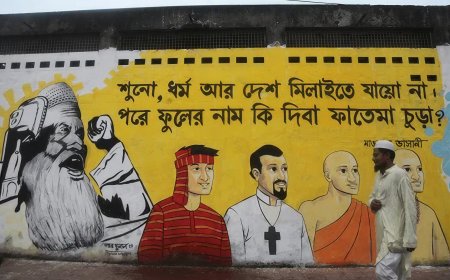
Bangladesh has never been a one-dimensional society. Its cultural imagination has been shaped by Rabindranath Tagore, Kazi Nazrul Islam, Lalon Shah, folk music, village traditions, Islamic heritage, Hindu and Buddhist traditions, indigenous cultures, rivers, language and the shared memory of liberation.
That plurality is not a weakness to be corrected. It is one of Bangladesh’s deepest civilizational strengths.
There is another important distinction that needs to be made.
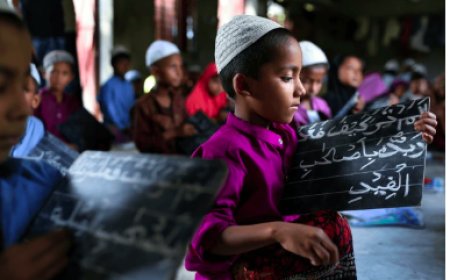
Religious education is a legitimate part of freedom of religion. Families have the right to educate their children according to their faith.
Bangladesh already has madrasas, Islamic universities, private Islamic schools and numerous religious organizations providing religious education.
The question, therefore, is not whether Islamic education should exist.
The question is why the military should become one of its institutional providers. Is a modern army expected to respond institutionally to every social need? Or should democratic states maintain clear boundaries around military functions?
If the army becomes an institutional provider of religious education, where does that mandate logically end? Could it later extend into history education, citizenship education, moral education or the official interpretation of national identity?
Comparative political history provides reasons for caution.
South Asia’s most extensively studied example of military-led Islamization is Pakistan under General Zia-ul-Haq between 1977 and 1988. Islamization under Zia did not remain a matter of personal piety. It became embedded in state policy, law, education, public institutions and political discourse.
Scholars including Vali Nasr, Ayesha Jalal, Christophe Jaffrelot, Markus Daechsel and Muhammad Qasim Zaman have examined how religious identity became increasingly intertwined with political authority and state legitimacy. The Afghan war of the 1980s intensified these dynamics as Pakistan’s military establishment became deeply connected to religious networks within the geopolitical architecture of the Cold War.
The consequences did not disappear when Zia died. They became embedded in political culture, security institutions and state-society relations.
This comparison should not be exaggerated. Bangladesh in 2026 is not Pakistan under Zia-ul-Haq, and opening an Islamic educational institution does not automatically constitute military Islamization or radicalization.
But that is precisely why institutional boundaries matter before such processes become entrenched.
Religion in education is not inherently problematic. Millions of people educated within religious traditions live peaceful, democratic and plural lives across the world.
The institutional configuration is what matters.
When an organization possessing concentrated coercive power also begins assuming a significant role in shaping religious identity, educational philosophy and social morality, the boundary between professional defence and ideological state-building can become increasingly difficult to define.
This question becomes especially important in the context of Bangladesh’s current education debates.
On the one hand, the government has stepped back from recruiting dedicated music teachers in primary schools. On the other, the military is expanding Islamic educational institutions. There have also been proposals to introduce compulsory karate education in schools, which may well have positive benefits for physical confidence and discipline.
But together these developments invite a broader question: what exactly are the educational priorities of the state?
Why does religious and physical education appear institutionally secure while music, arts and creative education remain politically negotiable?
A modern education system develops the whole human being: body, intellect, ethical judgement, emotional capacity, creativity and imagination.
Once that balance is distorted, education risks becoming less about enabling children to become autonomous citizens and more about producing a predetermined model of the desirable citizen.
So what kind of citizen does Bangladesh want? Someone who performs well in examinations and conforms to an approved moral template?
Or someone who can think independently, imagine alternatives, empathize with others, evaluate evidence and coexist with difference?
Education is not merely preparation for employment. It is one of the principal institutions through which societies cultivate imagination, ethical reasoning, social competence and democratic citizenship.
UNESCO’s Framework for Culture and Arts Education emphasizes the role of arts education in creativity, social and emotional development, critical thinking and inclusive citizenship.
Education systems in Finland, Japan, South Korea and Singapore combine science and technology with music, theatre, visual arts and cultural education. Muslim-majority societies including Malaysia and Indonesia likewise maintain arts and co-curricular education within their school systems.
These states understand a simple principle: a country’s future does not depend solely on children who can pass examinations. It also depends on citizens who can imagine, question, create and live alongside people who are different from themselves.
A state that considers art expendable may still produce a workforce. It will struggle to produce a genuinely free-thinking citizenry. And a state unwilling to invest in imagination ultimately weakens its own capacity for innovation.
The debate surrounding the Army International Islamic Institute should therefore not be reduced to the simplistic binary of being “for Islam” or “against Islam”. That framing obscures the real issue. The issue is institutional responsibility.
Are state institutions operating within clearly defined constitutional roles?
The military can and should protect the religious freedom of its personnel. It may provide facilities for worship and religious observance. But democratic stability depends on ensuring that no institution-especially one possessing organized coercive power-gradually becomes the dominant interpreter of national morality.
Many democratic militaries, including those of NATO states, maintain chaplaincy services for personnel of different faiths. Soldiers are free to practice religion. Yet professional military education remains centered on constitutional duty, military ethics, international humanitarian law, leadership, professional competence and civilian authority.
The task of the military is to professionalize soldiers, not to become the ultimate interpreter of the moral identity of the nation.
Bangladesh’s armed forces enjoy international respect, particularly through their extensive contribution to UN peacekeeping. That reputation has been built not merely on military capacity but on professionalism, discipline and adherence to international standards.
Precisely for that reason, one of the military’s most valuable assets is institutional credibility.
That credibility depends on constitutional loyalty, equal responsibility towards every citizen, and political and ideological professionalism.
Protecting that credibility requires clear boundaries between defence, education and ideological authority.
Religion is part of Bangladesh. That is not what is being debated.
The more difficult question is who gets to define morality in a democratic republic.
Families? Schools? Religious institutions? Civil society? Democratic politics?
Or should an institution possessing both organized coercive power and enormous state authority also acquire an expanding role in defining the moral character of future citizens?
Political theory has long treated this question seriously because democratic systems depend not only on elections but on the distribution and limitation of institutional power.
When an institution that possesses the legitimate instruments of force also begins accumulating authority over the definition of morality, citizenship and national identity, the balance can become fragile.
At that point, the state risks moving from protecting territorial borders to defining the borders of conscience.
It begins to determine which values are most desirable, which identities appear most legitimate, and what an “ideal citizen” ought to be.
If one religious interpretation receives institutional privilege within that process, the democratic space available to other identities and other forms of belonging may gradually shrink.
The greatest achievement of a professional military is therefore not simply winning wars. It is protecting a constitutional order in which citizens of different religions, beliefs, cultures and ways of life can remain equally secure.
Democracy derives its strength precisely from making coexistence possible among people who are not identical.
Bangladesh’s future will ultimately be determined neither by how religious nor by how secular, cultural or technologically modern it can appear in isolation.
The deeper test is whether all these identities can coexist under the same constitutional roof with equal dignity.
A state confident enough to protect plurality is not weaker because of diversity. It is more resilient because of it. Conversely, a state that gradually moves towards a single authorized model of identity risks weakening pluralism, institutional trust, social cohesion and democratic stability.
Those are not peripheral concerns. They go to the heart of what kind of republic Bangladesh intends to become.
Dr. Lubna Ferdowsi is an academic and researcher based in England.
References
Barkat, A. (2000). An Inquiry into Causes and Consequences of Deprivation of Hindu Minorities in Bangladesh through the Vested Property Act: Framework for a Realistic Solution. Dhaka: PRIP Trust.
Burki, S. K. (2016). “The Politics of Misogyny: General Zia-ul-Haq’s Islamization of Pakistan’s Legal System.” Contemporary Justice Review, 19(1), 103–119.
Daechsel, M. (1997). “Military Islamisation in Pakistan and the Spectre of Colonial Perceptions.” Contemporary South Asia, 6(2), 141–160.
Huntington, S. P. (1957). The Soldier and the State: The Theory and Politics of Civil-Military Relations. Cambridge, MA: Harvard University Press.
Nasr, S. V. R. (2001). Islamic Leviathan: Islam and the Making of State Power. Oxford: Oxford University Press.
Sheikh, M. Z. H., & Ahmed, Z. S. (2019). “Military, Authoritarianism and Islam: A Comparative Analysis of Bangladesh and Pakistan.” Politics and Religion.
The Constitution of the People’s Republic of Bangladesh, Articles 2A, 8, 27 and 28.
UNESCO. (2024). Framework for Culture and Arts Education. Paris: UNESCO.
UNESCO. (2025). Implementation Guidance: UNESCO Framework for Culture and Arts Education. Paris: UNESCO.