












































![A Ledger of the Soul: Navigating the Allah-Bhagavant Nexus in a 19th-Century Puruṣākāra Jñāna Caupara [Gyan Chauper]](https://counterpointbd.com/uploads/images/202608/image_430x256_6a93baa3b09a7.jpg)





















The Syed Family of Taraf: Ushering Islamic Rule in South Sylhet
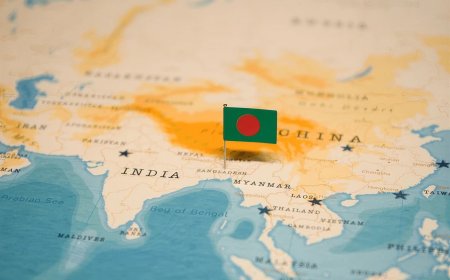
The sun of prosperity eclipsed for the Syeds in Taraf, as this land was conquered by the Kingdom of Tripura, which was at Bangladesh’s eastern border.

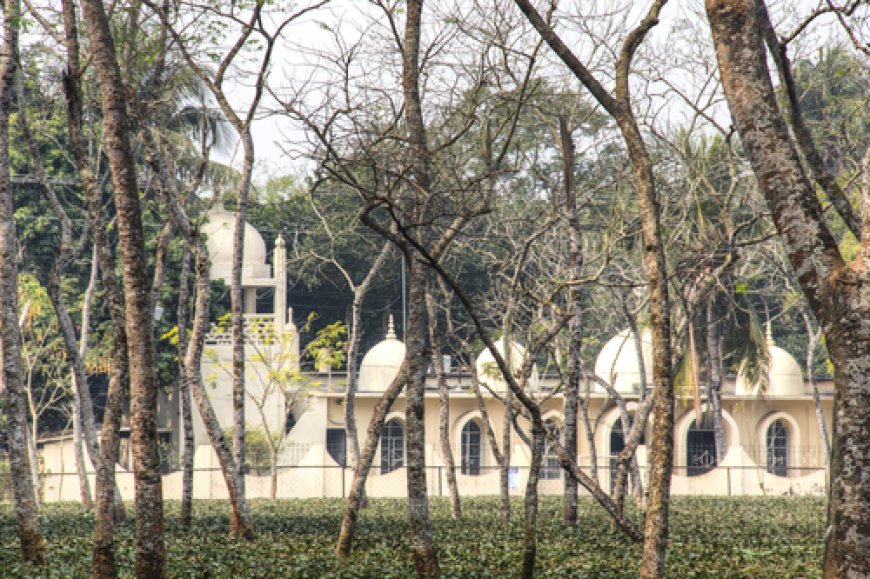
“Who knows what’s good or bad?” This Taoist philosophy comes to mind when describing Syed Nasiruddin (Rahmatullah alaih, may the Almighty have mercy upon him) of the 1300s. Born in Baghdad, he became a refugee after Mongol ruler Hülegü Khan seized and destroyed this city in 1258.
He travelled 1971 miles to Delhi and joined the imperial army. Eventually, he climbed the ranks to become sipahsalar, armed forces chief, under Bengal Sultan Shamsuddin Firuz Shah. Generals come and go, but Sipahsalar Syed Nasiruddin (R) was destined to be a historic figure in South Asian empire building.
In 1303, Sultan Shamsuddin Firuz Shah launched two military expeditions to Sylhet against King Gaur Govinda. After both operations under his nephew Sikandar Khan Ghazi failed, the sultan deployed his chief military commander Syed Nasiruddin (R).
As the third military expedition was en-route to Sylhet, both military leaders went to Sonargaon to meet with the great Islamic saint Hazrat Shah Jalal (R), who was travelling from Yemen on a mission to spread the religion. When asked for help to defeat the king, the saint alongside 360 disciples joined the war.
Together, the two groups, the first a military operation, and the second a missionary one, conquered Sylhet and brought the area under Muslim rule. Upon King Gaur Govinda’s escape, Sikandar Khan became administrator of Sylhet.
Sipahsalar Syed Nasiruddin (R) gains Taraf for the Sultanate
Sylhet District was conquered, but destiny had another territorial expansion for the descendant of Hazrat Ali ibn Abi Talib (Radi Allah anhoo, may the Almighty be pleased with him) and Sayida Fatima bint Muhammad (RA).
Sipahsalar Syed Nasiruddin (R) led an army of 3,000 infantry and 1,000 cavalry, alongside 12 disciples of Hazrat Shah Jalal (R), to the principality of Taraf (present-day Habiganj), south of Sylhet. This minor kingdom was ruled by King Achak Narayan, and upon his escape to Tripura, Syed Nasiruddin (R) became administrator of the land.
He helped locals clear jungles to cultivate the land, in addition to introducing them to Islam. As an early settler, he improved rice cultivation techniques by providing instructions to the farmers. Upon Syed Nasiruddin (R) passing away, the Bengal sultan assigned his son Syed Sirajuddin to collect revenues on behalf of the sultanate.
The zamindari, feudal landownership, would last for four more generations.
End of the Syed administration in Taraf
The sun of prosperity eclipsed for the Syeds in Taraf, as this land was conquered by the Kingdom of Tripura, which was at Bangladesh’s eastern border. In 1581, King Amar Manikya of Tripura ordered Syed Musa, the zamindar of Taraf, to provide laborers to excavate a water tank called Amarsagar.
When Syed Musa refused to carry out the order, the king deployed a 22,000-man army -- in addition to 100 generals -- against the zamindar.
The king’s vast armed forces completely overwhelmed Taraf’s small standing army. Under him, Taraf became a feudatory state, sending fiscal dues to the kingdom. Syed Musa and his son Syed Adam were held captive by the King of Tripura, but later released and received shelter in the Arakan Kingdom, where Syed Musa received a ministerial position, and Syed Adam was appointed administrator of Ramu province.
As the tides of time flowed, the Mughal Empire eventually came to rule Sylhet Division in 1612, when the area became one of 19 sarkars, sub-provinces of Bengal. More than a century later, the British conquered Bengal, and over two centuries afterwards, an independent Bangladesh was born.
Throughout the timeline, the Syeds of Taraf have influenced the trajectory of Bengal, from Nawab Sir Syed Shamul Huda, who was a Bengal legislative councilmember in early 1900s, to the nation’s current environment adviser Syeda Rizwana Hasan.
The Syed family’s legacy
From being a member of Bengal Sultanate’s royal court to administering a 1,000-square-mile domain of his own, Syed Nasiruddin (R) had an incredible life trajectory. He was one of medieval Bengal’s entrepreneurial pirs, a forest pioneer on the agrarian frontier who brought economic transformation of the land.
His family was among those responsible for individual conversions among the population, a process that took nearly four to five centuries for Bengal to have a Muslim majority
The Syed clan of Taraf has become an Islamic symbol for those seeking religious salvation for a better future. Syed Nasiruddin’s great-grandson Syed Ibrahim Malik al-Ulama went to Delhi to pursue his education. He was an Arabic and Persian scholar who received the title Malik al-Ulama, king of the learned, from the Delhi emperor.
The tradition of scholarship continued when another descendant, Syed Israil, also received the Malik al-Ulama title. He wrote the Persian book Maidan al-Fawaid, (Mine/Deposit of Morals) in 1534.
Even after the zamindari was violently taken away, the dynasty’s in-depth knowledge of Islam maintained a source of legitimacy and authority. In Murarband, Habiganj, the Syed family’s graveyard now holds 120 saints' remains, with Syed Nasiruddin (R)’s tomb drawing devotees from across the region. During his death anniversary, an estimated 100,000 individuals attend the religious ceremony to commemorate his life.
How much of history would be altered if Syed Nasiruddin (R) never immigrated?
He arrived in Delhi as Baghdad became unlivable for him after the Mongol invasion. Upon becoming chief of the Bengal sultan’s armed forces, it was Syed Nasiruddin (R) who paid a visit to Hazrat Shah Jalal (R), asking him to join in the conquest to gain Sylhet under the Bengal Sultanate.
This offer of an alliance led the great saint to join the triumphant wave of the sultan’s army, defeating the kingdom of Gaur Govinda, and establishing the crescent of Islam in the land. Today, this Sylhet is known as the land of saints, a chain reaction due to the strategy developed by military leaders of the sultan.
Today, his lineage lives in Bangladesh and beyond.
Tamim Choudhury is a public affairs specialist for an international volunteering agency within the US government. The views expressed are his own.