



















































The Difficult Bride: Breaking the Bridal Spell
Horror films can provide feminists with analytic tools to fight complacency and despair. Saturating viewers/witnesses with discomfort, they show the fragility of the symbolic order and open up ways toward alternative imaginaries.

In 1980s Dhaka, we grew up shadowed by an urban myth of the chic beauty salon, Mayfair, located in Dhanmondi Residential Area.
A young and beautiful bride, coiffed with a false hair bun festooned by flowers as part of her bridal make up, keeled over and died at the wedding reception, bitten by mysterious, poisonous insects that had been nesting in Mayfair’s faux bun.
The salon closed and that story remained a cautionary tale for generations thereafter, evidence of vanity’s ills, beauty rituals, and the ruses of patriarchy.
Feminist filmmaker Rubaiyat Hossain’s newest film, The Difficult Bride, utilizes the familiar tale to continue her interrogation of class relations and patriarchy in Bangladeshi society.
Alert viewers will detect a throughline extending from Under Construction and Made in Bangladesh where Hossain explored middle-class and working-class women’s struggles as well as their triumphs.
The Difficult Bride poses a culminating intertextuality with the prior films, at the same time as it offers an intimate look into upper-class women’s entrapment and emancipation. The film follows a young woman named Zaineen, or “Zai” (Zaineen Chowdhury Karim) as she prepares to wed a very wealthy man.
Her erratic and disturbed mind and body are on display while she deals with misogyny, rebellion, family, and social responsibilities in a neo-liberalized Dhaka, a multi-dimensional urban backdrop to the story.
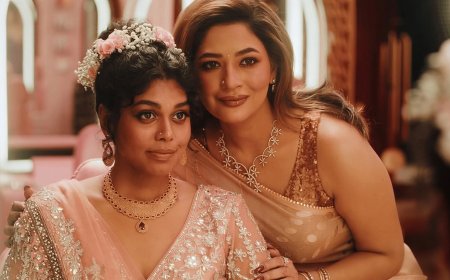
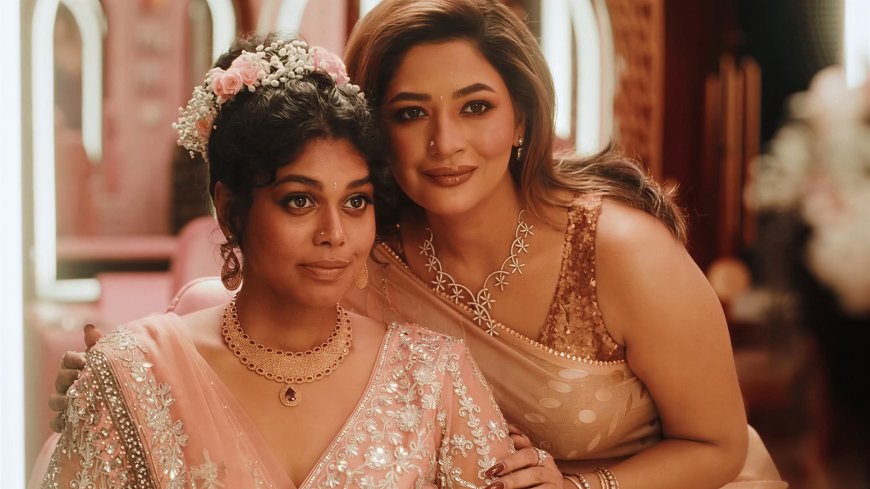
Set almost entirely in Dhaka’s elite Gulshan, the film opens with Zai at Mayfair Salon being made presentable for her upcoming wedding to the handsome Aarman (Dameer Khan).
She has already undergone months of painful and degrading rituals for weight loss, skin brightening, and hair straightening, even Platelet Rich Plasma (PRP) program -- a blood treatment to conceal and lessen the acne on her face.
At the end of it all, Zai looks at herself in the mirror with a smiling look of conquest as the salon manager (Azmeri Haque Badhon) puts a protective arm around her. “Happy?” She asks Zai, both women looking into the mirror, A celebratory dance sequence follows, set to “Luvergirl” by Yoana Rahman, including the lyrics: “I’m physically a whore, mentally a lover girl in itty bitty Dhaka.”
Everyone in the salon -- including the bride-to-be, her friends, and the beauticians -- join in a dance of abandon.
The scene is a nod to Made in Bangladesh’s dance sequence in the workers’ housing complex -- Rikita Nondine Shimu was the focal point in that earlier film; here, she plays Minoti, the beauty salon assistant who provides constant service to Zai. Later, creepy lizards and snakes foreshadow the dangers of patriarchy, another nod this time to Under Construction when in that film, Roya (Shahana Goswami) wakes up in bed with a snake, venomously trapped in her own middle-class norms of respectability.
Despite living a life oozing with decadent excess, Zai is discontent and disturbed: She picks at the acne on her body until it bleeds, she catches and eats a mosquito that bites her, she lashes out at her adoring if controlling mother.
When she begs her mother to deal with the monsters all around her from within the canopy of the mosquito net in her air-conditioned room, her mother smiles patronizingly and says: “One must learn to co-exist.”
Zai reads Sylvia Plath’s poetry and in quiet moments at her plush home writes in her journal:
If you slit my throat right now, you’d find a bird
Like slicing off my breast with a kitchen knife
Once I realized I could be other than a girl
And my head hurt for days
I am never a woman
But something carnal and hungry
From a time before we were here
This yearning for freedom is encapsulated by Zai as she looks out the upper-story barred window of her house to the streets where working-class men congregate below, making lewd comments and watching porn on their mobile phones, where street vendors train monkeys to jump through hoops, and where she sends Minoti to navigate the streets in a burqa to bring her cigarettes and drugs from the shady neighborhoods that she herself is forbidden to traverse.
As Zai spends long despondent moments writing in her journal, picking at her oozing boils, and admonishing her cloyingly sweet mother about body shaming, student uprisings occur in the background, in distant corners of Dhaka and Bogura.
Tanks guard the entrance to Gulshan as Zai gets dropped off in her air-conditioned car to the gated park where she sits alone and puffs weed. Zai is the melancholic bride, pricked and prodded, paying the price of beauty through interminable patience.
Death haunts her at every corner. Minoti tells her the cautionary tale of the salon’s ghost bride so Zai will comply and stay within the bounds of the norms of respectability.
Yet still, a crawling sensation settles constantly beneath her skin and when Zai wakes up with mysterious scratches on her body, the two brides -- she, the difficult, and the other, the dead -- are entangled in bed together.
The haunting presence of the ghost bride is ultimately a witness to her emancipation. The final moments of the film show Zai fully adorned in her bridal finery. One by one, each of the women in her life leave the room: The salon manager, her mother, even Minoti.
Watched over by the ghost bride, Zai locks herself in the salon, shears off her locks, discards her ornate dupatta, and heads out into the rain to claim the city as her own.
Artfully depicted through camerawork that deftly uses light and darkness to set varying moods, a fantastic soundtrack of local artists, and ubiquitous display of local textiles, The Difficult Bride is aesthetically pleasing to the senses yet, as it is with Zai, laced with a discomfort that alludes to the veil of patriarchy -- promising rewards while stripping women’s souls.
Hossain employs long shots of decaying, decapitated, creeping creatures that mirror Zai’s encroaching disturbed distress, and anxiety-inducing silences and sounds are suddenly punctuated by stunning calm and beauty, cleansing rain, upbeat music, and melodic azan (call to prayer), Zai’s ritual prayer and tazbeeh.
The classic Bengali song, “Bimurto ei ratri amar,” sung by Abida Sultana, is a recurring companion to long shots depicting solitude and the quest for inner peace and strength in the quiet of night.
In contrast, fresh and newer tunes like “Batash laglo na” by Islam Uddin Palakar, the folk-storyteller and performer, accompany the gaye holud jubiliations, shot outdoors and splashed with colors of spring, again culminating with an ensemble dance.
This scene of Gulshan-based opulence, celebration, and abandon contrasts with the concurrently occurring student uprising of July 2024 storming the city and nation, merely a minor concern for Zai’s hostessing mother who only considers it as a disruption to the guests’ abilities to attend her carefully-curated wedding festivities.
Men are scarce in this world: Aarman, Zai’s perfect fiancé, rich and doting, is described to her therapist as devoted to her -- the sex is good, and all her friends are jealous. Yet the security guard and her driver monitor her movements, not letting her out of their sight.
The police catch her in the alleyway behind the beauty salon, in disguise in a hijab buying drugs, and she has to pay them off with 25 lakhs given to her by Aarman.
The men cast a constrictive net, curtailing her mobility and sanctity of mind, entrapping her in the illusory patriarchal contract of rewards in exchange for obedience.
The rewards are, of course, tied to her class positionality where one single phone call to her rich fiancé produces an enormous sum of money to get her out of police custody, yet she has to recommit to marriage to ensure it.
A striking aspect of Hossain’s filmic practice is her use of juxtaposition as a plotting device: Salon manager/mother, the home/the world, heteronormativity/queer intimacy, beauty/disturbance, calmness/disruption, all point to the coercion and fragility of patriarchal domination, the repression and expression of feminist subversion.
This is especially evident in the relationship of Zai and Minoti. The consequences of the patriarchal social contract are illuminated in several instances between them.
For example, Zai comments on how the burqa that Minoti wears hides her beauty: Minoti does not require painful beauty treatments for her skin is unblemished, she has long and lustrous hair, and she is not carrying extra weight on her body.
Minoti admits to Zai that she wears the burqa as a protective garment to navigate the harsh streets -- she uses the burqa as a shield. It eventually proves to be no protection, however, and later, Minoti storms into Zai’s bedroom, taking off that shield, and throws the cigarette packet she asked for at Zai’s feet.
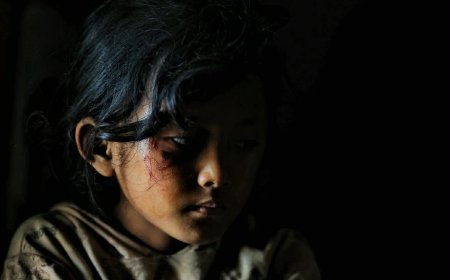
She tells her of the assault she endured on the streets for the audacity of purchasing cigarettes as a woman. Her face is bruised from a physical battering, her reputation now tarnished, and her salon employment possibly terminated.
Minoti admonishes Zai for her increasing petty rebellions and defiant habits, reminding her of her privilege. Zai, repentant yet oblivious to the severity of the power differential in her own contractual calling on Minoti to provide -- and Minoti’s limited capacity to refuse -- says weakly that she will “help” her.
In another scene, Minoti helps wrap Zai in a sari. Putting on a sari is an art, and Zai confesses her lack of skill. Minoti is reassuring and offers to teach her. In exchange, Zai gives her a half-used bottle of expensive perfume.
That is patriarchal contract: Charity in the form of help and even then, the gift is a half-empty object. When confronted by Minoti about her privilege and positionality, Zai tries to elicit pity from Minoti, pleading nervous anxiety heightened by insomnia.
Minoti and Zai adore each other yet it is not unconditional: The former helps wrap Zai into the aforementioned silky sari as she readies for a night out with her lover and applies steam treatment to her hair, and the latter promises to take care of her yet overly relies on her, applying pressure on her to get drugs for her.
The class betrayal of that demand is stark, pointed out by Minoti who admonishes Zai for being oblivious of her privilege living in an air conditioned house, having every life luxury, marrying the man of her dreams and carelessly jeopardizing Minoti’s own life dreams of saving money to have a beauty salon -- even a family -- of her own one day. Zai’s desperate and manipulative plea to Minoti to get cigarettes and drugs for her exposes the latter young woman to street violence.
The Difficult Bride is a bold foray into the feminist horror genre. It aligns with feminist scholar Johanna Isaacson’s (2022) characterization of contemporary horror that depicts the travails of feminized bodies, that links oppressions of heteropatriarchy and capitalism, and reveals female compliance, complicity, disruption, and defiance to heteronormative domination.
The beauty salon manager is the “capitalist monster” playing the mechanical matriarch of her empire of salon staff of working-class women and expectant brides of the elite classes waiting to be transformed by high-tech beauty regimens like PRP, accelerated weight loss, skin lightening sessions, and hair straightening packages that aim to twist, prick, and shrink every part of the female body to catastrophic ends.
As Isaacson notes, contemporary horror depicts patriarchal capitalist heteronormative oppression through women figures who appear as spectral ghosts or capitalist monsters in public and private.
Such monstrosities appear as “uncanny” which, drawing from Freud, she surmises as a feeling of terror or alienation in the face of more familiar phenomena.
This uncanniness arises not despite familiarity, but because of familiarity, revealing that the source of horror is intimate relations within capitalist patriarchy, as Isaacson points out.
Familial gender roles and the ways in which women comply, reify, resist, and subvert are reflected in The Difficult Bride, particularly in its ambivalent ending. As such, family as an institution perpetuates capitalist domination, yet a simultaneous refusal of that domination makes it both cage and sanctuary.
However, in contemporary horror films, justified and necessary women’s defiance disrupts capitalist violence and makes the case that it cannot carry on with impunity.
Zai is constructed as a “different kind of a woman” who resists the shackles of the patriarchal family that confine her yet is not able to include other women -- namely, Minoti -- in her search for emancipation.
Capitalist labor hierarchy effectively sabotages solidarity between women that should be collaborating for better labor and life conditions.
Frequently, women are coerced into passive roles and those who defy such prescribed roles are punished. Both Zai and Minoti are punished and scapegoated in the film, sometimes by other women, maternal figures, reflecting the cross-class and cross-generational aspects of patriarchal power.
Zai’s mother and the salon manager are protected by and thus protect and elevate patriarchy. Those who disrupt are maligned, made outcast, and ultimately driven to mental breakdown (Zai) or worse, death (the ghost bride).
Zai both disrupts patriarchy and benefits from it, as evidenced by Aarman’s financial power by association and Minoti’s meek compliance to her demands.
Women’s contradictory, conciliatory positionality here raises the question of whether women can truly transcend capitalist-patriarchal barriers.
Isaacson argues that unlike the classic genre of horror cinema, contemporary horror recognizes the limited logic of “lean in” and offers ways of “lean out” into social solidarity and towards a struggle for structural change.
It critiques individualistic self-advancement and shows that injustice cannot be dismantled by individuals, but rather urgent systemic change.
Even if commercial and classic horror films feature strong women, those do not necessarily lead to empowerment; rather, one strives for a feminist persona that is anti-capitalist, that strikes back at the violences induced by neoliberal multiculturalism.
Creating memorable figures of refusal and defiance, horror films can provide feminists with analytic tools to fight complacency and despair.
Saturating viewers/witnesses with discomfort, they show the fragility of the symbolic order and open up ways toward alternative imaginaries. Certainly, Zai does not lean in; quite disturbingly, she finds no solidarity to lean out.
In the final scenes of the film, Zai is walking alone -- cleansed by the rain and her newly-shaved head -- yet unable to bring along Minoti, who cannot escape the terms of capitalist labor to free herself.
The struggle is lonesome and thus, in a way, her experience is folded back into the dominant order even as she exposes its fragility, and consequently gains a semblance of individual freedom.
Yet, like in her previous woman-centered films, the making of The Difficult Bride is a site of solidarity behind-the-scenes: The actress who portrays Zai is a Smith College compatriot of Hossain’s; Hossain uses a mostly women crew and cast; and they all work and live side-by-side in creative labor.
The film was funded through a number of international cinematic grants, and included a multi-national and multi-generational crew; for many, the trip to Dhaka city was a first.
Hossain talks about the transnational expectation that cinema from Bangladesh ought always be about poverty and class inequality, topics well-depicted in some of her earlier films.
The subject matter of The Difficult Bride, set in and among the rich and powerful, brought not a minimum amount of discombobulation, which is bound to continue as it moves through various screening locations.
At the time of this writing, The Difficult Bride has already screened and received awards and acclaim at both the Venice Film Festival and the Toronto International Film Festival, both prestigious global sites to make its cinematic debut.
The joyful soundtrack, nuanced cinematography, and the framing of female desire with a feminist gaze -- a feminine aesthetic hailing all the way back to Hossain’s Meherjaan -- inflects the viewing experience of this latest film with quiet disruptions to women’s subordination, making space where it may for emergence of the bold beauty of women’s subversion.
Elora Halim Chowdhury is Professor and Chair of the Women’s, Gender, & Sexuality Studies Department at the University of Massachusetts Boston. She is the author of Ethical Encounters: Transnational Feminism, Human Rights, and War Cinema in Bangladesh (Temple University Press, 2022).