






































![A Ledger of the Soul: Navigating the Allah-Bhagavant Nexus in a 19th-Century Puruṣākāra Jñāna Caupara [Gyan Chauper]](https://counterpointbd.com/uploads/images/202608/image_430x256_6a93baa3b09a7.jpg)



















The Myth of Rohingya Aid Dependency
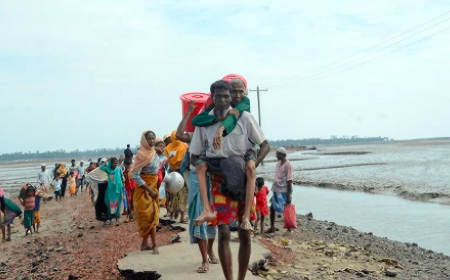
The Rohingya are not “fully dependent” on anyone. They are dependent only to the extent that they have been made dependent -- by design, by policy, and by a system that manages dependency rather than ending it.
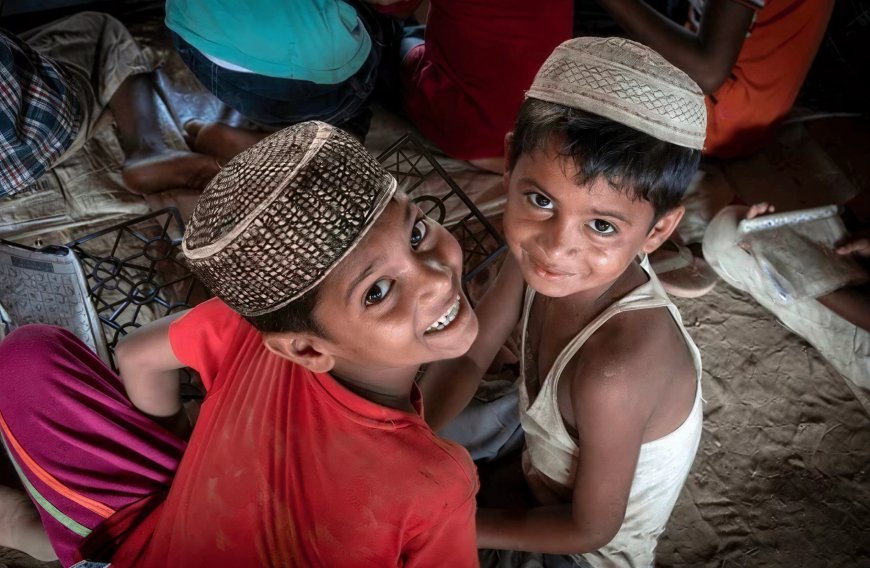
Last August, the World Food Program warned that food assistance for more than 1.2 million Rohingya refugees in Bangladesh would end after November 30 unless urgent funds were found.
“We have enough money until November 30,” said Country Director Domenico Scalpelli. “On December 1, the situation will be zero -- no food for 1.2 million people.”
A few months earlier, he told reporters that the Rohingya “remain entirely dependent on humanitarian assistance for their survival.”
That claim is repeated so often that it has hardened into conventional wisdom. When even Unicef’s celebrity ambassadors declare that the Rohingya are “100% dependent on aid,” it shows how deeply the narrative has taken hold.
Hollywood actor Orlando Bloom, after a tightly managed visit to the camps, remarked that refugees “have really nowhere to farm ... so they’re 100% dependent on aid from Unicef and partners.”
His words were scripted for empathy, but they echo the same framing: A story in which enforced illegality is recast as helplessness, and deprivation appears natural rather than imposed.
That narrative travels easily. Indeed, every few weeks, someone in the humanitarian echo chamber posts a line like this: “Nearly 1.2 million Rohingya refugees in Bangladesh are fully dependent on aid from the World Food Program.”
It sounds factual, even compassionate. But it isn’t true. Not about the numbers, and certainly not about the lives that phrase tries to summarize.
The Rohingya are not “fully dependent” on anyone. They are dependent only to the extent that they have been made dependent -- by design, by policy, and by a system that manages dependency rather than ending it.
Bangladesh denies the Rohingya the right to work or move. They are confined to camps where even secondary schooling is restricted.
Yet anyone who has spent time inside these fences knows that people work all the time.
They sell vegetables, drive tomtoms, cook, smuggle, repair phones, move goods, harvest crops, and do day labour -- a few even risk using illegally acquired Bangladeshi IDs to get hired.
Informal economies pulse through the camps because they must. When WFP cuts the ration to seven or eight dollars per person per month, there is no choice but to find income elsewhere. Survival demands illegality.
While Bangladeshi officials insist that repatriation is the only solution, a growing body of research argues that this stance has produced a dangerous policy stalemate.
A recent policy brief by Mohammad Salehin and Mizanur Rahman for the Peace Research Institute Oslo notes that, with more than one million Rohingya now in Cox’s Bazar, both large-scale repatriation and formal, citizenship-linked integration are currently unfeasible.
Donor fatigue and Myanmar’s ongoing civil war, they argue, are deepening the crisis rather than resolving it. Instead of treating integration as an all-or-nothing taboo, the authors propose a form of de facto local integration.
This would allow regulated income-generating activities within the camps and surrounding areas.
This would enable refugees to become more self-reliant while reducing pressure on humanitarian budgets and easing economic resentment in host communities -- all without altering the refugees’ precarious legal status.
Even before the latest ration cuts, surveys by Human Rights Watch and the Norwegian Refugee Council found that more than half of Rohingya adults -- and nearly a third of older adolescents -- were working informally inside or just outside the camps.
Those studies date from the early years of the response, yet no subsequent evidence suggests the pattern has reversed; if anything, shrinking food assistance has made informal labour more essential. Market research by XCEPT documented small trading hubs where refugees buy medicine, data, and transport -- all of which require cash.
To call such people “fully dependent” is therefore dishonest. It erases the small, grinding industries that sustain the camps and the exploitation that shadows them.
Every Rohingya who leaves the camp to farm salt or carry bricks risks arrest, beating, or worse. Women who take cleaning or childcare jobs face harassment, wage theft, and trafficking.
Inside the camps, so-called “volunteer” work pays token stipends, allowing NGOs to extract labour without acknowledging it as labour. Dependency is less a condition than a performance forced upon refugees by bureaucratic design.
The fiction of “full dependency” is further undermined by the World Bank and UNHCR’s 2025 labour market study, Two Settlements, Two Diverging Paths.
Drawing on panel survey data from 2022–2023, the study found that roughly one-third of working-age Rohingya had worked in the previous year -- despite formal prohibitions on employment.
In Cox’s Bazar, fewer than one quarter of employed Rohingya were engaged in humanitarian “volunteer” or cash-for-work schemes; the majority were earning through informal wage labour or self-employment.
In other words, even within a system designed to prevent integration, people are working.
The same study reveals how dependency is structured, not natural.
In Bhasan Char, one in three Rohingya actively seeking work could not find it. Among youth aged 15-24, over two-thirds were not in employment, education, or training, with young women overwhelmingly excluded. This is not passivity; it is enforced idleness.
When legal work is prohibited, mobility restricted, and employment rationed through aid agencies, the resulting unemployment becomes evidence for “dependency.” The system first blocks economic participation and then cites the blockage as proof that aid is indispensable.
The introduction of tiered assistance by the World Food Program from April 1, implicitly acknowledges economic differentiation within the camps.
If all households were uniformly dependent, there would be no basis for calibrated reductions. WFP’s shift reflects not self-sufficiency but stratified hardship -- some households are coping through informal work and remittances, while others are not.
The same PRIO brief underlines that camp-based livelihoods are already technically and logistically possible. Because almost all newly arrived Rohingya have been biometrically registered, mobile operators could legally issue SIM cards in refugees’ own names and link them to mobile banking, opening up small-scale digital and financial transactions inside the camps.
The authors sketch out a menu of options that begins with microfinance for small businesses, including grocery stalls, tailoring and repair shops. This is paired with digital training in fields like graphic design and data entry to help refugees enter online labour markets.
Beyond these, they also suggest a government-sanctioned economic zone where refugees could produce goods -- such as pickles and handicrafts -- specifically for the local Burmese Market in Cox’s Bazar.
Crucially, they argue that tightly regulated, camp-based livelihoods would not create major “pull factors.” The push factors in Myanmar -- ongoing civil war, extreme violence, and systemic denial of rights -- overwhelmingly outweigh any economic opportunity available in the camps.
In contrast, banning all income generation only deepens aid dependency, idleness, and exposure to criminal networks and the very forms of radicalization that Bangladeshi officials frequently warn about.
So why do agencies keep repeating it? Because “full dependency” is a funding story that works. It reassures donors that their money is indispensable and portrays the agencies themselves as saviours keeping famine at bay.
The narrative travels well in Geneva and New York. It also pleases Dhaka, which wants the world to see the Rohingya as a temporary burden -- pitied, contained, but never integrated.
Everyone in the chain benefits from maintaining the fiction. The host state collects praise and projects; the UN and NGOs secure budgets; donors feel humane. What disappears is the politics that created the dependency in the first place.
Some Rohingya advocates in the diaspora have, understandably, adopted this script too. Many now move within the humanitarian ecosystem -- fellowships, advisory boards, consultancy, side-events, and NGO partnerships -- where fluency in the system’s idiom is almost a requirement.
Speaking that language keeps invitations and funding flowing. A plea framed in hunger and helplessness attracts sympathy; a demand framed around rights and accountability is quickly branded “political” or “unhelpful.”
For those who depend on maintaining good relations with UN agencies or with Bangladeshi officials, there is a clear incentive to avoid friction. It is safer to repeat that the community is “fully dependent” than to challenge the architecture of containment that makes them so.
The humanitarian industry rewards compliant narratives and punishes dissonance. Capture happens quietly -- not through conspiracy, but through professional self-preservation.
But the cost of that capture is steep. By reproducing the myth of absolute dependency, even well-intentioned advocates help to normalize a structure that immiserates their own community. It converts the Rohingya into moral capital for others. The humanitarian sector thrives on the visible suffering of populations it cannot, or will not, emancipate.
The result is the aid-industrial complex -- a system that manages crises rather than resolves them, converting surplus populations into perpetual clients. In Cox’s Bazar, dependency is not a social failure to be corrected; it is the product the system delivers.
A more honest description of the Rohingya context would be this: The Rohingya are aid-reliant but economically active -- working illegally, exploited systematically, and criminalized for trying to live.
Recognizing that truth would force uncomfortable questions. Why does the world tolerate a containment policy that bans legal work while profiting from illegal labour? Why do agencies that speak the language of empowerment stay silent about the right to work? And why have refugee representatives been reduced to repeating slogans that erase their people’s agency?
The fiction of dependency endures because it serves too many interests. But it also blinds us to the Rohingya’s own capacity and dignity. They are not waiting to be saved; they are surviving in spite of a system that needs them to remain dependent.
To dismantle that fiction is to confront the uncomfortable alliance between donors, host states, and NGOs that sustains it -- and to insist that humanitarianism without rights is just another form of control.
Shafiur Rahman is a journalist and documentary filmmaker focusing on the politics of refugee management in South and Southeast Asia. He writes the Rohingya Refugee News newsletter.