







































































From Blueprint to Reality
The value of a 180-day plan lies precisely in BNP's ability to make the early report card meaningful. If the clock was started by BNP itself, it cannot now complain that citizens are watching it.


A government’s first six months are rarely enough to judge its entire tenure, but they are long enough to judge its direction. Six months is one-tenth of a five-year parliamentary term.
It is also long enough for an election promise to begin turning into policy, for a policy to reveal its administrative machinery, and for political rhetoric to collide with the stubborn realities of governing.
That is why the contrast between BNP’s much-publicised “First 180-Day Action Plan” and its first six months in office deserves closer attention. One represents what the party said it would do against the clock. The other shows what happened after the clock actually started ticking.
The 180-day blueprint was politically significant because it attempted to change the traditional grammar of Bangladeshi election politics. Manifestos have generally been collections of promises without clear deadlines.
BNP instead attached a six-month timeframe to a wide-ranging programme covering employment, education, healthcare, agriculture, women’s empowerment, industry, information technology, environment, law and order and expatriate welfare.
In principle, this was a welcome move. A government that tells citizens not only what it intends to do but also when it intends to begin can be judged more objectively. Accountability becomes measurable when promises acquire a deadline.
But a deadline can also become a political trap. The broader the promise, the greater the gap between aspiration and implementation can become.
BNP’s blueprint proposed laying the foundation for one crore new jobs within six months, increasing the foreign direct investment to GDP ratio from 0.45% to 2.5%. Working towards a one trillion-dollar economy by 2034, establishing investor-friendly digital services, expanding freelancing, introducing Family Cards for 50 lakh rural families and developing a Farmers’ Card system.
It also envisioned planting up to 300 million trees over five years. These are not minor administrative commitments. They require money, institutions, coordination and, above all, state capacity.
The employment pledge perhaps best illustrates the difference between political ambition and economic arithmetic. Every year roughly 20 to 22 lakh young people enter Bangladesh’s labour market.
Against that background, the promise of laying the foundation for one crore jobs within the first six months sounded transformative.
Yet employment is not created simply by announcing a target. It depends on investment, industrial expansion, SME financing, export diversification, infrastructure, skills and consumer demand.
If the country cannot create productive employment, a large population may remain technically employed while earning too little to improve its standard of living.
The real test, therefore, is not the number of jobs announced but the number of sustainable and productive livelihoods created.
Six months into government, that test has become more complicated because the most immediate economic problems are not necessarily the ones highlighted by political slogans. Inflation remains above 8% even after a slight decline in July.
For middle and lower-income households, the statistical movement in inflation matters less than the accumulated increase in the prices of food, education, healthcare and housing.
When real income falls, economic growth loses much of its political meaning. A country can celebrate GDP growth while households quietly reduce consumption, postpone treatment or withdraw children from better educational opportunities.
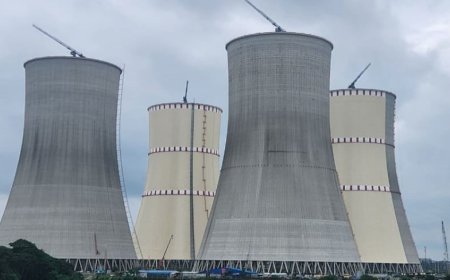
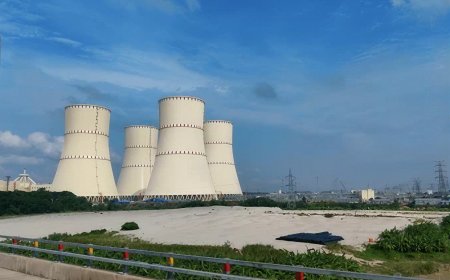
The energy crisis has made that contradiction even sharper. Load shedding has become one of the most visible problems of the government’s first six months, while factories have reportedly been forced to close because of fuel shortages.
The blueprint spoke of industrial expansion, investment and employment, but industries cannot create jobs when electricity and gas supplies are unreliable.
If electricity generation capacity had reached around 30,000 MW during the previous era while the supply line was reportedly no more than 13,000 MW, what is being done about the cost of excess and unnecessary generation?
The public deserves a transparent answer because inherited problems do not remove the responsibility of the present government to manage them.
This is where the 180-day blueprint encounters its first major contradiction. It was designed as a programme of action, but the first six months have been dominated by crisis management.
The government inherited inflation, energy shortages, weak revenue collection and institutional problems.
That is an important fact and should not be ignored. Yet inheritance cannot become a permanent explanation. A new government is elected precisely to manage inherited crises differently.
The real measure of change is therefore not whether the BNP created these problems, but whether it has demonstrated a credible capacity to solve them.
The same question applies to governance. The blueprint promised “zero tolerance” towards corruption, extortion and impunity and spoke of strengthening professionalism within the police and bureaucracy through training, motivation and monitoring.
Yet the first six months have raised questions about whether political loyalty is still influencing state institutions.
According to the source material, 17 current and former BNP leaders received contractual appointments to senior positions in 11 important government organisations and corporations and eight urban development authorities during June and July, while reportedly retaining party positions.
More than 50 universities also saw the appointment of vice-chancellors described in the source as politically affiliated. If a party promised to reduce partisanship in state institutions, such appointments inevitably create questions about the distance between the blueprint and practice.
This is particularly important because institutional reform cannot be measured through speeches. A politically neutral bureaucracy is not created by declaring neutrality. It is created when appointments, promotions, investigations and administrative decisions become sufficiently independent of party identity.
The government’s credibility will therefore depend less on how often it repeats the language of professionalism and more on whether citizens can see professionalism operating in reality.
Human rights offer another revealing test. The Cabinet approved the drafts of the National Human Rights Commission Act and the Prevention and Redress of Disappearances Act on August 10. But concerns have been raised over the proposed Human Rights Commission’s limited ability to investigate allegations against law enforcement agencies.
If the commission must seek reports from the very agencies accused of violations, its independence becomes questionable. The handling of disappearance investigations and the composition of the committee selecting the commission’s leadership is also a matter of concern.
For a party whose leaders and activists themselves experienced disappearances and human rights abuses during years of opposition, this is more than a technical legislative issue. It is a test of whether suffering produces institutional memory or merely political memory.
The contrast becomes equally striking in agriculture and social protection. The blueprint’s Family Cards and Farmers’ Cards were among its most politically attractive proposals. Initiatives such as these have started to see the light of day, although questions remain about their practical feasibility.
That is encouraging, but launching a programme is not the same as making it effective. A Family Card must reach the right household, transfer meaningful support and prevent political capture.
A Farmers’ Card must contain accurate information and help farmers obtain fair prices, finance and services. Otherwise, technology merely gives old patronage networks a new administrative name.
The first six months also reveal a less discussed dimension of governance: Political energy. The government and ruling party remain united, but the BNP has reportedly been less visible politically beyond routine programmes, while Jamaat and NCP have been comparatively vocal in the field.
At the same time, many BNP leaders holding government responsibilities have not relinquished their organisational positions. This creates a basic institutional dilemma.
Can a politician simultaneously be an effective minister, a party organizer and a guardian of neutral administration? The answer may be yes in theory, but the burden of proof lies with the government.
Foreign policy presents another test of maturity. Bangladesh now operates within an increasingly complicated triangle involving China, India and the United States. Bangladesh must prioritize long-term national interests over short-term domestic populism.
The government’s success will depend on whether it can maintain strategic balance without turning foreign relations into an extension of domestic political competition.
In an economically vulnerable country, diplomacy is not merely about prestige. It affects investment, trade, energy security and strategic autonomy.
Ultimately, the most important difference between BNP’s 180-day blueprint and its first six months is that the blueprint was written in the language of possibility, while governing happens in the language of constraint.
On paper, the plan is expansive. In reality, the state has limited fiscal space, a strained energy system, institutional weaknesses and a population already exhausted by inflation.
The question is therefore not whether every promise has been fulfilled in 180 days. That would be an unfair standard. The more serious question is whether the government has established the systems through which those promises can realistically be fulfilled.
The first six months should not be treated as a verdict on the BNP government. They should be treated as its first report card. The government still has more than four years ahead.
The value of a 180-day plan lies precisely in its ability to make the early report card meaningful. If the clock was started by BNP itself, it cannot now complain that citizens are watching it.
H. M. Nazmul Alam is an Academic, Journalist, and Political Analyst based in Dhaka, Bangladesh. Currently he teaches at IUBAT. He can be reached at [email protected].