






























































Why the President is Right Wing Enemy Number One
Not only did Mr. Alamgir represent a big obstacle for the right-wing network in their pursuit of power and rent but he was also a prominent face of the liberal democratic elite. He is also an obstacle in the spreading of right-wing influences within the BNP.

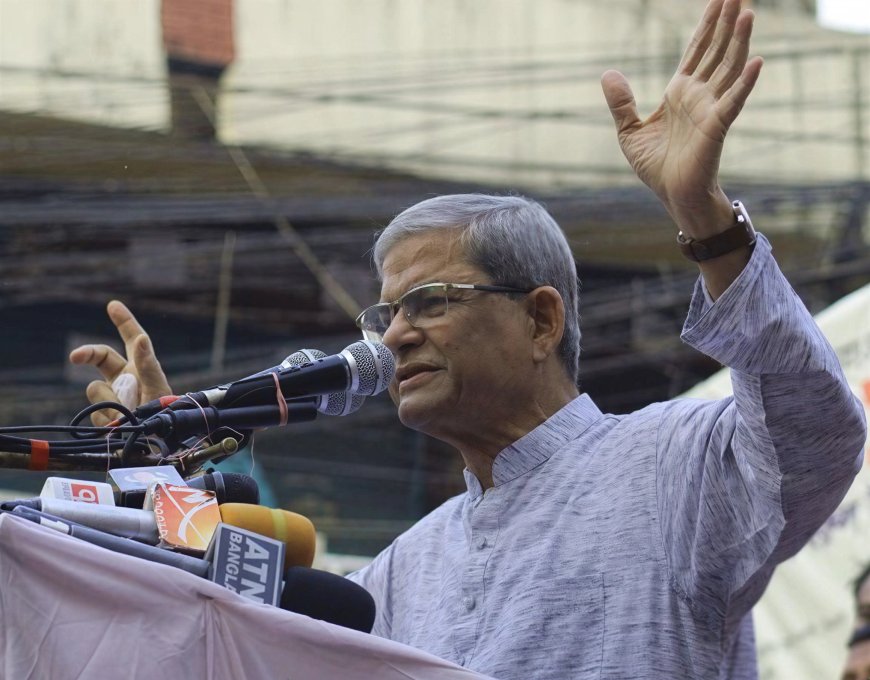
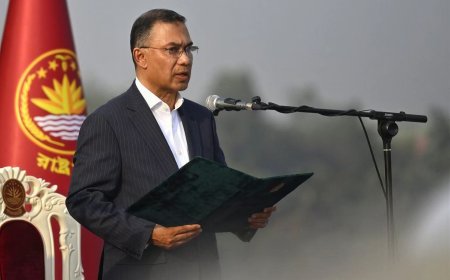
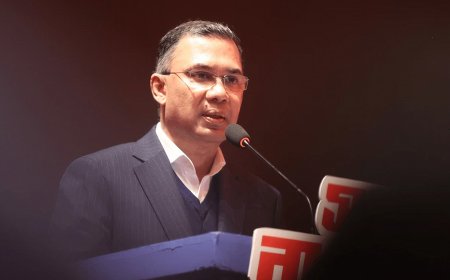
The election and investiture of Mirza Fakhrul Islam Alamgir as the 23rd president of Bangladesh was a two-day occasion of great national comity. Emotional scenes in the parliament and tributes from the opposition highlighted another rare moment where the July Uprising coalition came together. He is being hailed as a guardian of democracy.
However, this all-round amity marks a temporary pause at the end of a two-year period when Mr. Alamgir was one of the principal targets of unrelenting lies, vilification, and calumny by right-wing populists. Many of the political luminaries, who are now expressing satisfaction with Mr. Alamgir’s ascension to presidency, were active participants or cheerleaders in that vilification campaign.
To anyone whose memory of public affairs goes back beyond a few weeks, this turnabout may seem curious, but this represents dynamics of one of the main strands of post-July politics by the right-wing.
The post-July immediate political settlement is the reason for these attacks. The main lines of attack were that Mr. Alamgir is a stooge of India, he is soft on Awami League and protecting them from just retribution, and he is conspiring with the powers that be to subvert the "spirit of July."
This is doubly ironic because all throughout his long tenure as BNP’s Secretary General during the Awami regime, the regime propagandists cast aspersions on his Freedom Fighter credentials and connected him with politics of his father during the Pakistan period. And second only to Begum Khaleda Zia, Mr. Alamgir was an iconic face of victimhood of the Awami regime’s relentless oppression of political rivals. Moreover, few elder senior political leaders engaged with student-leaders of July-Uprising leaders from other parties with more respect and gratitude than him.
Right-wing activists from abroad and home led these attacks and their minions amplified them. They were the vanguard of a vast right-wing network that rapidly constituted immediately after Hasina fell.
This network consisted of right-wing activists, intellectuals, significant part of leadership of Jamaat and Shibir, significant part of leadership of NCP, a patron cabal within the Interim Government and a faction of BNP.
A common right-wing ideology was the unifying thread of this network, but the formation and activity of the network has much less to do with ideology and more with the post-July political settlement.
A political settlement is the balance of power or the shared understanding among elites of powerful groups that roughly determines how power and political rents are to be shared among the groups. Political rents are economic benefits or prestige and influence that is generated by the state.
The abrupt fall of Hasina’s political settlement, which monopolized power and rents, suddenly created a nation-sized gap in ruling elite space. The vacuum was rapidly filled by BNP, Jamaat and the students patronized by the Interim Government.
Despite the rampant looting of the previous regime that left the national cupboard bare there were still lucrative rents for the winning coalition of July. Rents from government posts and appointments, government contracts, government conferred honors and most importantly, extraction of resources from the members and affiliates of the previous regime.
The unique August 2024 political settlement meant that BNP, Jamaat and the Interim-sponsored student party enjoyed a rough parity in power and share of rents. We saw overnight proliferation of nouveau elites in the national stage exerting their power and influence, strutting about on the national stage and arranging distribution of rent behind the stage.
But this settlement was on shaky grounds. The settlement was not in balance with the distribution of the national democratic political power and de facto power of established elites and institutions. It was meant to be interim and a democratic election at the end of it would reallocate political power overwhelmingly to the victor and thereby share of political rent.
BNP was expected to win the election easily and that marked a known future where the interim gravy train for the rest would dwindle to a trickle.
That election horizon and what lay beyond shaped the incentives and the actions of the aforementioned right-wing network throughout the interim period. Their principal goal was to prolong the interim period so that the interim settlement and distribution, from which they were richly benefiting, could continue.
Instigating instability to undermine the power of the established elites, continuous revolutionary rhetoric, using reforms to play for time, all were tools to defer the election and prolong the interim gravy train.
A secondary goal of the right-wing network was to infiltrate and occupy substantial grounds within BNP so that, in the eventuality of an election, the distribution of rent remains somewhat in their favor. And this is where the concerted attack upon Mr. Alamgir comes in.
In August 2024, Dr Yunus and General Waker-uz-zaman were the two men in charge of Bangladesh. Dr Yunus headed the government but, in the absence of functioning police and the state bureaucracy in disarray, the Army provided order and held the country together. However, Dr Yunus was not a hands-on executive on domestic affairs.
His focus was mostly on global diplomacy. Cabals and factions within the interim government pursued their own domestic agenda with free rein. The resulting domestic political chaos rapidly deteriorated relations between Dr Yunus and General Waker to the point that they were not directly communicating with each other.
Mr. Alamgir was the third man in charge as the leader in interactions between the government and BNP, the largest political force post-July and the incumbent power to be. He had the close confidence of both Dr Yunus and General Waker and acted as the mediator and third party in the highest circle of power during the interim government.
Whenever domestic crises arose, and they were plenty and regular, calls came to him to mediate. Moreover, Mr. Alamgir was also instrumental in arranging the June meeting between Tarique Rahman and Dr Yunus that set the general course and calendar of the interim government for the next six months.
So, it would not be an exaggeration to say that Mr. Alamgir provided the glue that held together the established national order during the transition and shepherded the nation towards a democratic election. And this is why, along with General Waker, Mr. Alamgir was the main target of attack by the right-wing network.
There were little ideological motives behind those attacks. It was mostly about power and rent. One way the impersonal, non-ideological aspect of the attack campaign revealed itself was how the relationship between the luminaries of the right-wing network and Faham Abdus Salam, Mr. Alamgir’s famous son-in-law, rapidly changed after July.
Faham Abdus Salam has been a central node in the network of Bangladeshi activists battling the Hasina regime intellectually and with information since 2013.
During the long period leading up to the July Uprising in 2024, he developed close working relationships with many of the most prominent activists at home and abroad, belonging to all parts of the political spectrum. Many of the most prominent influencers or the post-July right-wing network had strong ties with Faham in the pre-July activist network, some even were friends.
However, in the post-July interim political settlement, the right-wing network chucked aside the sentimental and material values of the previous ties in pursuit of power rent in the new Bangladeshi landscape. Mr. Alamgir and his family became targets of a campaign full of lies, calumny, and innuendoes.
From erstwhile friend, Faham Abdus Salam turned into an obstacle in the realization of their aims overnight.
While the objectives were distinctly material, the egregious way it used lies as the main weapon of the campaign revealed one important aspect of the ideological character of the right-wing network.
The post-July right-wing network in Bangladesh shares with the global right-wing populists and post-modern left a disdain for truth and objectivity in the politics of contention. They believe that marginalized groups, invariably themselves, don’t have the burden to demonstrate good faith, truth, and objectivity; these are the tools of maintaining a liberal democratic order anyway.
While the postmodern left articulates their political ethics through the lens of equity, the rightwing populists view morality in politics from the standpoint of the identity and interest of the traditional majority, which they believe are economically and culturally dispossessed by the entrenched liberal elites.
For the right populists, spreading disinformation or disregarding democratic norms are necessary tactics of asymmetric warfare against the powerful entrenched elite. Because of the similarity in the basic framework of political ethics, it’s not just happenstance that many of the big names in the rightwing network come from radical left backgrounds.
Not only did Mr. Alamgir represent a big obstacle for the right-wing network in their pursuit of power and rent but he was also a prominent face of the liberal democratic elite. He is also an obstacle in the spreading of right-wing influences within the BNP. That is why he was the relentless subject of their attacks till the day he was elected president.
However, the lull in their campaign is probably going to be short-lived. The post of president played a very critical role in all periods of turmoil and transition in our politics, even in the parliamentary period that began from 1990.
It’s because of the criticality of the position that the right-wing network continuously demanded removal of the previous president Mr. Shahabuddin Chuppu, even though he was but a puppet president, shikhondi in Bangla parlance.
President Mirza Fakhrul Islam Alamgir will continue to play a very important role in democratic continuity of the country. And that’s why his detractors will come back attacking him soon enough with a vengeance.
Shafiqur Rahman is a Political Economist and Executive Director of Bangladesh Research Analysis & Information Network (BRAIN).