






































































Bangladesh First Meets its First Major Test
Bangladesh’s possible entry into the Mecca Pact would be a consequential foreign-policy decision, testing whether the BNP government can translate its “Bangladesh First” policy into a strategic and politically sustainable choice.

In recent days, there has been intense speculation about whether Bangladesh might be considering joining Saudi Arabia, Pakistan, and Turkey as part of the recently signed Mecca Joint Defense Agreement.
Popularly referred to as the “Mecca Pact” this collective security mechanism is explicitly modeled on the North Atlantic Treaty Organization (of which Turkey is a member) and builds upon an earlier bilateral deal between Riyadh and Islamabad.
Almost immediately after the agreement was announced, there was speculation that it could be expanded to include others, with discussion focusing on the possibility of Egypt, Syria, and Bangladesh joining the founding members.
Speculation about Bangladesh joining the Mecca Pact was fueled by reports of an invitation extended to PM Tarique Rahman by the Saudi Crown Prince to pay an official visit to the Kingdom. Some potential concerns were also likely allayed when President Trump strongly endorsed the agreement after its signing.
For their part, Bangladeshi officials have indicated that they are open to discussions about possibly adhering to the agreement. This is not the place to analyze the Mecca Joint Defense Agreement in detail or speculate about the motives that the three founding members might have had for reaching this agreement.
Instead, my focus is to simply highlight some of the key considerations facing Dhaka as the BNP government decides whether moving forward with this possibility is in the country’s best interests and consistent with its stated “Bangladesh First” foreign policy.
Just the fact that Bangladesh has indicated a willingness to entertain such discussions was enough to set off alarm bells in neighboring India, indicating the potential stakes involved for Dhaka. This also comes in the wake of a recent downturn in Bangladesh’s relations with its larger neighbor caused by the fallout from PM Hasina’s August 5 press conference in Delhi.
The reaction to Hasina’s statements has threatened to derail a long anticipated “reset” in India-Bangladesh relations following Bangladesh’s February 2026 election.
While the members of the Mecca Pact have indicated an intent to follow the NATO example and include both diplomatic and military mechanisms in its organizational structure, it is clear that this is primarily a collective security arrangement.
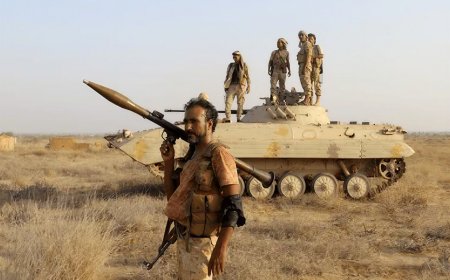
As with NATO’s Article V, the agreement seeks to deter third party aggression with the members pledging to come to each other’s defense. In order to participate as a possible future member of the Mecca Pact, Bangladesh would need to likewise commit to the deployment of its armed forces as required by the terms of the agreement.
As such, it is a consequential decision, as is any decision to commit military forces. There are many reasons why nations form alliances, whether NATO or the new Mecca Pact. As a member of this new alliance, Bangladesh would derive security benefits as the other members would commit to coming to its defense as required.
So, one lens through which Bangladeshi decision makers would need to analyze the costs and benefits of joining the Mecca Pact would be the value of having such collective security guarantees to deter any potential aggressors.
From a military perspective, this benefit would need to be weighed against the cost and risk of having to commit Bangladesh’s forces in defense of potential future allies.
From a purely practical perspective, for a military alliance to function properly, there needs to be interoperability between member state military forces in order for them to perform effectively on the battlefield. Issues related to equipment, tactics, doctrine and command and control would all have to be worked out in detail.
In this, Bangladesh’s military would be able to draw upon its extensive international experience in global peacekeeping operations in which it has operated alongside military forces from around the world. Alliance needs would help shape future force modernization, including equipment and training.
One reasonable expectation for Bangladesh would be that the alliance would entail a degree of burden sharing, given different levels of military and economic capability. At a time when global demand (and funding) for international peacekeeping forces is plummeting, Bangladesh may find itself with excess capacity in search of new missions.
A decision to join the Mecca Pact would also require an analysis of its impact on Bangladesh’s other bilateral and multilateral relationships. While the Mecca Pact has been framed by its members as purely defensive in nature, some might perceive this differently.
Notably, Indian sources have already expressed concerns about the Mecca Pact and there is no reason to doubt that Bangladesh joining the alliance would be interpreted negatively by many in India.
Joining the grouping could negatively impact Bangladesh’s relationships with other states. While there may also be anticipation that joining a security focused alliance would strengthen the overall relationships with other members, history has shown this is not always the case.
Finally, while a decision to join the Mecca Pact would not necessarily be in conflict with a Bangladesh First foreign policy, this would clearly be a consequential move for the country.
In a newly restored democracy, PM Tarique and his government would need to carefully perform a political calculus and seek a broad domestic consensus before signing onto the agreement. This would be particularly important because of the stakes involved, including the potential employment of military forces.
Past governments have similarly needed to take into consideration domestic politics before deployment of military forces in international peacekeeping missions and other expeditionary roles. At a minimum, consultations with the Parliamentary Opposition and other key stakeholders would be required.
None of the above discussion is meant to indicate that a decision on joining the Mecca Pact is imminent. Neither is it intended to express an opinion one way or the other.
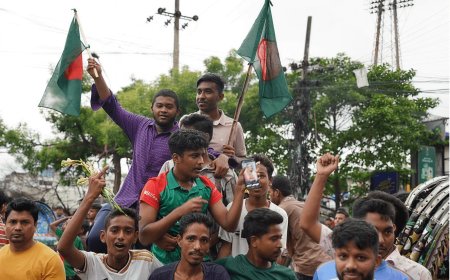
Rather, this issue coming to a head early in the BNP Government’s tenure provides an opportunity and a challenge to translate the “Bangladesh First” campaign slogan into policy.
Many will be watching closely as these deliberations proceed to determine how much the events of the past two years have changed Bangladesh’s international behavior.
Jon F. Danilowicz is a retired American diplomat of the Department of State.