







































































Fixing Bangladesh’s Broken Energy System Before the Lights Go Out
Bangladesh stands at an energy crossroads. By pairing modern financial risk management, diversified onshore infrastructure, and long-term producer partnerships with free-market structural reforms, the nation can move past recurring energy crises and build a resilient foundation for future economic growth.

Every day across Bangladesh, the rhythm of commerce is dictated not by consumer demand, but by acute energy shortages. From heavy industrial corridors to everyday households, national productivity is being systematically choked.
The crisis is no longer theoretical: Across major industrial hubs like Gazipur, widespread gas pressure drops force scores of factories routinely to halt operations or run well below capacity. Leading conglomerates across manufacturing, processing, textile dyeing, and steel production face recurring operational shutdowns, leaving downstream manufacturers without crucial raw materials.
In major urban centers like Dhaka and Chittagong, pipeline gas supply to residential kitchens has dwindled to a trickle. At the same time, rural regions remain burdened by a long-standing lack of pipeline infrastructure.
The underlying cause is clear: Bangladesh’s domestic natural gas reserves are rapidly depleting, and the state-run energy apparatus remains ill-equipped to handle the fallout.
For decades, natural gas was Bangladesh's quiet economic driver, supplying roughly 60% of its electricity grid. But indigenous production from aging onshore fields like Bibiyana and Titas has plummeted to approximately 1,620 million cubic feet per day (mmcfd) -- a steep decline against a national demand exceeding 3,800 mmcfd.
To bridge the widening gap, the country turned to imported Liquefied Natural Gas (LNG), procuring 410 to 800 mmcfd through floating regasification terminals. Yet, this reliance on volatile global spot markets exposed the nation's fragile fiscal reserves to severe commodity price spikes, leaving a massive daily deficit.
Policy missteps have hampered Bangladesh's attempt to replenish its gas reserves via offshore exploration.
The 2024 Offshore Bidding Round offered 24 blocks in the Bay of Bengal under the Model PSC 2023 but received zero bids from major international oil companies (IOCs).
The terms were unviable: Gas prices were capped against low fuel oil benchmarks, operator qualification criteria excluded nimble offshore specialists, and strict fiscal controls prevented seamless profit repatriation.
In response, Petrobangla launched the Bangladesh Offshore Bidding Round 2026 under a revised Model PSC 2026, offering 26 blocks (11 shallow, 15 deep-water) with a deadline set for November 30.
By tying gas prices to Brent crude (up to 11% with a $70-100/bbl collar), removing signature bonuses, and permitting full profit repatriation, the government has created an opportunity to attract global majors such as Chevron, ExxonMobil, and Shell.
The Single-Point Bottleneck
Beyond upstream depletion, Bangladesh’s gas crisis is severely compounded by structural single-point vulnerabilities in its midstream infrastructure.
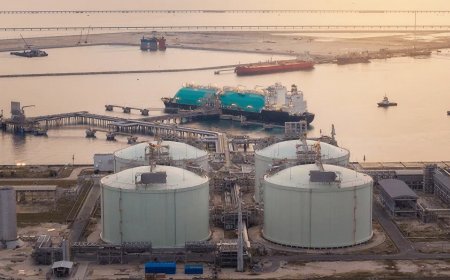
The nation’s entire LNG import capability hinges on just two Floating Storage and Regasification Units (FSRUs) moored offshore Maheshkhali -- one operated by Excelerate Energy and the other by Summit Group (under technology supplied by Excelerate).
With no onshore land-based regasification terminals in operation, the national energy grid is effectively trapped in a duopoly that operates as a single point of failure. Any disruption -- whether from scheduled maintenance, severe weather, forced technical outages, or accidents -- instantly throttles a massive portion of the country's gas supply.
Compounding this risk are poorly negotiated legal frameworks: Restrictive "take-or-pay" clauses lack robust performance recourse, forcing state agencies to continue paying substantial fixed capacity charges even when terminal operations come to a complete standstill.
Furthermore, terminal operationality alone does not guarantee supply. The state's procurement apparatus has repeatedly failed to secure consistent LNG cargoes. Driven by short-term planning, government agencies have frequently resorted to ad-hoc spot market purchases from secondary trading merchants, resulting in deliverability delays and inferior fuel quality that damages downstream infrastructure.
The entire picture reveals a complete breakdown of due diligence coupled with the incompetence of state-owned entities ill-equipped to deal with an international energy market amid a global supply crisis. Securing long-term stability requires a clear, multi-pronged strategy: Expanding supply, hardening infrastructure, and overhauling market architecture.
Securing Supply
In the short to medium term, Bangladesh must bypass third-party trading intermediaries and establish direct supply relationships with primary producer trading desks (such as Shell, TotalEnergies, or QatarEnergy).
Rather than relying on volatile ad-hoc market purchases, the state should structure a balanced procurement portfolio combining fixed medium-term contracts -- securing an agreed fixed price for entire one-to-five-year terms -- alongside disciplined spot volume purchases.
Where spot purchases are utilized to manage seasonal load peaks, spot price volatility must be actively hedged through professional financial risk management. State enterprises Petrobangla and the Bangladesh Petroleum Corporation (BPC) must build dedicated internal pricing and risk analytics teams.
By utilizing standardized exchange instruments -- such as NYMEX Henry Hub (HH) futures, Brent-linked derivatives, or over-the-counter (OTC) price swaps -- Bangladesh can lock in price ceilings on its spot volumes, effectively insulating its public budget against global energy shocks.
Over the long term, Bangladesh must diversify its primary energy sources and physical import infrastructure:
Onshore regasification infrastructure: Transition toward developing onshore, land-based regasification terminals. In-ground facilities carry lower long-term operational costs, offer significantly higher reliability and storage capacity, and require less specialized technical assistance than offshore FSRUs.
Direct off-take contracts: Move away from middleman traders and secure long-term LNG contracts directly with producers, tapping into major upcoming production capacity such as ExxonMobil's Mozambique LNG facility (expected online around 2031) and US Gulf Coast liquefaction projects like Golden Pass and Freeport LNG.
Renewable power allocation: Dedicate non-arable government land outside major urban centers to utility-scale solar farms. In metropolitan areas, incentivize rooftop solar paired with Battery Energy Storage Systems (BESS) to capture daytime generation for use during peak evening hours.
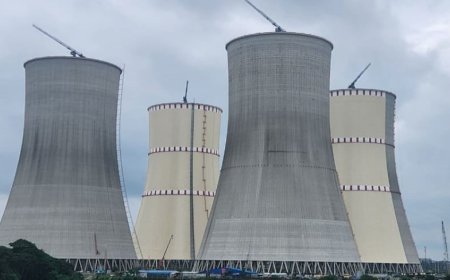
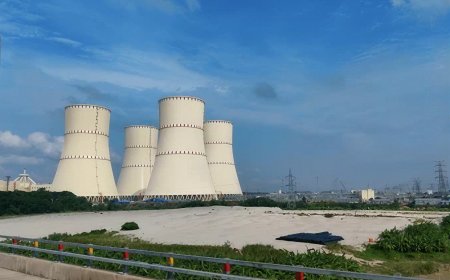
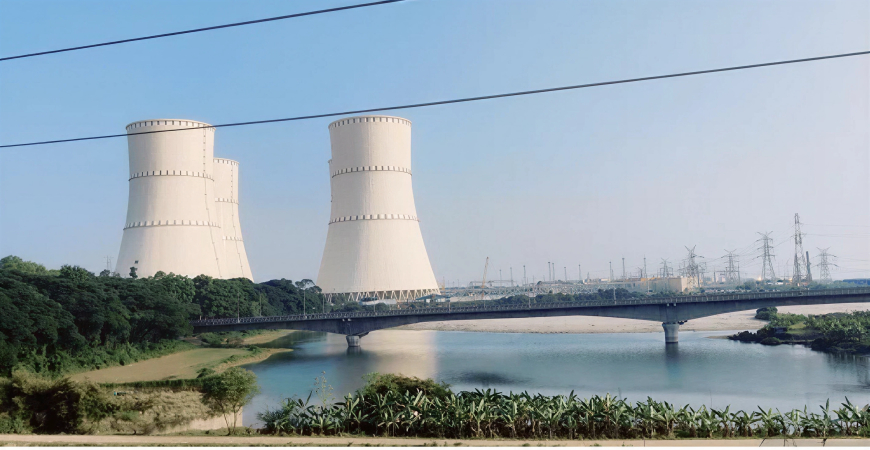
Baseload & modular nuclear: Complement the country's single nuclear power plant at Rooppur with Small Modular Reactors (SMRs) -- engaging technology firms like Aalo Atomics -- to provide reliable, distributed baseload power directly to heavy industrial corridors.
Deregulating the Market
Securing fuel supply addresses only half the equation; the market architecture itself requires fundamental reform. For decades, state monopolies have managed procurement, generation, transmission, and distribution, leading to systemic inefficiency and fiscal strain.
While the Bangladesh Energy Regulatory Commission (BERC) currently attempts to regulate rates, pricing decisions remain vulnerable to bureaucratic lag and political intervention.
Bangladesh must transition toward full value-chain deregulation, enabling private enterprise to compete alongside state firms in upstream exploration, fuel importing, refining, and power generation. To establish true market transparency, price-setting authority must be removed from political ministries and assigned to an independent System operator (ISO)s.
Crucially, the ISO must act strictly as a non-market participant -- a completely neutral balancing authority independent of all market players, including state agencies, private generators, and political bodies.
Marginal cost pricing: Rather than setting arbitrary tariffs, the ISO functions as a real-time supply-and-demand clearinghouse. It clears energy prices dynamically based on the actual marginal cost of procurement and generation required to meet grid demand.
Open market participation: Under ISO oversight, any qualified independent supplier or generator can sell energy into the pool, fostering competitive price discovery.
State-owned transmission & distribution infrastructure: To prevent private cartels or regional distribution monopolies, core delivery assets -- high-voltage grid transmission lines, gas pipelines, and bulk petroleum transport networks -- remain state-owned public utilities. Private suppliers cannot charge inflated distribution premiums, ensuring equitable access to transportation networks while guaranteeing national energy security.
Importantly, social safety nets should be unbundled from energy pricing: Rather than distorting wholesale market rates with broad supply-side subsidies, the ISO would oversee direct-to-consumer subsidies for vulnerable households.
This structure maintains price transparency, encourages smaller private entrants to compete, prevents monopolies, and ensures the lowest reliable energy prices for businesses and consumers alike.
Bangladesh stands at an energy crossroads. By pairing modern financial risk management, diversified onshore infrastructure, and long-term producer partnerships with free-market structural reforms, the nation can move past recurring energy crises and build a resilient foundation for future economic growth.
Mohammed Mia is an investment executive and community leader focused on democracy, economic empowerment, and US-Bangladesh engagement. A co-founder of UBUI, he brings two decades of experience across global finance, civic leadership, and diaspora-driven institution building.