


































![A Ledger of the Soul: Navigating the Allah-Bhagavant Nexus in a 19th-Century Puruṣākāra Jñāna Caupara [Gyan Chauper]](https://counterpointbd.com/uploads/images/202608/image_430x256_6a93baa3b09a7.jpg)


















What Governments Misread Before They Fall
Dismiss early grievances, personalize criticism, stigmatize opponents, mistake force for authority, answer old questions, control information instead of rebuilding trust and confuse institutional power with public legitimacy. These are not uniquely Bangladeshi mistakes. They are universal governmental temptations.


Every government prepares for opposition. Few prepare for disappointment.
The difference matters because governments are rarely defeated by the size of a protest. They are defeated by their inability to understand what that protest has become. Political crises seldom explode overnight.
They evolve through a sequence of small miscalculations, each appearing manageable in isolation until, together, they produce a crisis no state machinery can reverse.
That may be the most enduring lesson of Bangladesh's July Revolution. Two years later, the story is often told through its dramatic finale. Yet the real political lesson lies elsewhere.
The Awami League did not lose power simply because students protested. It lost because it repeatedly misread the changing nature of public anger.
What began as an administrative dispute gradually transformed into a moral confrontation, and the government continued responding as though the original dispute still existed.
There is an old saying in politics that governments answer the questions they wish had been asked. The Awami League spent much of July answering questions about quotas long after Bangladesh had begun asking questions about dignity, accountability and justice.
That distinction explains far more than any conspiracy theory ever could.
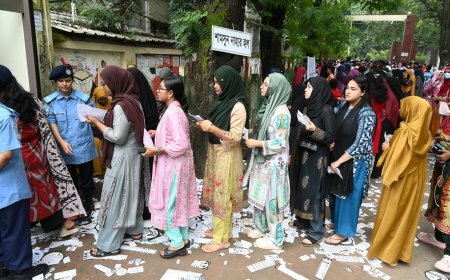
The chronology itself tells the story. The first demonstrations were remarkably restrained. Students organised processions, submitted memoranda, waited for court hearings and repeatedly appealed to institutions. Even road blockades were initially political pressure tactics rather than revolutionary declarations.
Protesters still believed the system could respond. They were asking institutions to function, not demanding that the political order collapse.
Governments often assume that every protest secretly desires revolution. Ironically, that assumption sometimes creates the very revolution they fear.
The first major political mistake, therefore, was not refusing a demand. Democracies reject demands every day. The mistake was failing to recognise that protests evolve. Public movements are living organisms. They change their language, emotions and objectives. States that respond only to yesterday's grievance inevitably lose tomorrow's argument.
The second mistake was perhaps even more consequential.
Power often mistakes criticism for hostility.
The infamous "Razakar" remark did far more than generate controversy. It fundamentally altered the emotional chemistry of the movement. A political label intended to isolate protesters instead united them through irony. Within hours, satire became resistance. A slogan became an identity.
The government's attempt to define its opponents only allowed those opponents to redefine themselves on their own terms.
History repeatedly demonstrates that ridicule is one of the least controllable forces in politics. A government can ban organisations, disperse rallies and arrest organisers. It cannot easily suppress humour once an entire generation adopts it as political language.
The third mistake was treating organisational strength as the source of the movement rather than treating public emotion as its fuel.
Authoritarian and democratic governments alike frequently imagine that every protest is orchestrated by a handful of masterminds. Consequently, they focus on dismantling leadership structures. Yet successful movements often become successful precisely because leadership gradually becomes less important than shared experience.
Every funeral recruited new participants.
Every injured student expanded public sympathy.
Every grieving family became a political argument that no official press briefing could erase.
Violence rarely restores legitimacy. More often, it transfers moral authority from the state to its critics.
Perhaps the greatest strategic error occurred after the first deaths.
Until then, the movement demanded reform. Afterwards, it demanded justice. That transformation was irreversible. Administrative negotiations can settle policy disagreements. They cannot easily heal moral wounds.
Yet the government's political vocabulary barely changed.
When the Supreme Court eventually reformed the quota system, the original administrative issue had largely been resolved. Constitutionally, the state had answered the students' initial demand.
Politically, however, the country had already moved elsewhere. Citizens were no longer discussing recruitment policies.
They were discussing deaths, disappearances, internet shutdowns, accountability and public trust. The government had answered yesterday's question after the nation had begun asking entirely different ones.
Governments often believe delayed concessions are still concessions.
History suggests otherwise.
Timing determines whether compromise appears as wisdom or desperation.
Another enduring lesson concerns information itself.
Modern governments often respond to unrest by restricting communication. On paper, the logic appears straightforward. If coordination becomes difficult, protests should weaken.
Reality frequently moves in the opposite direction.
The internet blackout during July created something far more dangerous than online mobilisation. It created uncertainty. Parents could not contact children. Rumours replaced facts. Silence became more frightening than information itself. Citizens eventually trusted whispers more than official statements because whispers, however unreliable, acknowledged the emotional reality people were experiencing.
Political authority depends not merely on controlling information but on remaining credible.
Once credibility disappears, even truthful government statements begin sounding unbelievable.
Interestingly, events elsewhere in South Asia suggest that these lessons may already be influencing political behaviour, whether acknowledged publicly or not.
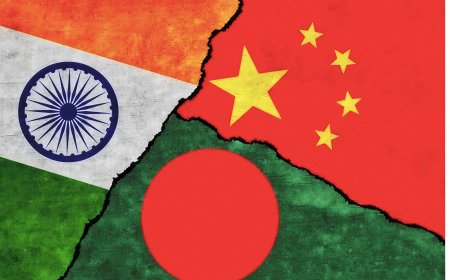
India's student demonstrations in 2026 over examination irregularities also witnessed confrontations, police action and nationwide mobilisation. Yet the trajectory eventually diverged in important ways.
Alongside enforcement measures, the government entered negotiations, provided written assurances regarding non-violent protesters, discussed institutional reforms, accepted compensation demands for affected families and ultimately saw the resignation of the education minister before the movement escalated into an existential political confrontation.
This should not be romanticized. The Indian protests themselves generated serious allegations of excessive police force, civil liberties concerns and political confrontation. Those controversies remain subjects of debate.
Perhaps the most consequential difference, however, was that the Indian government did not allow the confrontation to evolve into a cycle of mass fatalities that could permanently redefine the movement. The protests witnessed clashes, injuries and serious allegations of excessive force, yet they never acquired the emotional momentum that repeated deaths gave Bangladesh's July Revolution.
In Bangladesh, every funeral transformed the movement, drawing in families, professionals, artists and ordinary citizens who had never joined the original quota protests. Each death shifted the struggle further away from policy and closer to collective moral outrage. India, by contrast, appears to have recognised that once blood becomes the dominant political language, governments lose far more than control of the streets.
They begin losing the legitimacy to govern. Whether by design, restraint or political calculation, preventing that irreversible transition proved as significant as any negotiation or administrative concession.
Yet one contrast deserves careful attention.
The dispute largely remained centred on education policy and governmental accountability instead of transforming into a nationwide moral referendum on the legitimacy of the political system itself.
Whether this resulted from conscious learning, institutional instinct or political pragmatism cannot be established from available evidence.
But the contrast is nevertheless instructive.
Governments cannot always prevent protests.
They can often prevent protests from becoming revolutions.
The deeper lesson extends far beyond Bangladesh or India.
Every sitting government, regardless of ideology, eventually develops the dangerous illusion that state power automatically produces political security. It does not.
Power controls institutions.
Legitimacy controls history.
The two frequently travel together until, quite suddenly, they separate.
The Awami League possessed overwhelming parliamentary strength, administrative experience, organisational capacity and security institutions. Yet none of these could compensate for a growing inability to understand how ordinary citizens were interpreting unfolding events.
Governments often measure stability through cabinet meetings, intelligence reports and police briefings. Citizens measure stability through entirely different indicators: whether they feel respected, heard and safe.
Political systems usually collapse first in imagination before they collapse in reality.
Once citizens collectively stop believing that the government understands them, every subsequent decision becomes harder to defend, every explanation becomes less persuasive and every concession arrives too late.
Perhaps this is why July should not merely be remembered as a revolution against one government.
It should also be remembered as a masterclass in political miscalculation.
Not because every decision made by the Awami League was unprecedented, but because nearly every mistake followed a recognizable pattern found throughout modern political history: Dismiss early grievances, personalize criticism, stigmatize opponents, mistake force for authority, answer old questions, control information instead of rebuilding trust and confuse institutional power with public legitimacy.
These are not uniquely Bangladeshi mistakes.
They are universal governmental temptations.
That is precisely why every government should study July.
Not to learn how revolutions begin.
But to understand how governments unintentionally help write them.
H. M. Nazmul Alam is an academic, journalist, and political analyst based in Dhaka, Bangladesh. Currently he teaches at IUBAT. He can be reached at [email protected].