

























































40 Years of Karate: From Japan to Bangladesh
The exchange has never run one way. Bangladeshi karatekas train to standards set in Tokyo. Instructors who came as visitors, stayed close to the country for the rest of their careers. What began as instruction became friendship.

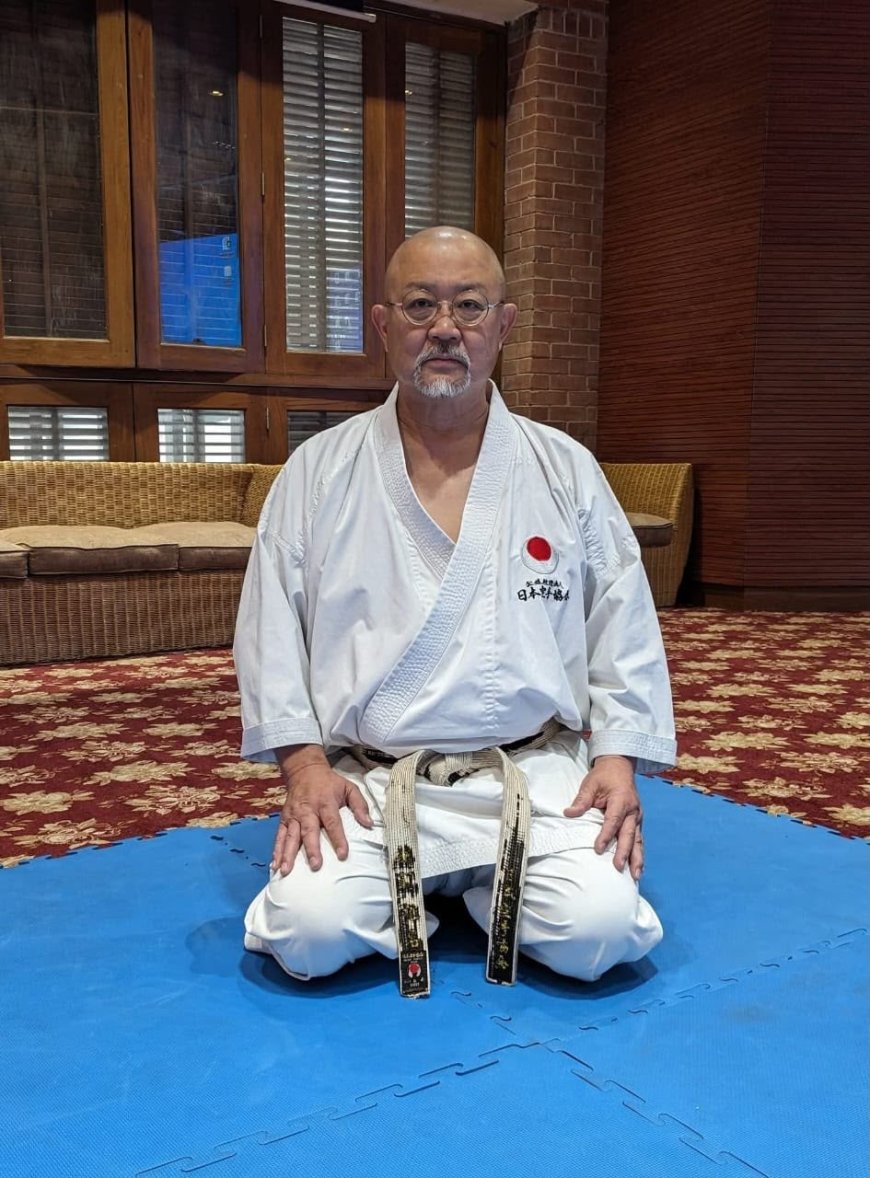
When Tetsuro Kitamura arrived in Dhaka in 1985 as a young Japanese volunteer instructor, he came to teach karate for a few years. He kept coming back for four decades, learned to speak Bangla, and made lasting friends among the athletes he trained.
His story says something about how Japan and Bangladesh have grown close. The relationship has been carried by people, not only by governments.
Karate in Bangladesh is often described as a straight import from Tokyo but the truth is more layered, and more interesting. The discipline arrived from Japan, took root in Bangladeshi soil, and became something the country now teaches its own children.
That journey, from a foreign art to a shared one, is one of the quieter successes of cultural exchange between the two nations.
Martial arts resembling karate were practised in the southeast before formal Japanese dojos reached Dhaka. In the late 1960s and early 1970s, people in Chattogram, Cox's Bazar and the Chittagong Hill Tracts took up striking arts, and several of the earliest practitioners had learned while across the border in Burma.
Much of it went under the loose name of "karate." It built an appetite for the discipline before any national body existed.
After the 1971 Liberation War, the new state began to organise its sport. Led by Hasanuzzaman Moni, karate came under the Bangladesh Judo Federation in 1972, creating the Bangladesh Judo Karate Federation. The first official Dan examination, at Dhaka's Wonders Club in 1978, produced the country's first home-grown black belt instructors.
In 1982 the inaugural National Karate Championship gave the sport a competitive circuit. It arrived as Bruce Lee films were filling the cinemas. The actor Masud Parvez Rubel competed in that first tournament before he became a star of Bangladeshi action cinema.
The mid-1980s gave Bangladeshi karate its technical grounding, and Japan supplied much of it as the Japan Overseas Cooperation Volunteers and JICA, master instructors came to teach. Yasunobu Nonaka introduced Shito-ryu in 1984, Kitamura brought Wado-ryu in 1985, and Mitsuo Yoshida expanded Shotokan in the 1990s.
The Embassy of Japan made karate part of its cultural work in Dhaka, hosting the annual Japan Cup beside displays of ikebana and origami. These were small gestures with a long reach. They introduced Bangladeshis to Japan through something they could take part in, not just watch.
The exchange has never run one way. Bangladeshi karatekas train to standards set in Tokyo, sit examinations recognized there, and carry qualifications issued by the Japan Karate Association. Instructors who came as visitors, like Kitamura, stayed close to the country for the rest of their careers. What began as instruction became friendship, and the friendship outlasted the postings.
Karate has also grown into something larger than sport for many young Bangladeshi women. In a country where women often face harassment in public space, self-defence programmes have taken training to schoolgirls and to women in rural districts. World Vision's Shahosh, meaning courage, taught karate to girls in remote villages.
The Warrior Women Bangladesh project, built on full-contact Shinkyokushin karate, has run classes in Dhaka since 2017. For those who take part, the training offers confidence and a way to hold their ground. A Japanese art has become a Bangladeshi tool for change.
Its value is now being recognized in national policy. In July 2026 the government announced plans to bring martial arts into physical education for Classes Four and Five. It is a measure of how far the practice has travelled, from the border districts and the embassy-backed dojos of the 1980s towards the primary-school syllabus.
That transfer of expertise carried into the new century. Shunichi Takaura, a Japan Karate Association (JKA) karateka recorded by the Japan Karate Association as a 3rd Dan in 2005 and a product of Takushoku University's karate tradition, came to Bangladesh in 2007 as a Japan Overseas Cooperation Volunteer through JICA.
He served as a karate instructor at the Bangladesh Karate Federation in Dhaka. His posting was another instance of Japanese expertise passing directly to Bangladesh, not as a cultural fusion but through instructors who trained and worked alongside Bangladeshi athletes.
His JKA background also formed a bridge between the Japanese instructors who helped build karate in Bangladesh and the direct institutional link with the JKA that would come later.
The formal link to Japan reached a milestone in 2015, when Bangladesh received its first official country licence from the Japan Karate Association. JKA WF Bangladesh became the sole licensed body for traditional Shotokan Karate-Do in the country.
Headquartered in Chittagong with an office in Dhaka, it ties local practitioners directly to the JKA's Honbu Dojo in Tokyo. Today it oversees more than 50 affiliated dojos and clubs, from Dhaka and Chittagong to Mymensingh.
Its focus is not competition alone but the traditional pillars of Shotokan practice: Kihon, kata and kumite. Through the network, Bangladeshi karatekas earn internationally recognized Dan certificates, JKA passports and instructor qualifications issued from Japan.
This year the relationship takes another step. JKA WF Bangladesh holds its annual camp in Dhaka under Katsutoshi Shiina, a senior instructor at the JKA's Tokyo headquarters and a former world and All-Japan champion in both kata and kumite.
The opening ceremony on September 2 is expected to bring together senior representatives of the Bangladesh government, including the Minister for Youth and Sports and senior officials of the National Sports Council, along with other distinguished guests.
Bringing a master of Shiina Sensei's standing to Dhaka does more than sharpen technique. It renews a bond that four decades of instructors have built, and it tells young Bangladeshi karatekas that Tokyo is paying attention.
Namia Akhtar is an anthropologist with a background in international development, politics and cultural heritage. She has worked at the Embassy of the Netherlands in Dhaka, the United Nations Development (UNDP), and the European External Action Services (EEAS). Email: [email protected].