





























































Diplomacy Alone is not Sufficient
Deep political involvement is necessary to set policies, which bureaucracies can then execute, not vice versa, the whole nation, regardless of political leanings, prefers its leader to be bold yet pragmatic

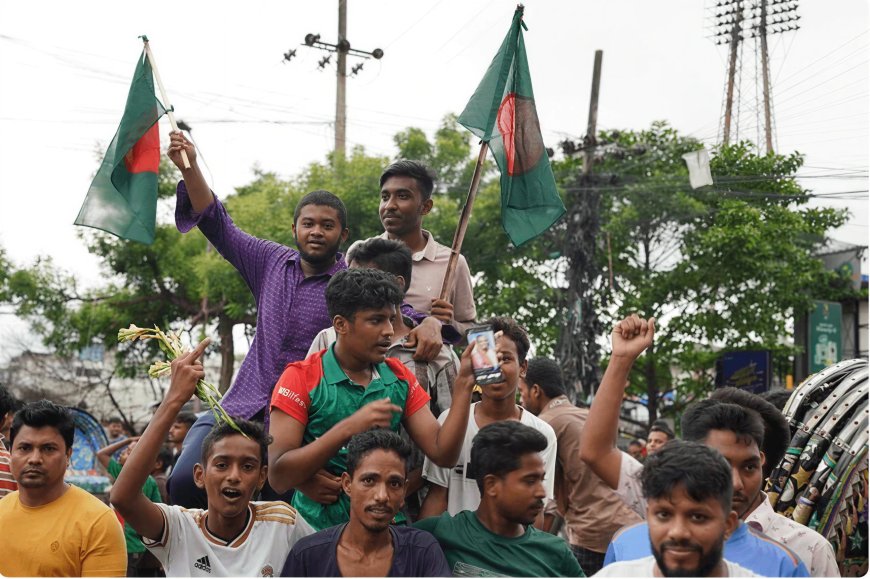
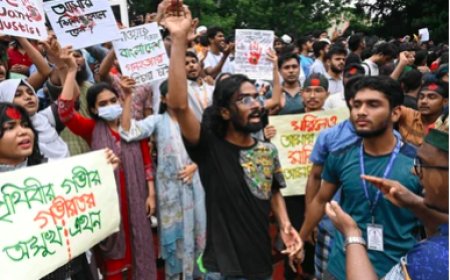
The sudden implosion into a surreal political landscape after the July Uprising is a watershed moment in the country's political journey. With the change from an undemocratic regime, political discourse is galvanized by unmeasured temerity, unleashed by long-term extra-national influence.
A bird, uncaged, flies high in the sky to taste the free air and the infinite space around it. Half a century of the country's politics is likewise uncaged and set in motion, ushering in everything new on the political horizon.
The euphemistic rhetoric used by nascent political parties or by youths entering politics is an expected notion, unacceptable in habitual political practice, yet inescapable. Not only nascent politics but the people as a whole dream of a country that can live free, breathe free, and fearlessly protect its national boundaries to realize its national interest to the fullest satisfaction.
The whole nation, regardless of political leanings, prefers its leader to be bold yet pragmatic; personally simple and honest yet strategically focused; calm and not indulging in temerity; to use its tools of national power without abusing them; and to prepare and direct its national power to practice good governance and deal with foreign powers under international norms.
The unannounced efforts to redirect foreign policy orientation onto a different template are already a major point of debate across classes. On one hand, the constant suggestions from associates aligned with the previous arrangement to use a measured approach, be mindful of regional stability, maintain strategic autonomy, and balance the strategic approach to all partners, etc.
They are nothing but habitual timidity or worshipping respective alliances rather than caring for one's own national interests. On the other hand, clamoring for a complete closure of relations with a regional neighbor without judging the preparedness of national power is insanity and gibberish.
The diplomatic breakout from the timid routine is rejoiced, but rhetoric alone wouldn’t yield anything worthwhile, rather than satisfying the charged youth.
At the same time, a habitual defensive mindset and a sense of inferiority should not also drive the foreign policy approach, forgetting that a small nation may matter too in advancing the country's national interest in accordance with the aspirations of the people.
An independent foreign policy requires readiness to use all the tools of national power, i.e., diplomacy, information, military, and economic, within their respective spheres of influence. A pragmatic investigation into the real sources of power of these tools is necessary to determine where the nation stands, adapt to the new direction, and combat uncertainty stemming from dismayed partners.
Diplomatic practices and skills have been reduced to placing envoys at the discretion of regional powers to align with their goals and earn their trust to ensure further career advancement.
Placing envoys in Western countries was driven by the desire of a monopolized group close to the political government for advanced education and the rehabilitation of their progeny. The development of skills to connect with high-power stakeholders in respective countries and negotiate to realize the national interest has barely been achieved.
The unprofessional growth of the media vis-à-vis the activities of the information ministry was never able to efficiently utilize the information domain and turn it into real intelligence for better and productive use. In today’s world, controlling the narrative is half the winning campaign.
There is no strategic direction, culture, or technological capacity to command this very important domain, which, in today's world, is the most important tool for any nation to strengthen its national power.
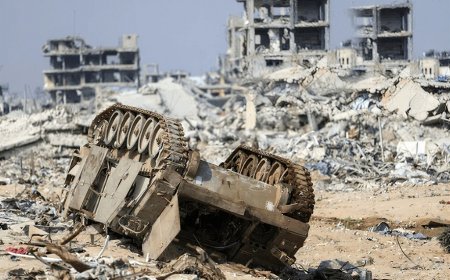
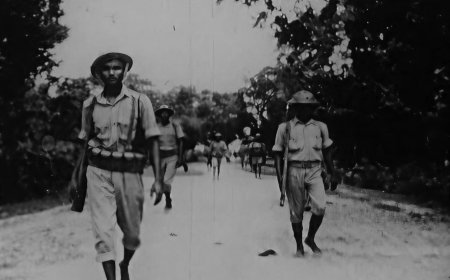
The military is the most important instrument on the physical plane for directly complementing the country's diplomatic goals. Any military doctrine is developed based on the perceived threat from geographically closer countries as potential adversaries.
Accordingly, the Bangladesh military's fighting doctrine was devised based on the 1971 War experience to fight a very strong neighbor in a defensive posture, holding out for a certain period in conventional fighting and thereafter resorting to unconventional fighting, with the recent inclusion of a limited offensive focus.
Capacity building has so far focused on equipping the land forces with heavy ground-based armor and non-armored vehicles, mostly low and medium-range artillery pieces, with the exception of the recent induction of heavy artillery of considerable range to reinforce fighting capacity and limited air defense equipment to augment the efforts of the Air Force.
Despite being part of the guardians of the Bay of Bengal, the Navy's fighting capabilities are limited to a low defensive force able to provide close-shore protection. Its capacity to deal with the strong naval forces of two neighbors is limited, lacking modern platforms with the requisite offensive firepower to protect its continental shelf.
The Air Force's fighting capacity is in a heartbreaking state, unable to dominate the airspace for the land forces to fight and hold ground with a few MiG-29 and very old F-7 series of fighter aircraft. It will be harsh to claim that the military was happy with this state of capacity, keeping its hands off without developing thoughts.
Efforts to build capacity to meet evolving ideas of warfare under the forces' goal 2030 didn’t see much light due to the budgetary support needed.
Institutional training from world-class joint training institutes is commendable, but there is no scope to test it physically given its current fighting capacity. Numerous policy papers were submitted to the political masters, but there was barely any response, except for pushing the military to cut the budget further and reduce numbers.
Last but not least, the most important tool of power is the economy, which is crucial to supporting all other organs in expanding their capacity to defend national goals in consonance with foreign policy objectives.
Efforts to build a stronger economy through the sweat and blood of private entrepreneurs and millions of expatriates have repeatedly been put in jeopardy by politically government-sponsored financial corruption.
The fragile and fractured national economy is already too distressed to support its poor population and industries. But there is no denying that the country needs to prepare its fighting forces vis-à-vis the diplomatic core to protect the country's national interests.
Setting priorities, long-term planning, revising the economic focus from single-item exports to the production of energy- and environment-efficient diversified fields, adopting stricter regulatory principles to prevent systemic loss, and implementing meticulous national budgeting.
This includes closer direction and supervision of spending, can build a robust economy in the long run. Deep political involvement is necessary to set policies, which bureaucracies can then execute, not vice versa.
The change in the character of warfare, as seen in recent asymmetric wars fought in different parts of the world where smaller powers commanded the war, suggests that future wars may have to be fought using a no-contact technique, from reinforced defensive survivability to debunking the myth of overwhelming superiority.
The command system will need to be extremely decentralized to ensure that the lowest level of command can effect strategic gains and fight unrelentingly regardless of the sudden loss of higher command.
The old ideas of sharp victory through a short-tenure war might have to be reversed by asymmetric war ideas in the form of expanding the battlefield across the region, creating strategic exhaustion for bigger powers, and deadlocking the termination of conflict.
Considering the change in the character of warfare as stated above, the military in Bangladesh needs a major overhaul in its organization and doctrine, to shift from typical conventional defensive land warfare to prepare to fight asymmetric warfare, adopt joint forces command practices to remove parochial service preferences, establish joint forces intelligence agencies to effect operational intelligence.
They equip the military according to the overriding role of the Air Force and drone based Air Defense forces, develop Navy as a stronger defensive forces with long rage firing capacity to protect its continental shelf, and develop systems to inculcate strategic culture in the forces to be able to develop war strategy to win against larger forces.
Political leaders must also develop a strategic culture to understand the nature of conflicts in the current world, the nature of the enemy, the forms of violence the country may face, and how to set strategies against them rather than leaving them as the domain of military forces only. Diplomatic efforts alone can't achieve anything unless other organs are developed in parallel.
Let these bold and sagacious diplomatic movements not stray for lack of strategic insights and synchronization among all the tools of national power, to only sound louder in words rather than in actions.
Brigadier General AF Jaglul Ahmed (Retd) is a regular contributor to national dailies. He can be reached at [email protected].