



























































Can India Ever Become a Good Friend of Bangladesh?
Bangladesh and India have repeatedly attempted to reset their relationship, but deep-rooted disagreements over sovereignty, regional power, strategic autonomy, water sharing, and economic reciprocity continue to undermine trust.

A much-expected reset in Bangladesh-India relations, following the February 2026 parliamentary elections in Bangladesh, is repeatedly running into troubles.
The latest hurdle has been former Prime Minister Sheikh Hasina, who fled to India on August 5, 2024 in the face of a popular mass uprising against her government.
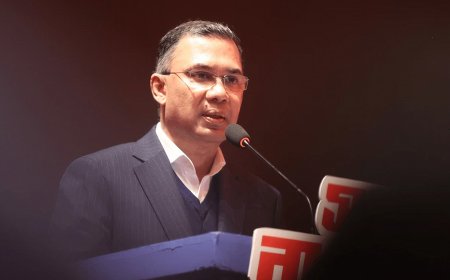
Hasina’s video-based address at a news conference in New Delhi on the second anniversary of the mass uprising has seriously upset the democratically elected government in Dhaka, complicating the first visit of the current Bangladesh Prime Minister Tarique Rahman to India.
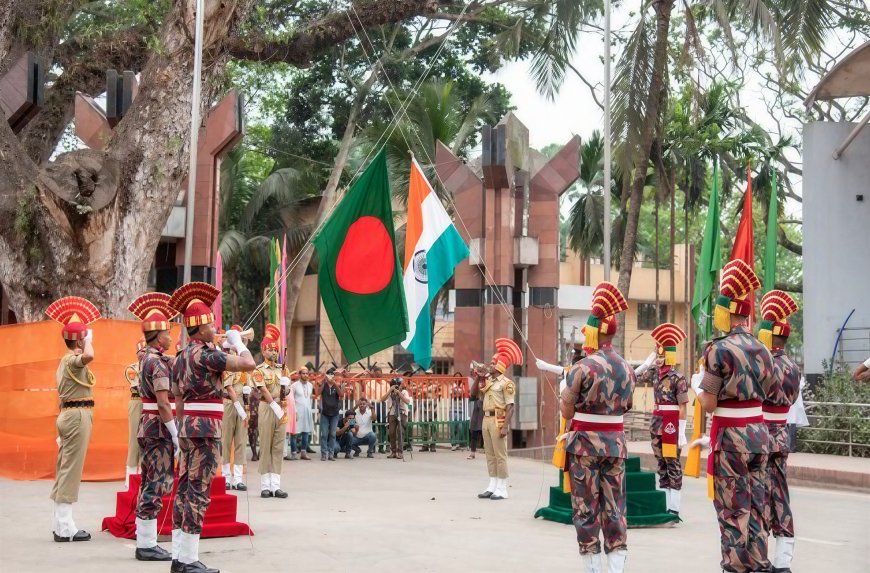
Tensions on a series of other developments also flared up in Bangladesh-India relations in recent months, including an increase in killings of Bangladeshis by the Indian Border Security Force (BSF) following BJP’s April 2026 electoral victories in India’s West Bengal and Assam provinces.
These developments are ominous signals in Bangladesh’s relations with her giant neighbor India. Implicitly or explicitly, they reveal the underlying deep structural, geopolitical and economic problems that plague their bilateral relations.
And it has been the case for most of the time of Bangladesh’s history of independence in 1971. It begs the question: Can India be Bangladesh’s good neighbor at all?
Relations between the two geographically proximate neighbors took a nose-dive following the Hasina government’s collapse.
The Interim Government, formed in the wake of the July 2024 successful mass uprising and headed by Nobel Laureate Prof. Muhammad Yunus, shifted diplomatic and economic focus to China, ringing an alarm bell in India. Dhaka-Islamabad diplomatic overtures were also taking a definite shape.
During Hasina’s rule (2009-2024), India-Bangladesh relations thrived on close economic, political and diplomatic cooperation. Critics charge that the relationship was unequal, not based on mutual interests or founded on an equal footing.
While India got transit benefits and the right to use Bangladesh’s land, river and sea ports to ship goods from its West Bengal province to the land-locked northeast region, Bangladesh never got reciprocal access to Nepal and Bhutan for overland trade transactions.
The Interim Government initiated reviews of the transit agreements signed with India by the Hasina government, and cancelled at least one agreement, citing national interest.
The new government of Prime Minister Tarique Rahman looks still uncertain about its India policy. Possibly, government leaders are debating which way to proceed with India, but one thing appears strikingly clear that India does not top the list of foreign policy choices of the new government.
Mr. Tarique Rahman, son of national liberation war hero and President Ziaur Rahman and two times Prime Minister Begum Khaleda Zia, has deliberately chosen Malaysia as the first destination of his first official overseas trip, after taking office on February 17, and China as the second destination.
The Prime Minister’s trip plan overtly or covertly transmits a message to India that Bangladesh looks forward to maintaining strategic foreign policy autonomy.
Stumbling blocks to improve relations
India’s regional ambitions constitute the primary stumbling block to improve Dhaka-Delhi relations. Policymakers in New Delhi, from Jawaharlal Nehru to Narendra Modi, have traditionally viewed India as the undisputed security and economic anchor of South Asia, and a bridge to Southeast Asia.
That runs into two complex realities -- China’s entry through Belt and Road Initiative (BRI), and India’s geographic disadvantage to connect its land-locked northeast to the mainland.
China’s BRI has developed and modernized seaports across the region -- Chittagong in Bangladesh, Hambantota in Sri Lanka, Kyaukpyu in Myanmar, and Gwadar in Pakistan, making the Bay of Bengal a contested region.
Bangladesh is the shortcut for India for quick connection to the northeast, but much depends on how India extends its folded or cooperative hands to Bangladesh.
India’s interests in Bangladesh
The hard part is that India pursues four non-negotiable interests in Bangladesh, which Indian leaders never admit publicly.
First, Bangladesh must not allow any anti-India foreign military or naval bases on its soil, share intelligence or grant China military access to Chittagong port or Cox’s Bazar district (that sits on the Bay of Bengal).
Second, Dhaka needs to grant India rail, road, river transit rights, and allow it to use the Chittagong and Mongla sea ports for cargo shipments to its northeast region.
Third, India wants Bangladesh to keep buying Indian power, diesel and cotton, while keeping tariffs low and making no dumping claims.
Bangladesh is one of India's top five export markets, with US$11.32 billion exports in 2024. Additionally, West Bengal, Assam, and Tripura state economies are tied to Bangladesh -- an economic reality Bangladesh should never disturb.
The four non-negotiable interests drive India’s expectations high. It expects a friendly government in Dhaka that does not play the “China card” or moves to Pakistan to extract concessions, and refrains from exporting security instability (supporting the rebel groups in its northeast region).
Since 2009, the Awami League (AL) government under Hasina gave India guarantees of no anti-India actions from Bangladesh soil.
This ask does not change whether there is a BJP or Indian National Congress government in New Delhi or a BNP government in Dhaka.
Bangladesh Refuses to be a Client State
India’s non-negotiable interests are heavily contradicted by Bangladesh’s independence-seeking policies, which India sees as a real problem.
The core ambition of Bangladesh is to preserve sovereignty, achieved through the 1971 war against Pakistan, and grow to an upper-middle income country by 2031.
That means there exist three red lines, emboldened by the July 2024 mass uprising, which India must not cross:
First, no external veto on domestic politics. All major political parties of Bangladesh -- the BNP and Jamaat-e-Islami resent “Delhi picks PM” perception, a perception that stemmed from India’s overt backing of Sheikh Hasina.
Second, the principle of strategic autonomy -- expressed in “friendship to all, malice to none” foreign policy stance -- is a sacred policy for Dhaka.
Bangladesh refuses to compromise its freedom to take Chinese infrastructure development cooperation, Japanese metro, Russian nuclear assistance, US and European Union market support.
India wants exclusivity but post-Hasina Bangladesh turns indifferent to India’s demand accepted by the Hasina government.
Third, on the unresolved water sharing and transit issues, Bangladesh demands reciprocity, prefers equitable sharing of Teesta River water, fair transit fees, and anti-dumping protection from India.
India -- a “friend with interests”
India prefers to be a “friend with interests”, not a “friend without expectations” from Bangladesh. So, India’s preferred choice of interests-based friendship either fails to appreciate or seriously underestimates the costs for Bangladesh.
That is the real puzzle in Bangladesh-India relations. Historically, India’s interpretation of friendship with Bangladesh has involved taking Bangladesh as an unequal, if not subservient, partner.
The best periods of friendly relations between Bangladesh and India are: 1972-1975, 1996-2001, and 2009-2024.
Interestingly, all AL-led governments were in power during these three periods, which undeniably transmit a message that the AL is, indeed, India’s political party of choice in Bangladesh.
Some milestone developments of the three periods include India’s support for the 1971 War of Independence, extension of $8 billion Line of Credits (LOCs) for Bangladesh, resolution of land disputes and the signing of the 1996 Ganges Water Sharing Agreement.
In exchange, Bangladesh gave India transit benefits, cracked down on the Indian rebel groups, occasionally operating from Bangladeshi soil, and handed over separatist rebel leaders to India.
The worst periods of Dhaka-Delhi bilateral relations, in contrast, are 1975-1996 and 2001-2006. BNP-Jamaat-e-Islami governments sheltered Indian rebels and terrorists, assassinations and coups followed, India responded with border fencing and raised trade barriers, creating a situation of zero-sum game.
A deep look at the pattern of India-Bangladesh relations reveals a significant point -- friendship between the countries works when three conditions hold:
A) Regime alignment: India is comfortable with Bangladesh government, and Bangladesh government is not threatened by India;
B) Economic mutuality on an unequal footing: Increasing trade between the two neighbors, their power grids are interlinked, and expanded cross-border tourism; and
C) China factor is managed: Bangladesh does not allow China to expand its economic influence freely or establish a military base, and India does not object to growing Bangladesh-China trade.
Hasina government’s loyal India policy held the three conditions.
Friction Points that Test Friendship
The principal friction points that bedevil Bangladesh-India relations are Teesta water-sharing dispute, NRC (National Register of Citizens) and CAA (Citizenship Amendment Act) that legalize the sending of people with Muslim names from West Bengal and Assam to Bangladesh -- a policy the media call “push-in”, border killings, and yawning trade gap.
On these points India takes a biased position, maintaining an inflexible position to disregard Bangladesh’s interests.
On the Teesta River dispute, India emphasizes that it is the upper riparian, and under pressure to protect West Bengal farmers’ interests; BSF justifies killings falsely arguing that its troops target smugglers and cattle thieves who fire first at them; and despite huge trade imbalance with Bangladesh ($11.32 bn exports to but $2 bn imports from Bangladesh) India wants Bangladesh to further open up its markets while denying reciprocal benefits to Bangladesh.
Two Models of Relationship, But Both are Less Promising
There are two models of friendship for Bangladesh and India to consider -- the Canada-U.S. model, and the post-1945 Germany-France model.
Neither model, however, totally suits the interests of the two neighbors. The Canada-U.S. model is a dominant vs. subordinate model of relationship, where the most dominant power in the world overshadows a rather militarily weak and peaceful Canada.
For India and Bangladesh, the asymmetry is too big -- India’s demographic strength (1.4 bn Indians) and $3.9 trillion GDP ridiculously dwarf that of Bangladesh (171m people and $455 bn GDP).
India, based on the leverage it enjoys, looks set to dominate Bangladesh, and this is what has been happening since 1971. The Germany-France model sounds better but it is still fraught with serious difficulties.
The two European powers fought many wars, but now run the European Union (EU) together to the benefits of their citizens.
The uniting thread between them is a major compromise -- Germany has accepted French security concerns, and France has accepted German economic leadership in the EU.
Both powers are gaining from EU than from rivalry. Applied to Bangladesh-India relations, India must accept Bangladesh’s independence-seeking policy and never expect to make Bangladesh a client or satellite state.
But India is very unlikely to digest and live with this reality. Similarly, Bangladesh is also very unlikely to endorse India’s dominance-seeking behavior and accept it as an imposer.
The future of their bilateral relations looks less promising, unless India’s Bangladesh policy fundamentally changes.
Dr. Mohammed Nuruzzaman is a Professor of Political Science at NSU, specialising in International Relations.