



































































Can the Subaltern Speak in Bangladesh’s Public Discourse?
True inclusivity means bridging the gaps that keep the dispossessed silent. Only then can a purportedly democratic society begin to hear those at its margins, as active political subjects, not just data points.

Gayatri Chakravorty Spivak’s seminal essay, "Can the Subaltern Speak?" (first published in 1988), argues that the voices of the most marginalized populations, the "subaltern," are mostly silenced by the frameworks of intellectual discourse.
Originally a military term used to denote lower-ranking officers, the concept of the "subaltern" was adapted into social and political theory by Antonio Gramsci to describe subordinate, marginalized classes subject to the hegemony of ruling elites.
Historian Ranajit Guha later founded the Subaltern Studies collective to rewrite South Asian history from below, a project in which Gayatri Chakravorty Spivak played a central, defining role, critically expanding and reworking the concept through a deconstructive lens.
Spivak concludes that the subaltern, though not literally incapable of speaking for themselves, cannot truly speak within dominant systems of knowledge and representation because their voices cannot be heard or recognized on their own terms.
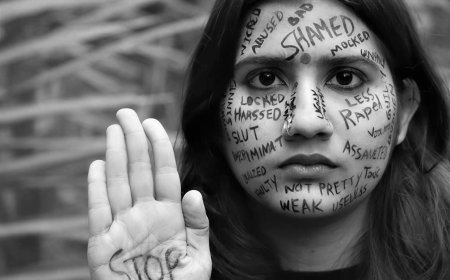
While she particularly uses the example of oppressed women, the concept is not exclusive to them but refers to a class of people who are unheard in colonial and postcolonial societies. Spivak contends that when scholars attempt to speak for the subaltern, they may inadvertently reinforce colonial power structures and the colonial interpretation of the situation.
In doing so, the subaltern's lived experiences are filtered through elite epistemological frameworks, systems of knowledge shaped by those in positions of power, preventing their voices from being recognized on their own terms. This process effectively "ventriloquizes" the subaltern, replacing rather than conveying their authentic voices.
Ventriloquizing is the act of speaking or projecting sounds in the manner of a ventriloquist, producing words without noticeably moving your lips so the sound appears to come from another source or person. A useful analogy is to imagine a person trying to describe the experience of drowning while standing safely on the shore.
Even if the observer uses the most poetic and empathetic language, their description is fundamentally created or shaped by their position of safety, thereby overwriting the actual, lived sensory experience of the person underwater.
Consequently, the subaltern remains unheard because the dominant systems and language of political and intellectual power, even when ostensibly progressive, are structured in such a way that they cannot fully register the consciousness of the truly dispossessed.
The relevance of subaltern theory in the socio-economic context of Bangladesh, a country born of colonial partition and postcolonial development struggles, finds clear resonance. Despite the country's vibrant political culture, public dialogue and national discourse largely exist in two interconnected spheres: Academic discourse and mainstream discourse.
Academic discourse is predominantly shaped by scholars, policymakers, and intellectual elites who debate questions such as whether the Constitution should be reformed or amended.
Mainstream discourse, meanwhile, is largely shaped by the urban middle and upper-middle classes, particularly journalists, political commentators, social media influencers, and online intellectuals who dominate Bangladesh's digital public sphere.
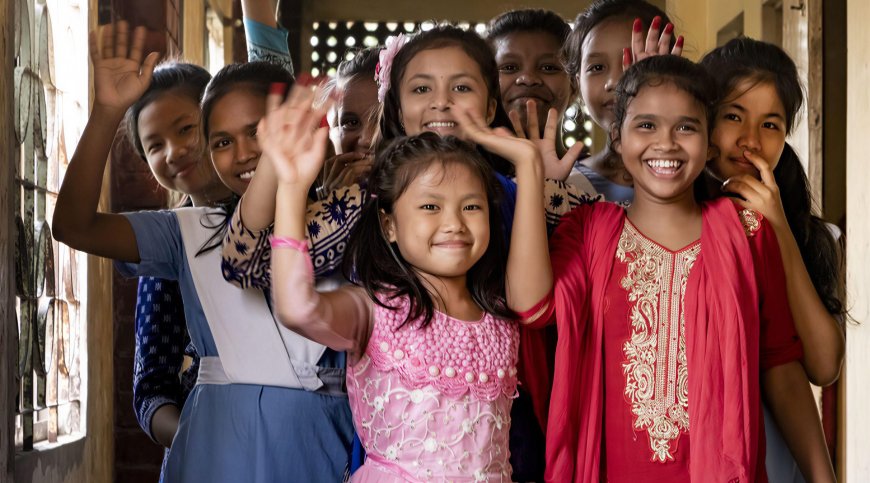
While the rural poor, workers, indigenous peoples, and others have virtually no forum in which their own voices can shape the conversation. Their voices are not necessarily absent because they have nothing to say, but because the structures through which public discourse operates rarely allow them to speak on their own terms.
For millions of people, daily life is defined not by constitutional debates or ideological disputes but by the struggle for survival. Their immediate concerns are securing the next meal, overcoming malnutrition, obtaining affordable healthcare, finding stable employment, or coping with the consequences of inflation and economic insecurity.
Under such conditions, participation in intellectual or political discourse becomes a privilege rather than a practical possibility. Many poor and rural Bangladeshis have limited formal education and civic literacy, leaving them unfamiliar with the legal and political language of debates.
In practice, decision-makers and journalists tend to address “the people” in generic terms, reducing actual individuals to statistics rather than hearing their stories. For example, NGO and government reports might cite poverty or demographic data for a community, but rarely include the testimonies of community members in their own words.
For many subaltern Bangladeshis, immediate survival needs overshadow any luxury of participating in intellectual debate. Under such conditions, attending policy forums or writing blog posts is a distant concern.
As one study of rural women notes, although they may hear about development programs, their practical involvement is "tokenism," invited to meetings only to satisfy formal requirements, while real decisions are made by others. In short, their engagement is often "peripheral and performative," not substantive.
This mirrors Spivak’s point that subalterns can speak, but the structures of power make it impossible for their voices to be heard or acted upon. Major institutions (political parties, universities, media outlets) remain concentrated in the hands of educated elites. Policy and media debates, from national budget discussions to university syllabi, are shaped by those with formal power and influence, almost always from urban or upper-class backgrounds.
Grassroots leaders or community representatives have little access to these platforms. This reproduces a colonial-era pattern. After independence in 1971 and before as well, Bangladesh’s elite retained much of the state machinery.
As a result, even "progressive" policies are often debated in elite terms, sidelining the lived experience of the poorest. Because of these factors, public discussions in Bangladesh frequently occur about marginalized people, rather than with them.
Spivak’s insight is strikingly relevant that when well-meaning intellectuals or officials claim to speak for the subaltern, they often end up "ventriloquising" them, imposing elite interpretations on their lives instead of letting the subalterns speak for themselves.
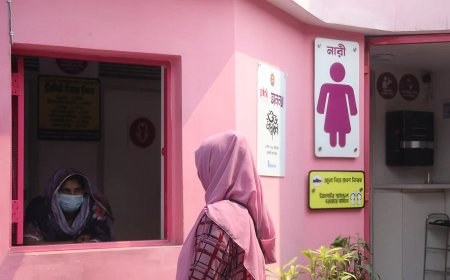
In the Bangladeshi context, this can be seen in instances where poor women or minority communities are represented only as case studies or footnotes.
Rather than just improving service delivery or hearing them in isolated surveys, policymakers must actively create spaces where subaltern people lead the discussion. Such measures recognize Spivak’s warning that representation must mean letting subalterns define issues in their own terms, not merely translating their problems into elite language.
Subaltern theory suggests that giving marginalized Bangladeshis a real voice goes beyond formal quotas or token seats. It calls for restructuring dialogue itself. Practical steps might include strengthening labor unions, farmers’ cooperatives, slum councils, indigenous community groups, etc., so they can develop their own leaders and agendas.
These bodies can articulate needs like land rights, safe housing, or local schools on their own terms. Providing civic literacy programs in rural and urban slum areas, enabling people to understand how government and law work and to exercise voice (e.g. through village councils or local elections).
Creating spaces where decision-makers listen to subaltern representatives. For instance, including authentic community representatives (not just elites) in policy forums on poverty alleviation or labor laws.
If a bunch of high-profile elites or upper-class bourgeoisie living in New York were to face river erosion or sea-level rise, the entire world would be outraged. But for many decades, Bangladesh's rural class has been constantly facing it every season. It is not that our globe lacks empathy, but it creates no outrage because our challenges and pain are unheard by others; in fact, unheard by anyone at all.
Just imagine that the first incident has the potential to capture global attention, but the second one does not. Why? Who decides that? Actually, it's us; we decide that, but we're too busy to be bothered about ourselves. These efforts echo Spivak’s call to move "beyond speaking for" and instead facilitate conditions where subaltern groups can speak for themselves.
True inclusivity means bridging the gaps that keep the dispossessed silent. Only then can a purportedly democratic society begin to hear those at its margins, as active political subjects, not just data points.
While subaltern theory is well-established in South Asian academic scholarship, applying its insights to mainstream Bangladeshi media, policy frameworks, and public discourse remains a neglected imperative in a society grappling with structural inequalities, numerous political, economic, and social challenges.
Yet this is precisely why the conversation must continue. A democracy cannot claim to be truly representative if those at its margins remain unheard. The challenge before us is not merely to speak about the subaltern, but to create the conditions under which they can speak, be heard, and shape the national discourse on their own terms.
Tasin Mahdi, a knowledge seeker based in Dhaka, Bangladesh, exhibits a profound commitment to the betterment of his home nation and a keen interest in international affairs, and quietly coaxes discussions on global and local issues.