
































































Why the Taliban's Iron Grip is Slowly Cracking
A regime fighting a two-front war against Pakistan and internal insurgents, unable to feed its own base, splitting at the leadership level, and now facing a resistance movement finally capable of operating on its own home turf.

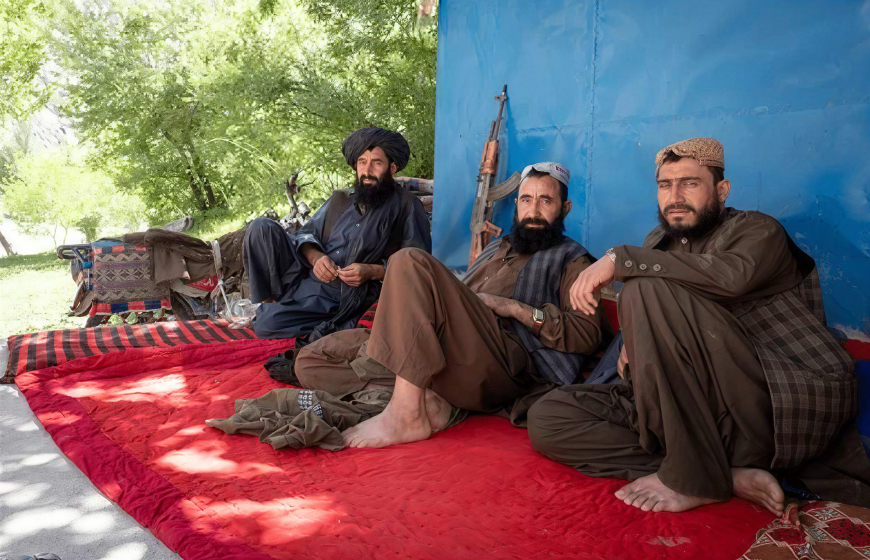
Five years after the world watched Afghans cling to the wings of departing US cargo planes, the Taliban's promise of order through submission is unraveling in real time.
The regime that swept to power in August 2021 by exploiting exhaustion, fear, and a hollowed-out Afghan state now finds itself besieged from every direction: An economically ruined population, a fracturing leadership, a resurgent Islamic State affiliate, and most tellingly: Armed resistance movements taking root in the very Pashtun heartlands that once formed the Taliban's most loyal base.
This is not a temporary insurgent nuisance. It is the slow, grinding failure of a social contract that the Taliban never had the capacity or the will to honor.
A Broken Bargain
Every government, however illegitimate its origins, survives on an implicit exchange: Obedience for security, taxation for services, submission for a tolerable life.
The Taliban's version of that bargain was always going to be austere, built as it was on theocratic decree rather than consent. But even judged by its own severe terms, the Taliban has failed catastrophically. Nearly three in four Afghans live in extreme poverty. Roughly the same share cannot reliably secure food, clean water, or shelter.
Four million children are acutely malnourished. This is not the result of bad luck alone: It is the product of five years of mismanagement, self-imposed isolation, and a leadership more preoccupied with enforcing dress codes and banning girls from classrooms than governing a nation of 40 million people.
What makes this failure politically dangerous for the Taliban is that it is no longer confined to the ethnic and religious minorities the regime always treated as expendable. Kandahar and Helmand: Historic seats of Pashtun, pro-Taliban sentiment now sit among the provinces facing the worst malnutrition and hardship.
The Taliban's founding claim, that they represented and would uplift the Pashtun rural poor, has been exposed as hollow. When a government cannot feed the very people who form its ideological base, that government has forfeited whatever legitimacy it once had.
The Resistance Finally Learns Geography
For years, Afghanistan's anti-Taliban resistance was written off as a northern curiosity: Tajik and Hazara fighters harassing the edges of a regime that controlled the demographic and geographic core.
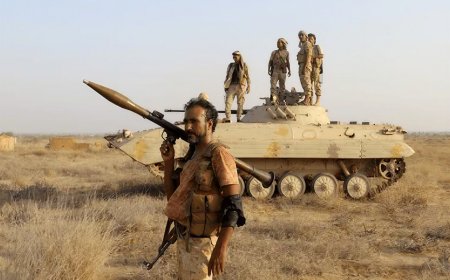
That calculation is now obsolete. The National Resistance Front has expanded beyond the Panjshir Valley into a genuinely nationwide network of cells, credited with 100 attacks. The Afghanistan Freedom Front, quieter but more militarily disciplined, has begun contesting entire districts, including a multi-day battle it reportedly won in Zebak this summer.
But the real signal of Taliban decline is the emergence of the Afghan United Front. Led by Sami Sadat, a Pashtun, NATO-trained former commander of Afghanistan's most capable clandestine units, the AUF has done something previous resistance factions could not: It has opened a sustained front inside Kandahar itself, the Taliban Supreme Leader's own seat of power.
Sadat's choice of target was not accidental; it was a calculated message that no Taliban stronghold is beyond reach. That a Pashtun-led, foreign-connected insurgency can now operate persistently in the Taliban's home province says less about the AUF's strength and more about how thin the Taliban's actual control has become.
Cracks at the Top
Perhaps most consequential is the split within the Taliban's own leadership: A rift between the Supreme Leader's faction in Kandahar and rival power centers in Kabul, serious enough that the Supreme Leader himself has privately warned of the "Emirate's" collapse.
When an internet shutdown ordered from Kandahar was defied and reversed by officials in Kabul, it exposed something the Taliban spent two decades trying to prevent: Visible, functional disunity.
Local commanders are taking note. A Tajik Taliban commander's brief armed revolt over gold-mining revenue in Badakhshan this summer, however quickly it was contained, would have been unthinkable in the Taliban's more disciplined insurgent years.
Once local strongmen sense that Kabul's authority is negotiable, the incentive to defect, extort, or simply stop cooperating multiplies.
No Single Path to Collapse, But No Way Back Either
None of this means the Taliban's fall is imminent or guaranteed. As every serious analysis of Afghan resistance concedes, no single faction- not the NRF, not the AFF, not the AUF, and certainly not the nihilistic Islamic State Khorasan Province currently possesses the combined manpower, unity, and logistics to march on Kabul.
Afghanistan's terrain, poverty, and the Taliban's own decades of counterinsurgency experience make a swift, Syria-2024-style collapse unlikely in the near term.
But swift collapse is not the only way regimes die. Governments can also be hollowed out province by province, defection by defection, until the center can no longer project authority beyond its own capital.
That is the trajectory Afghanistan appears to be on: A regime fighting a two-front war against Pakistan and internal insurgents, unable to feed its own base, splitting at the leadership level, and now facing a resistance movement finally capable of operating on its own home turf.
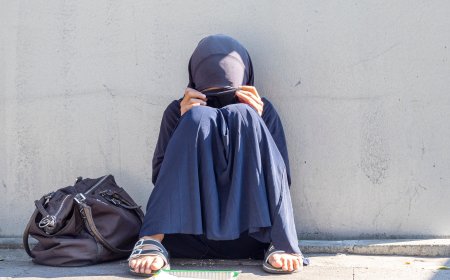
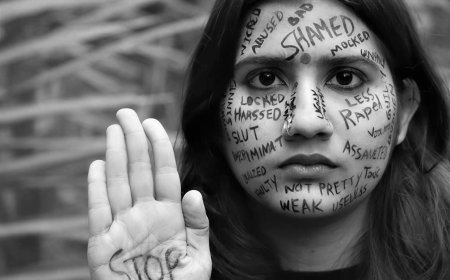
The tragedy is that ordinary Afghans- women barred from work and school, minorities hunted from their homes, children starving through brutal winters will bear the cost of this unraveling long before any resistance faction reaches Kabul.
Whatever comes after the Taliban, and whenever it comes, it will not undo the five years of suffering the group has already inflicted. But the direction of travel is now unmistakable: A government that cannot keep its own bargain cannot indefinitely keep the peace it claims to guarantee.
Shafqat Aziz is a barrister (Lincoln’s Inn) and an accredited Civil-Commercial Mediator (ADR-ODR International).