














































![A Ledger of the Soul: Navigating the Allah-Bhagavant Nexus in a 19th-Century Puruṣākāra Jñāna Caupara [Gyan Chauper]](https://counterpointbd.com/uploads/images/202608/image_430x256_6a93baa3b09a7.jpg)





















What Defines a Client State?
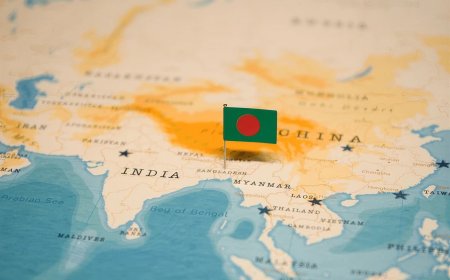
If autonomy matters only in relation to one great power while compliance with another is rebranded as "technical cooperation," then Bangladesh has not escaped dependency. It has merely changed its address.

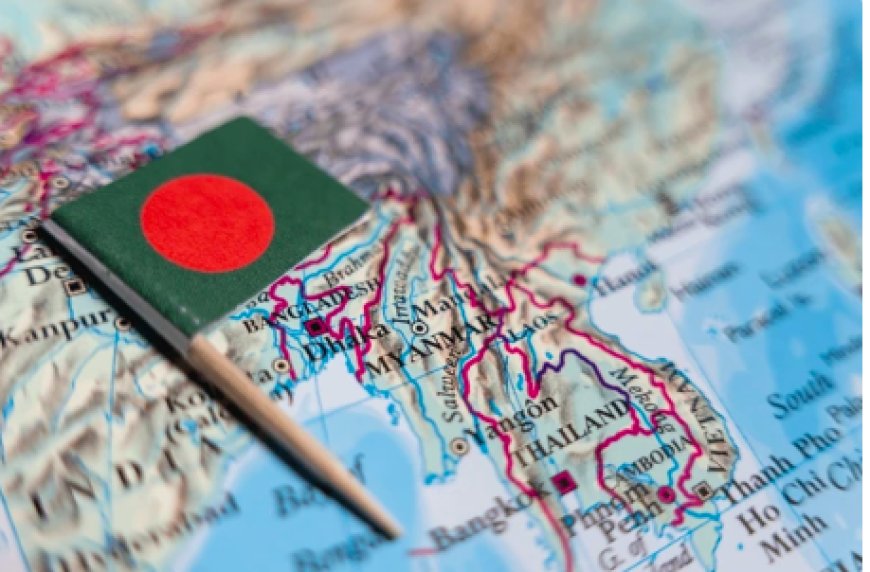
When Bangladesh's new Foreign Minister, Dr. Khalilur Rahman, declared that: “From the very beginning, the biggest objective of our foreign policy has been Bangladesh first. We will never again return to the status of a client state,” my first reaction was not political agreement or disagreement. It was a conceptual question:
What exactly does he mean by a "client state"? Whose client? Which period of Bangladesh's history is he referring to? And most importantly, what analytical criteria is he using to classify a sovereign state as a client state?
These questions matter because Dr. Rahman is not an ordinary politician delivering campaign rhetoric. He is a technocrat and now the country's chief diplomat.
His words carry conceptual weight. When a technocrat uses a term deeply rooted in international relations theory, the public deserves more than applause lines. It deserves a definition.
In political science, client state is not simply another way of saying "friendly" or "dependent." Nor is it merely a rhetorical insult directed at a previous government.
The concept generally refers to an asymmetric patron-client relationship in which a weaker state exchanges policy autonomy for security guarantees, economic benefits, diplomatic protection, or political survival.
As David Lake argues in Hierarchy in International Relations, hierarchy exists when one state exercises legitimate authority over another state's policy choices.
The critical question is not whether two countries enjoy close relations. The question is how much independent decision-making the weaker state retains, particularly when its interests diverge from those of the stronger power.
A country may have massive trade with another state and still not be a client state.
It may receive military aid and still remain strategically autonomous. It may even cooperate closely on security without surrendering sovereign decision-making.
Therefore, if Dr. Rahman believes that Bangladesh previously functioned as a client state, he should clarify the indicators.
Was it because of India's political influence? Security dependence? Energy dependence? Cross-border connectivity? Diplomatic alignment? Policy vetoes? Or something else entirely?
Without clear criteria, "client state" ceases to be an analytical concept and becomes little more than a partisan slogan that changes meaning every time governments change.
This question becomes even more relevant when viewed against Bangladesh's current geo-political trajectory.
Earlier this year, Bangladesh signed the Agreement on Reciprocal Trade with the United States. The agreement is legally binding and extends far beyond tariffs and market access.
Its provisions include harmonizing Bangladesh's export-control regime with US export-control objectives, cooperating on sanctions-related trade restrictions, consulting on inbound investments, facilitating trusted cross-border data flows, incorporating US input into Bangladesh's emerging data governance framework, aligning agricultural sanitary and phytosanitary standards, and accepting restrictions relating to trade agreements with certain third countries and even aspects of nuclear procurement.
This is not simply a trade agreement. It represents an increasingly integrated economic-security framework.
Now, I am not arguing that these provisions automatically make Bangladesh a US client state.
Quite the opposite. My point is that if we are going to use the concept of client state seriously, we must apply it consistently.
If policy asymmetry with India qualifies as clientelism, then what conceptual category describes extensive policy harmonization with the United States? Strategic partnership? Managed interdependence? Asymmetric alignment? Or does the definition of client state suddenly change depending on which great power is involved?
This is where analytical consistency becomes essential. The greatest strategic asset of a small or middle power is not military strength. It is optionality. The ability to cooperate with Washington without alienating Beijing.
To engage India without sacrificing leverage. To trade with Europe while maintaining independent regional diplomacy.
This is how countries such as Singapore and Vietnam navigate great-power competition. They do not survive by choosing permanent patrons. They survive by preserving room for manoeuvre.
Vietnam deepens defence ties with the United States while maintaining extensive trade with China. Singapore hosts American military facilities while expanding economic cooperation with Beijing. Neither allows a single external power to acquire a veto over its foreign policy.
This is what strategic autonomy looks like in practice. The real test for Bangladesh, therefore, is straightforward.
Can Dhaka still make major foreign policy decisions contrary to the preferences of Washington, Beijing, or New Delhi when its own national interests require it?
If the answer is yes, Bangladesh retains strategic autonomy. If the answer is no, then we have a legitimate debate about clientelism -- regardless of which capital exerts the influence.
This is precisely why the language of a technocratic foreign minister matters.
A politician may say: "We will never bow to anyone."
That is politics. A technocrat's responsibility is different.
His task is to explain what constitutes unacceptable dependence, what constitutes necessary interdependence, and where legitimate strategic alignment ends and sovereignty-eroding dependency begins.
Without those distinctions, foreign policy becomes a matter of political branding rather than analytical reasoning.
There is also a deeper irony. If excessive responsiveness to New Delhi once justified describing Bangladesh as a client state, but extensive alignment with Washington's economic and security architecture is instead described as strategic autonomy, then we are no longer applying an analytical framework.
We are merely changing the identity of the patron. The same standard must apply everywhere.
India should not receive special scrutiny while the United States receives conceptual exemptions.
Nor should China. If dependence on Chinese infrastructure, loans, technology, or strategic access ever constrains Bangladesh's independent choices, that too should be examined through exactly the same analytical lens.
Otherwise, "client state" becomes less a category in international relations and more a politically convenient label.
The most dangerous erosion of sovereignty rarely begins with foreign troops or formal treaties. It begins quietly.
When policy-makers gradually lose the ability to say "no." When strategic choices become increasingly predetermined by external expectations. When governments begin managing external preferences rather than maximising national interests. That is how policy autonomy disappears-not dramatically, but incrementally.
So my objection is not to Dr. Rahman's aspiration. No independent country should aspire to become anyone's client.
My question is much simpler. What is your definition of a client state, Mr Foreign Minister?
What are your criteria? What measurable threshold distinguishes strategic cooperation from strategic dependence?
And perhaps most importantly: Are you prepared to apply exactly the same standard to Washington, Beijing, and New Delhi alike?
Because sovereignty cannot be selective. If autonomy matters only in relation to one great power while compliance with another is rebranded as "technical cooperation," then Bangladesh has not escaped dependency.
It has merely changed its address. A truly sovereign Bangladesh should pursue one simple principle: No patrons. Multiple partners.
Dr. Lubna Ferdowsi is an academic and researcher based in England.