













































Diplomacy is Mischievous
The politics of diplomacy, whether by providing a political stalwart as a diplomatic envoy or by overshadowing the efforts of the professional diplomatic core, will not further efforts to reset but ruin the relations.


Diplomacy is the art and practice of conducting international relations by negotiating alliances, treaties, agreements, etc. bilaterally or multi-laterally between states and sometimes organizations, or even between polities with varying status, such as monarchs and their princely vassals.
On a naïve platform, the term sounds gentle, and countries put their best into these services, considering that they can conduct them with acumen and negotiating power through words and policies to avoid physical force. Implied that it doesn’t carry a defensive posture, though it is meant largely; but it is like a warning shot below the belt before attempting to decimate.
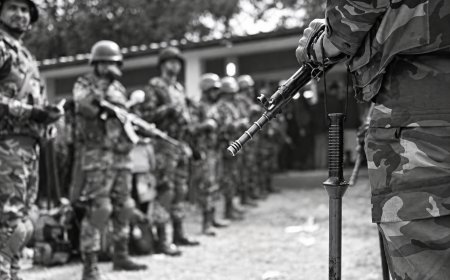
States primarily extend their role to deal with others to establish their will, primarily through two instruments: diplomacy and, if the former fails, war.
Thus, it is clear that, though the term diplomacy is not aggressive, it harbors aggression, as it resorts to war when other means don’t work. Interestingly, diplomacy on an individual scale, beyond institutions, is rather naïve.
If one wants to achieve something from the other, as an equal, power uses diplomacy as a main tool, lacking the power to ensure it. One who falls into the trap of diplomacy surrenders to the will of others, deeming it harmless because of its approach.
If the same were achieved through force, it would hurt, which it doesn’t due to the use of the naïve tool of diplomacy.
The term diplomacy, when translated into Bengali or Hindi as ‘Kutniti’, does not connote the same gentleness as it does in English; rather, it translates literally as ‘Mischievous Policy’, a derogatory meaning.
The Chanakya doctrine of diplomacy, largely used in India without explicit proclamation, holds that the closest neighbor is an enemy, while the enemy’s enemy is to be deemed a friend. The very philosophy is mischievous and power-driven, governing smaller nations in one's own interest by other means.
All that indicates that diplomacy is not as friendly as it looks on the surface and as sweet as the term sounds. It has more aggression than defence, as war follows in its failure.
Besides, it is highly power-centric, in which great powers share responsibility for overseeing the conduct of smaller powers and preserving peace among themselves.
Thus, diplomacy is power-centric: in an international system, it is an actor's ability to influence other actors to act in accordance with power interests, whether hard or soft. The above theoretical concept of diplomacy is far from reality, given the current complex global disorder, including the war in the Middle East and the Russian front.
Against the forecast that Putin’s Russia will collapse with decades-long sanctions, it endured war in Ukraine for six years and deadlocked the ending. Putin warned the West to end its geopolitical adventurism and keep away from Russia’s sphere of influence; to stop fishing and flirting with Ukraine, to no avail, as was stated in the ‘Monroe Doctrine’ of the USA pre-World War period.
Diplomacy was never considered an option, given the Western idea that Russia would succumb and come under Europe's grip. Putin acknowledged Trump's attempt to end the war in his first term as genuine, but a backdoor conspiracy unexpectedly prolonged it.
Diplomacy doesn’t find a clear route to track and converge on a solution. Iran, with more than 40 years of sanctions, topsy-turvy the most powerful country of the world, including Israel, by its resilience to fight and muddle not only the Middle East but the energy lifeline of the whole world.
Against all assessments, Iran not only is enduring the war, but it has deadlocked the ending of the war, alluding to diplomatic closure as the only option.
Initial negotiations, the formation of various security alliances in the region, Pakistan's mediation for closure, etc., all failed and ultimately compelled the three major powers, the USA, Russia, and China, to sit at the same table.
Would diplomacy find solutions to it, driven by an altruistic attitude among the big powers?
Perhaps not, but the closure of the war on both fronts is not only a submission to the demands of Iran and Russia but also an emergent call for the rest of the world.
Is diplomacy still a powerful tool for powerful countries to impose their will on smaller powers?
Both Russia and Iran have brought to the fore that war can’t be the choice as a replacement for diplomacy to establish the geo-political ambitions of the powerful countries.
Diplomacy will need to be benign for stronger powers to adapt and an aggressive tool for middle powers to warn against war.
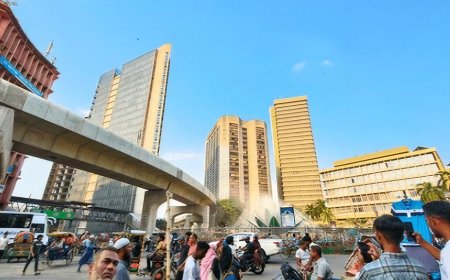
The diplomatic design of the South Asian regional power to ensure the conduct of the smaller countries like Bangladesh, Nepal, or Sri Lanka worked well for a long time.
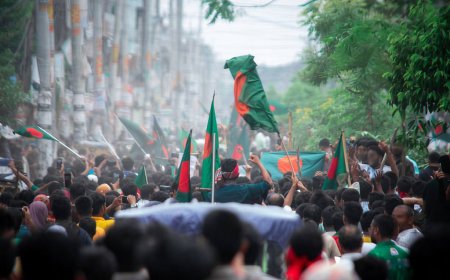
But after Gen Z stormed their respective governments to oust them for submitting to mischievous diplomacy, the regional power's diplomatic influence was strangled.
The Chanakya doctrine of diplomacy, that the closest neighbor is an enemy, while the enemy’s enemy is to be deemed a friend, may have to be revisited. The diplomatic scheme between India and Bangladesh will need to be played out more theoretically through the joint efforts of the foreign affairs ministries of the respective countries.
The politics of diplomacy, whether by providing a political stalwart as a diplomatic envoy or by overshadowing the efforts of the professional diplomatic core, will not further efforts to reset but ruin the relations.
The South Asian countries should take lessons from the Russian and Iranian experiences of war and diplomatic failure, and seek to replace the word Kutniti to create space for a benign policy.
Any war on any front in this region would crumble the whole region and plunge it into an irreversible economic abyss.
Brigadier General AF Jaglul Ahmed (Retd) is a regular contributor to national dailies. He can be reached at [email protected].