



































































When the Law Fails Women
The problem is not only that laws fail after harm occurs, but that outdated laws make women unsure whether what they are facing is legally recognized as harm or not.

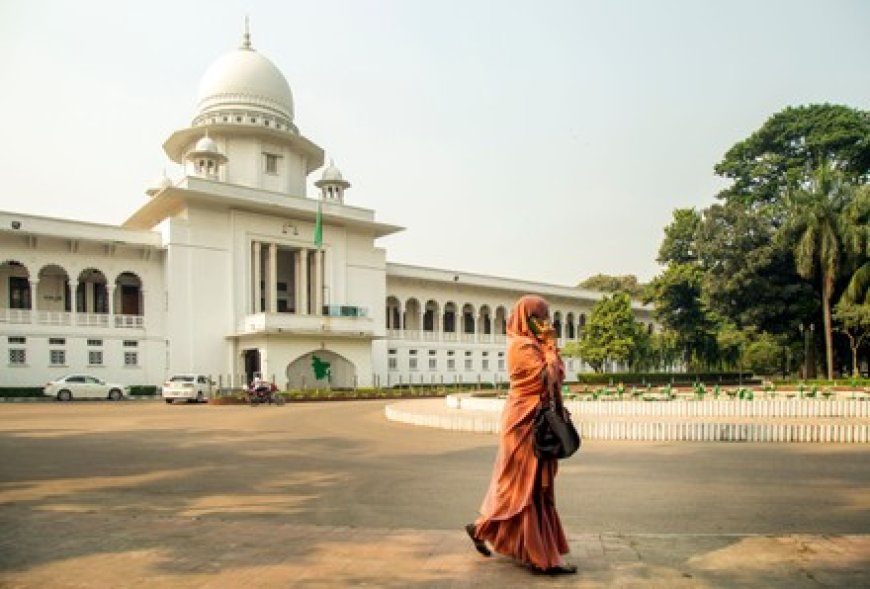
The promise of equality in Bangladesh’s legal system looks strong on paper. Article 27 of the Constitution guarantees equality before the law, and Article 28 ensures equal rights for women and prohibits discrimination on the basis of sex.
However, in everyday life, this promise feels fragile. The problem is not only that laws fail after harm occurs, but that outdated laws make women unsure whether what they are facing is legally recognized as harm or not.
Bangladesh’s legal system is a mixture of British colonial rules, religious personal laws, and with the laws in place today. Many of these laws remain unclear, creating difficulties in interpretation and enforcement. As a result, it becomes harder for women to clearly understand or rely on legal protection.
A recent UN Women report identified at least 19 laws in Bangladesh that are discriminatory and fail to protect women. These gaps are not isolated, rather they reflect a broader issue in how legal protection is defined and applied in the country.
One of the clearest examples is the definition of rape under Section 375 of the Penal Code, 1860. The law does not clearly define “consent.” In practice, judicial interpretation has tended to rely on physical indicators such as visible injuries or signs of force when examining whether consent was absent. However, sexual violence does not always leave physical marks. As a result, many cases become difficult to prove, and certain forms of abuse remain outside the legal recognition.
These problems become more serious when exceptions exist. Sexual intercourse with a girl above 13 years of age is not considered rape if she is married to the perpetrator. This creates a situation where a child may be treated as a wife in one context and denied protection in another. As it appears, instead of preventing harm, the law in these cases simply allows it to happen within marriage.
Another issue lies in Sections 354 and 509 of the Penal Code, which criminalizes acts that “outrage the modesty of a woman.” The concern is not the aim of addressing harassment, but the wording itself.
The term “modesty” is vague and subjective, which shifts the attention away from the offender’s conduct and placing it on assumptions about a woman’s character. As a result, even when harassment occurs, women remain in doubt whether the law clearly recognizes it as wrongdoing.
These gaps weaken protection and shape behaviour. Ambiguities regarding legal thresholds and evidentiary requirements leads to underreporting. Many women do not report harassment or sexual violence. This is not only due to fear, but also hesitation.
When the law does not clearly define harm, women may doubt whether their experience is serious enough. In this process, questions are raised about a woman’s behavior, her past, and her credibility. Her character becomes the bigger concern.
This discourages women from continuing to pursue proceedings further. For women with fewer resources, the barriers are higher, which includes limited awareness of rights, social stigma, and economic dependence.
At the same time, this ambiguity may benefit the wrongdoers. The absence of clear legal framing also affects how such experiences are reported and understood
If the law is to truly protect women, it must be clear in definition, consistent in application, and effective in practice. Beyond legal reform, there is also a question of trust. Addressing these concerns requires consistency in interpretation, and stronger enforcement to ensure that constitutional guarantees translate into meaningful protection in real life.
Maria Afroze is an undergraduate law student at the University of Dhaka.