




































































Justice That Can Produce a Judicially Sound Precedent
The legal proceedings unfolding after Ramisa Akhter’s rape, beheading, and murder should be anchored in a fundamental jurisprudential principle and not be designed to appease public emotion: Even in a high-profile case where guilt appears certain, due process is not a concession to the accused, but a guardrail protecting the integrity of the criminal justice system.
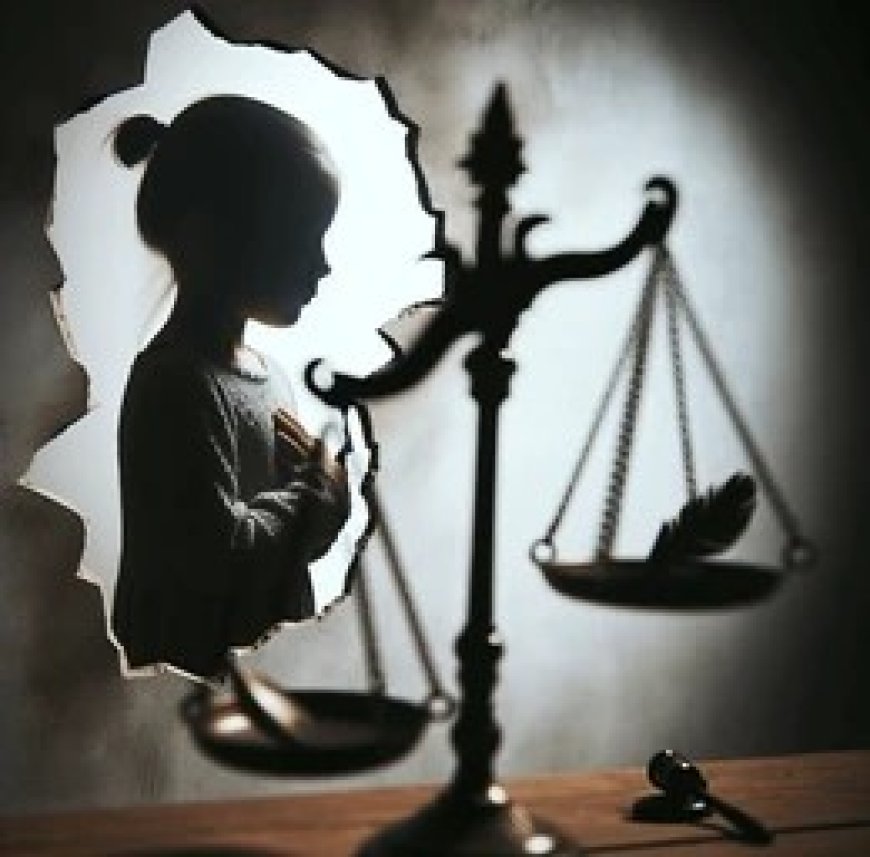
Treating capital punishment as the exclusive answer to sexual violence conflates punishing an individual after a crime has been committed with preventing such crimes in the future.
Comparative criminological research and evidence from jurisdictions with and without the death penalty point to a salient finding: Capital punishment alone has not proven to be an effective systemic deterrent and can, in fact, divert public policy attention away from both the upstream drivers and downstream enforcement gaps that allow sexual violence to persist.
Public anger at and distrust toward the state machinery are understandable after the sexual assault and murder of a child, and amid a series of similar recent incidents of violence. The very machinery mandated to deliver justice has long stood as one of the principal impediments to it.
Why the Criminal Justice Pathway Fails Survivors of Sexual Violence
Confidence in that machinery is difficult to build, let alone sustain. A recent study conducted by BRAC and the Supreme Court of Bangladesh is indicative of why: The conviction rate in violence-against-women-and-children-related cases is approximately 3%, the settlement rate in such cases is 13%, and the acquittal rate for the accused is 70%.
These three figures paint a picture of a profound miscarriage of justice. Precisely because of this, society needs to continue demanding justice for victims and keep pressure on the state machinery until justice is not only delivered but seen to be delivered.
Bangladesh also needs to confront what these figures reveal about the criminal justice pathway for violence against women and children cases. The data point to systemic case attrition: Cases involving such crimes are repeatedly weakened, sidelined, or lost at multiple stages before substantive legal accountability can be secured through the courts.
First, many such cases are compromised even before the formal trial begins. Social and reputational pressure tends to begin at home. Women and girls who survive sexual violence, and in other cases bereaved families, are frequently told that speaking publicly will damage the family’s reputation, reduce marriage prospects, or bring shame on everyone around them.
Local power brokers may also nudge survivors and their families, or bereaved families, toward settlement with the offender instead of pursuing criminal prosecution.
Second, these pressures become even more significant because the legal system depends on survivor testimony. The survivor is the central witness and, in many cases, the only direct witness. Bangladesh does not have a comprehensive witness protection program, despite years of recommendations to successive governments from legal specialists, human rights advocates, and other policy practitioners working to confront violence against women and girls.
Without state-led protection guarantees, survivors carry the evidentiary burden of the case while also bearing the social cost of speaking out, with limited or no assurance of their safety.
By the time a case reaches court, the evidentiary record may already have been dented. Testimony may have been withdrawn or altered under pressure. Survivors or bereaved families may no longer be in a position to speak freely. A judge is then left to decide the case based on the record before the court, rather than the full extent of the violence that occurred.
Confronting Our Collective Failure While Upholding the Rule of Law
On the surface, Ramisa Akhter was the victim of a crime committed by an individual whose perversity and depravity deserve condemnation across the board. Like the other children whose abuse has come to public attention in recent weeks, she was also failed by the nation at large: Specifically, by the trio of society, the state apparatus, and political actors.
It is imperative that Bangladeshis perceive what happened to Ramisa as a collective failure, representative of something far more fundamental than finger-pointing at the law enforcement apparatus, the judiciary, the decay of morality, or a few so-called bad apples.
Repeated incidents of child abuse reflect a degradation of the social compact itself: The basic promise a society makes to its children that they will be protected and cared for, and the obligation to cultivate enabling conditions in which they can grow up in security.
But there is a parallel truth: The state has a sacrosanct duty to enforce the law in accordance with both the letter and the spirit of the law. Society writ large can be emotional. The state, by contrast, cannot act on emotion or be influenced by it.
A rule-of-law-based criminal justice system requires any case, including cases involving crimes that shock the conscience of a nation and test the underlying social compact, to move through arrest, investigation, prosecution, trial, conviction, and sentencing.
If a functioning liberal democracy with an independent and robust judiciary is the destination Bangladesh seeks to chart a concrete path toward, that aspiration cannot coexist with demands for lynchings, public hangings, Shariah-style executions, or verdicts within days.
That kind of resolution belongs to court-martial proceedings, secret trials, and theocracies. Bangladesh has fought time and again against authoritarian regimes that leveraged such draconian methods to do what was politically convenient in the name of delivering justice.
Opposition parties need to resist the temptation to weaponize this incident as a means of making the BNP government look bad. This issue goes far beyond any one political party and should not be politicized. All parties have their share of blame for failing, over time, to build a healthy political and civic culture in which they lead by example as model citizens.
There is also a need to revisit, if not reinvent, the wheel when it comes to legislative instruments related to combatting sexual violence against children. On paper, Bangladesh does have well-defined public policies and legal frameworks intended to guarantee the safety of children. As with other issues, however, implementation continues to lag.
Take corporal punishment as one example. Both a High Court ruling and government directives prohibit corporal punishment in educational institutions. The practice continues because poor enforcement by the state machinery and regulatory non-compliance by educational institutions mean that legal protections and judicial directives are not consistently implemented in practice.
Circling back to Ramisa’s ongoing case, is there a strong argument for fast-tracking the prosecution of the perpetrator, as well as other child rape and murder trials, so that verdicts and sentences can be delivered sooner rather than later? Certainly.
Should there be specialized courts and publicly televised proceedings that send a tangible signal that the state will use its harshest coercive powers against perpetrators of sexual violence? Absolutely.
No victim’s family deserves to wait endlessly for legal resolution. A reminder is perhaps necessary: there are already glaring examples of the state being unable or unwilling to deliver justice, even in high-profile cases that have received widespread public attention.
Justice Delayed is Justice Denied, but Justice Hurried Can Become Justice Buried
The Sagar-Runi murder case remains a painful example. More than a decade after the journalist couple were killed, the investigation report has still not been completed. Courts, responding to repeated requests from the state’s prosecutorial teams over the years, have extended the deadline again and again. That cannot remain a recurring feature of the judicial system.
Having said that, speed cannot come at the expense of credibility. Credibility is achieved when due process is followed in line with the norms of what constitutes a fair trial. Whether the perpetrator’s guilt appears plain as day is immaterial to that person’s right to due process.
Take the 1971 war crimes trials under the Awami League administration. It is difficult to imagine any reasonable, non-partisan observer opposing those trials in principle.
The accused Jamaat leaders were believed to have aided and abetted genocide. That perception was based on the lived experience of those who survived the independence struggle, anecdotal evidence from freedom fighters and media reporting from 1971. The accused war criminals deserved to face the full force of the law.
But when the Awami League state machinery failed to follow due process in some cases, or intentionally circumvented it by falsifying evidentiary documents or producing fake witnesses, the moral force of those politically sensitive trials was damaged.
Amnesty International and Human Rights Watch reported those concerns. Several accused war criminals, already guilty in the public consciousness, later found space to be rebranded as victims of judicial persecution. That narrative travelled far enough to reach even some who opposed Jamaat’s role in 1971, giving the party an opening to emerge, as it did in the recently concluded general election, stronger at the ballot box than at any point in its history.
Similar concerns apply to former Prime Minister Sheikh Hasina’s recent trial under the International Crimes Tribunal. Given the fault lines in adherence to due process norms, the death penalty verdict against her may not stand the test of time.
It may someday be framed as politically motivated by a larger cross-section of society than it is today. That risk remains even though her government, under her supervision, orchestrated mass atrocity crimes against its own people, as the nation witnessed, resulting in roughly 1,400 state-sponsored killings.
Public sentiment appears overwhelmingly to favour the view that Ramisa’s perpetrator should face the maximum punishment available under the law: The death penalty. Support for or opposition to capital punishment is a separate philosophical debate.
In this instance, the state has an obligation to show that the criminal justice system can function in three ways: Lawfully, visibly, and credibly. This case has drawn national attention, and the state cannot hide from the responsibility it is now duty-bound to shoulder. It has to get this right.
The same logic of expedited justice has, unfortunately, been abused by past governments. Currently, public anger is directed at horrific rape and murder cases. Society wants the state to act aggressively and with inescapable severity.
In the past, however, governments have facilitated expedited measures by arresting opponents and labelling them traitors or enemies of the state. They have leveraged manufactured outrage to legitimize rushed prosecutions and convictions that were later found to be faulty. Post-August 2024, there is clear societal opposition to the state becoming oppressive in that way.
The only way to reconcile these concerns is to design a criminal justice system that is blind to the accused in question and pursues justice through due process.
That process can be frustrating. But it is the direction the country needs to move towards, and it is better than the alternative: Governments deciding, based on their own value judgments, which cases deserve a fair trial and which cases deserve a rushed trial to appease the public.
The criminal justice system has to remain agnostic to the identity of the accused and faithful to the law. Let it be called upon to administer justice fairly.
Bangladesh has a new government, and any assessment of the ability of the state machinery it oversees to deliver justice for Ramisa should be grounded in the actions it takes in the coming days and months, rather than in a premature verdict about its intentions.
The full force of the law, not only the force of public anger, needs to be directed at the rapist and murderer. That is what would make any punishment both exemplary and legitimate.
We Need a Policy Agenda Focused on Prevention
The Prime Minister’s commitment to a one-month timeline for completing the trial may give some measure of reassurance to Ramisa’s family. So, too, may his recent visit to their home to offer condolences. These gestures carry weight.
A family that has lost a child is entitled to hear directly that those at the highest levels of government are taking their pain seriously. The Prime Minister’s personal attention to child abuse can also send a meaningful signal that enough is enough.
Bangladesh has witnessed this before, when former Prime Minister Begum Khaleda Zia took a hands-on role in addressing acid violence and mobilized various arms of the state machinery aggressively and successfully against it.
But the reality is that attention from the executive branch of government remains a band-aid. It can accelerate a trial, frighten law enforcement officials into action, and reassure a grieving family. It cannot, by itself, ensure that similar incidents do not happen in the future.
The fact that a Head of Government has to publicly attach a timeline to a criminal trial is itself an indictment of the criminal justice system. The tragedy is that such intervention has become necessary at all. In an ideal world, Tarique Rahman should not utter a word about an ongoing judicial proceeding. In theory, the executive must remain at arm’s length from the judiciary.
To create a precedent that deters child rapists and abusers, and to build a criminal justice system that is preventive rather than simply reactive, the state must ensure justice for Ramisa and other victims of child abuse. What is critical is that justice is delivered in a way that is landmark, worthy of emulation and fully by the book.
The longer-term strategic response to sexual violence has to extend beyond the courts.
Comprehensive sex education and gender-based violence training need to be introduced in primary and secondary schools. A curriculum imported wholesale from the West would categorically fail in Bangladesh. It would lack social legitimacy among many parents.
The better path is to design a curriculum rooted in Bangladesh’s own cultural context, attentive to religious values and public sensitivities, and structured to teach children about consent, good touch and bad touch, bodily autonomy, boundaries, online safety, and related issues in a staggered and age-appropriate way.
Madrasahs and religious institutions cannot also be allowed to remain silent on sexual violence emanating from within their own spaces, nor should they become barriers to addressing it. The exploitation of boys in these settings has revealed another issue often neglected in public discourse: The pervasive lack of awareness surrounding the sexual abuse young boys endure.
Why are Jummah khutbahs not speaking directly about protecting children from abuse, the dignity and rights of women being violated in real life and across social media, the criminality of sexual violence, and the religious duty to confront exploitation rather than conceal it? These are the kinds of questions ordinary citizens should be asking in their local mosques.
Beyond waiting to see Ramisa’s killer face the noose, the trio of society, the state apparatus, and political actors should first enforce the judicial rulings and legislation already in place on child abuse, and do so holistically, in the truest sense of the word. Second, they should begin implementing the prevention-focused social policy solutions that subject-matter experts have long recommended, and pursue them with seriousness.
A civilized and rights-based country cannot allow an epidemic of sexual violence to continue indefinitely, only to respond when the next horrific incident captures national attention.
Mir Aftabuddin Ahmed is a Canada-based public policy columnist with more than 140 published articles across Bangladeshi and Canadian media and policy outlets. He currently serves as a Policy Development Officer with the City of Toronto.