



































































The Titan of 1969
Future generations will continue to study the Mass Uprising of 1969 and the birth of Bangladesh. When they do, they will encounter the name Tofail Ahmed standing prominently among those who transformed resistance into victory and aspiration into nationhood.

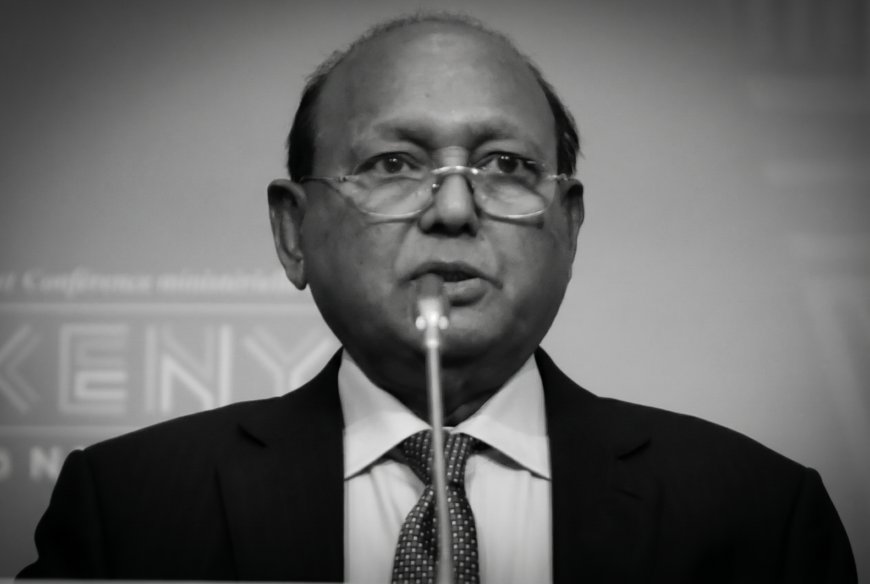
With the passing of Tofail Ahmed on June 1, Bangladesh has lost not merely a veteran politician but one of the most luminous architects of its democratic consciousness. A giant of history has departed, leaving behind a legacy so profound that it transcends the boundaries of time and mortality.
Nations produce countless public figures, yet only a select few become inseparable from the defining struggles that shape their people's destiny. Tofail Ahmed belonged to that rare fraternity of history-makers. He was not simply a politician; he was a symbol of resistance, a standard-bearer of democratic aspiration, and a fearless champion of the Bengali nation during one of the most turbulent periods of its existence.
To generations of Bangladeshis, he shall forever remain the People's Leader, the Titan of 1969, and one of the most recognizable faces of the democratic awakening that ultimately led to the birth of Bangladesh.
The Mass Uprising of 1969 occupies a hallowed place in Bangladesh’s national memory. It was not merely a political movement; it was the thunderous roar of a people refusing to remain subjugated beneath the weight of military authoritarianism. The uprising shattered the foundations of Pakistan’s despotic rule and accelerated the emergence of Bengali nationalism as an unstoppable force.
At the epicentre of that historic storm stood a young student leader whose courage, eloquence, and organizational genius inspired an entire generation. Tofail Ahmed emerged as the undisputed voice of the student movement, transforming widespread frustration into disciplined resistance and collective action.
The uprising did not materialize spontaneously. It was the culmination of years of economic discrimination, political repression, and cultural humiliation imposed upon the Bengali people. Yet every revolutionary moment requires leaders capable of converting public discontent into a coherent movement. Tofail Ahmed fulfilled that role with extraordinary distinction.
Among his most enduring contributions was his pivotal role in mobilizing public support for the release of Bangabandhu Sheikh Mujibur Rahman from imprisonment. The liberation of Bangabandhu on February 22, 1969 fundamentally altered the political trajectory of the region. It elevated Sheikh Mujibur Rahman to the undisputed leadership of the Bengali nation and paved the road toward eventual independence.
The historical significance of that achievement cannot be overstated. The movement that secured Bangabandhu’s release became a decisive milestone on Bangladesh’s journey toward self-determination. In that achievement, Tofail Ahmed’s contribution remains permanently etched into the nation’s collective memory.
To understand Tofail Ahmed is to understand the crucial bridge between uprising and nationhood. The road to Bangladesh’s independence was paved by successive struggles -- the Language Movement of 1952, the democratic movements of the 1950s and 1960s, the Mass Uprising of 1969, and ultimately the Liberation War of 1971. Tofail Ahmed stood prominently within this continuum of sacrifice and resistance.
Yet his greatness did not end with the revolutionary fervour of youth.
Unlike many political figures whose influence fades after moments of historic prominence, Tofail Ahmed continued to play a consequential role throughout Bangladesh’s national journey. He remained deeply engaged in political organization, parliamentary leadership, governance, and public service.
His public life reflected an enduring commitment to democracy, nationalism, and social justice -- the very principles that had animated his activism during his student years.
Perhaps his most remarkable quality was his profound connection with ordinary citizens. Genuine leadership is measured not by titles, offices, or ceremonial authority but by the trust it inspires among people. Tofail Ahmed possessed that rare gift. Whether addressing students, workers, farmers, intellectuals, or grassroots activists, he spoke with authenticity and conviction. People saw in him not a distant political figure but a reflection of their own hopes and aspirations.
Like every consequential public figure, he faced criticism, controversy, and political adversity. Such experiences are inevitable in any long and active public career. However, history ultimately renders its verdict by evaluating the entirety of a life’s contribution rather than isolated episodes.
Viewed through the broader lens of national history, Tofail Ahmed’s legacy stands firmly on the side of democratic struggle, patriotic service, and unwavering dedication to the people of Bangladesh.
Today, as the nation mourns his departure, it is worth remembering that many of the freedoms enjoyed by contemporary generations were secured through the sacrifices of leaders like him. They confronted dictatorship when silence was safer. They embraced uncertainty when submission was easier. They envisioned a future that did not yet exist and dedicated their lives to bringing it into existence.
The story of Tofail Ahmed is therefore far greater than the biography of a single individual. It is the story of Bangladesh’s awakening. It is the story of a courageous young student who became the voice of a generation and helped redirect the course of history. It is the story of a patriot who walked beside his people through their darkest hours and remained faithful to their aspirations throughout his life.
The People's Leader has departed. The Titan of 1969 has entered eternity. Yet history itself shall guard his memory.
Future generations will continue to study the Mass Uprising of 1969 and the birth of Bangladesh. When they do, they will encounter the name Tofail Ahmed standing prominently among those who transformed resistance into victory and aspiration into nationhood.
His mortal journey has reached its conclusion, but his legacy shall endure as long as Bangladesh remembers the struggles that gave birth to its freedom.
Tofail Ahmed was not merely a witness to history. He was one of its principal architects.
And therefore, my lips cannot utter farewell. For legends do not die. They become immortal in the conscience of a grateful nation.
Anwar A. Khan was a freedom fighter in 1971 to establish Bangladesh and is an independent political analyst based in Dhaka who writes on politics, political and human-centred figures, current and international affairs.