





































![A Ledger of the Soul: Navigating the Allah-Bhagavant Nexus in a 19th-Century Puruṣākāra Jñāna Caupara [Gyan Chauper]](https://counterpointbd.com/uploads/images/202608/image_430x256_6a93baa3b09a7.jpg)



















Not For One Day Only
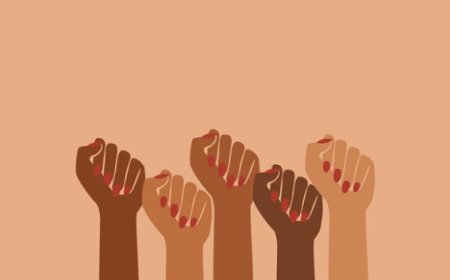
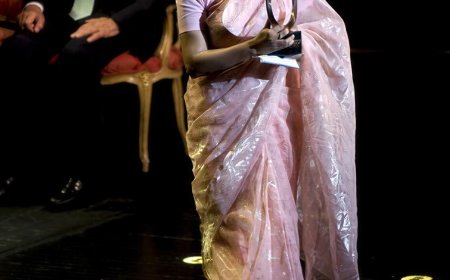
Respecting the rights, dignity, and freedom of women, and ensuring full equality for women in health, education, employment, and opportunity must be established as the common ground on which all political actors in Bangladesh agree.

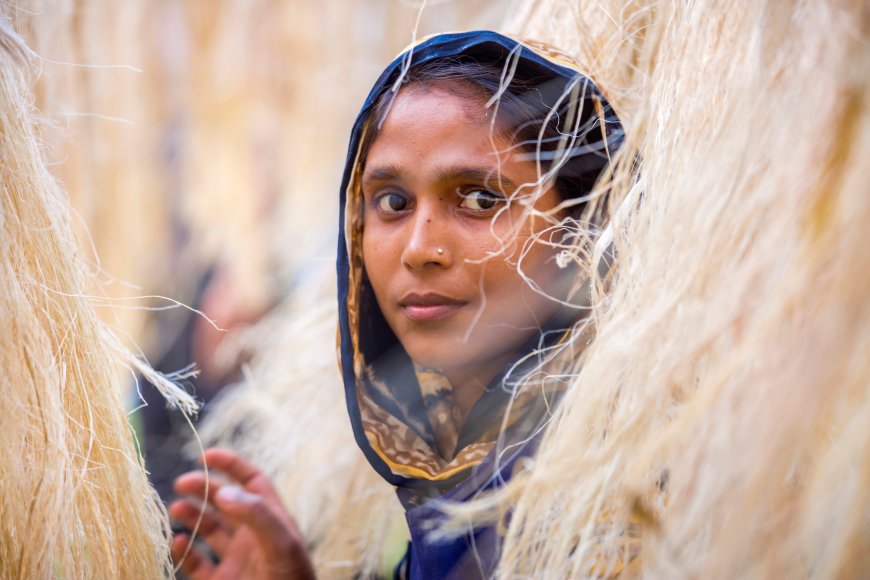
While the focus brought to women’s issues by the day is salutary, it is important that this emphasis be retained throughout the year and that women’s issues remain front and centre of the policy discussion.
The reason for this is simple: It is not just that women make up roughly fifty percent of the population, but that everywhere and at all times women's wellbeing serves as a crucial proxy for the general health of a nation.
Where women do better, the nation does better. Where women’s rights, health, education, and opportunities are protected and expanded, the entire nation feels the benefit.
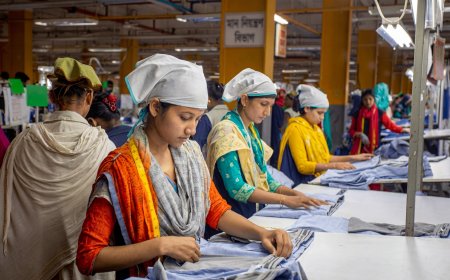
In fact, Bangladesh has long understood this, and that is why women have long been the focus of both development efforts and why the garment industry has played such a transformative role in the nation's economic and social development.
To the extent that Bangladesh is a very different country than it was a few decades ago, with social and economic indicators pointing upwards, it is because women have been able to access healthcare, education, welfare, credit, and entrepreneurial and economic opportunity.
It is hard to overstate just how transformational this has been. Not only has the social structure become more equal but the overall impact on families has been tremendously beneficial.
Families where women are empowered are families where the children are better taken care of and have greater opportunity.
Societies where women are empowered are societies that grow and develop much faster and where conflict and crime is minimized.
But of course much remains to be done.
Bangladesh is still very far from a paradise for women’s rights and indeed in many ways women’s rights and freedoms have regressed in the past 18 months.
The incoming government would do well to put women’s issues and women’s rights at the centre of its policy agenda.
The first reason for this is purely pragmatic. It has been shown that there is no better way for a government to deliver on its promises of development and opportunity than to focus on women. The multiplier effect of centring women’s rights will help steady the entire ship of state.
The second reason is that it provides a clear contrast and point of departure from the opposition.
If the ruling party wishes to stake out ideological territory that clearly differentiates itself from the opposition, then this is the ground on which to do so.
It is the nature of government that there will be tough decisions to be made, there will be mistakes, there will be failures, and there will be dissatisfaction.
At such times it is important that the government be able to point to something tangible in terms of why and how they offer something better than the alternative.
For many voters, and not just women, the bedrock of their support for the ruling party now and in the future will be its support for women and its understanding that to roll back the gains made by women over the past few decades would be devastating to Bangladesh.
Indeed, the long-term benefits to the nation from taking a stand on women’s issues goes further than simple electoral advantage.
The point is to reframe the entire social discussion and redraw the lines of political debate so that every political actor in Bangladesh understands that women’s rights and freedoms are non-negotiable and must remain at the heart of the nation’s policy agenda.
As Bangladesh gets used to a new political reality, where parties that had once been relegated to the fringe of politics are now entering the mainstream of political discourse, it is more important than ever that we develop a baseline understanding as a nation as to what our red lines are as a society.
All political parties should be welcome to be part of building a new Bangladesh as long as they all subscribe to a certain set of common values and understandings.
Respecting the rights, dignity, and freedom of women, and ensuring full equality for women in health, education, employment, and opportunity must be established as the common ground on which all political actors in Bangladesh agree.
The government would do very well to draw this line in the sand and defend it to the death.
In the short-term, this will help remind the public why they voted for it. In the long-term, this will help preserve a Bangladesh where they remain relevant.
Zafar Sobhan is the Editor of the weekly Counterpoint.