Trapped by Revolutionary Fatigue
The NCP risks sliding into oblivion and losing its uniqueness by merging into the shadow of larger political interests. It must now undertake serious soul-searching about the long-term costs and benefits of its strategy.

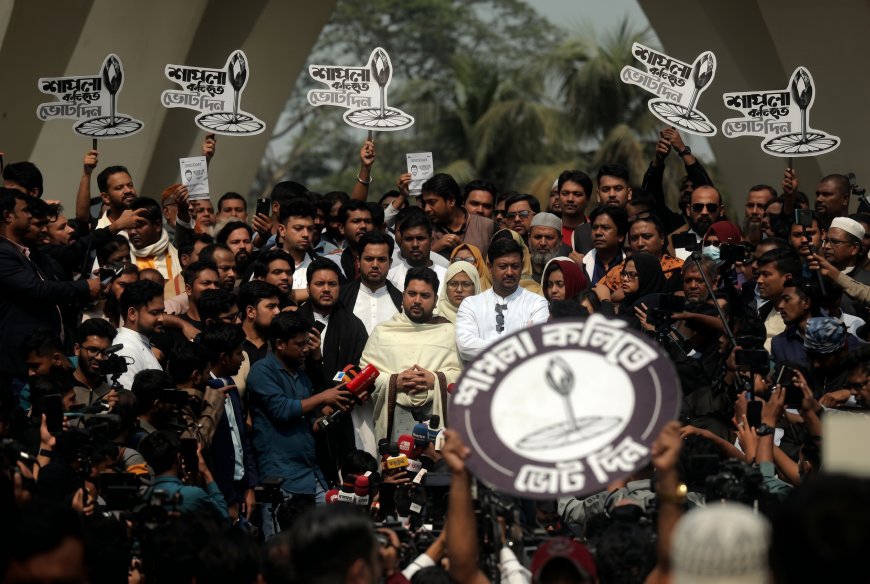
I am deeply worried about the future trajectory of the nation. Do our youth leaders truly think about Bangladesh’s future? Are they equipped with the essential qualities of leadership -- patriotism, vision, morality, ethics, and integrity -- which are non-negotiable for guiding a nation?
During our War of Liberation in 1971, many of us from the younger generation sacrificed our safety, studies, careers, and family life to free the country from foreign occupation. We fought not for personal gain, but for the dream of an independent Bangladesh.
After independence, we returned quietly to our professions, some remained in the army and also joined the effort to rebuild a devastated nation.
Life during the war was harsh beyond imagination. We lacked proper clothing, food, shelter, and rest. After guerrilla training, we frequently raided the Pakistan army’s camp, never knowing whether we would return alive. Yet none of these hardships weakened our resolve. Some of our comrades were killed, others permanently injured. Those memories still haunt many of us to this day.
Looking back, however, I believe we committed a grave mistake by handing over the liberated country entirely to politicians without ensuring accountability. Tragically, many among them failed the nation.
On the night of March 25, 1971, when the pakistan army launched a genocide to annihilate the Bengalis, Bangabandhu Sheikh Mujibur Rahman, our leader, surrendered to the Pakistan army, leaving the country in complete darkness.
In that vacuum, Major Ziaur Rahman declared the independence of Bangladesh and called upon the people to take up arms. After nine bloody months, independence was achieved at an enormous human and material cost.
When Sheikh Mujib returned and assumed leadership in 1972, the nation was filled with hope. People expected democracy, development, and an end to corruption. Sadly, the opposite unfolded. Corruption spread widely, party loyalists and student groups operated with impunity, and criminality became rampant.
A powerful paramilitary force was created to consolidate authority, while all political parties except the ruling one were banned, effectively turning Bangladesh into a one-party state. This turbulent period ended with Mujib’s assassination by a group of military officers, both serving and retired.
It was during President Ziaur Rahman’s brief tenure that the country experienced a measure of discipline, governance, and democratic revival. He inspired students and young people to envision themselves as future leaders, and was grooming them accordingly. Unfortunately, after his assassination, that momentum faded, and the youth once again became absorbed in the toxic culture of traditional politics.
Following the July 2024 revolution, I felt renewed hope. Young leaders such as Nahid Islam, Hasnat Abdullah, Sarjis Alam, Mahfuz Alam, and Zara Tasnim appeared to embody patriotism, courage, and a new political consciousness. Their speeches and activism reignited public hope that a new generation might finally rescue the nation from decades of decay.
Unfortunately, those hopes were quickly shaken. Some sections of the anti-discrimination student movement became consumed by greed, disorder, and arbitrary exercise of influence. Reports emerged of interference in administration from the Secretariat down to local levels, bypassing rules and institutions.
Corruption and indiscipline began eroding public trust. The same people who once celebrated these young revolutionaries started questioning their conduct. It felt, at times, like the country was drifting into a state of political dystopia.
I was equally disappointed by the hurried launch of the National Citizen Party (NCP), by some of the leading figures of the revolution. There is nothing wrong with forming a political party; indeed, new political movements are essential for democracy. What troubled me was the decision to align too quickly with controversial political forces, thereby diluting their own identity at the very beginning of their journey. It also gave them an ignominious tag.
In my view, they should have contested elections independently, regardless of how many seats they might initially win. Establishing a distinct political identity is far more important at this stage than securing a handful of seats through alliances. Political history offers many examples. India’s BJP (sans its ideology), Trinamool Congress, and Aam Aadmi Party all began modestly under their own banners before eventually becoming dominant political forces through perseverance, organization, and clarity of purpose.
The NCP risks sliding into oblivion and losing its uniqueness by merging into the shadow of larger political interests. It must now undertake serious soul-searching about the long-term costs and benefits of its strategy.
Still, there are reasons for optimism. Their decision to participate in upcoming local elections under their own banner is encouraging. These elections will provide a real test of public sentiment. Regardless of the results, they should remain patient and determined. Political credibility is not built overnight.
They should also make every effort to reunite capable and respected figures such as Zara Tasnim and Mahfuz Alam, along with others who distanced themselves from the movement. With discipline, integrity, organizational strength, and a clear vision, they can still emerge as a transformative political force.
Most importantly, time remains on their side. Bangladesh possesses a vast reservoir of energetic young people searching for principled leadership. If the new generation can free itself from greed, impatience, and opportunism, it may yet build the political alternative the nation has long awaited.
One day they may even rise to become the country’s largest political force.
Ashraf Ud Doula is a freedom fighter, a retired Major, former Secretary to the GOB, and served as Bangladesh Ambassador to several countries. He can reached by email at [email protected]