

























![A Ledger of the Soul: Navigating the Allah-Bhagavant Nexus in a 19th-Century Puruṣākāra Jñāna Caupara [Gyan Chauper]](https://counterpointbd.com/uploads/images/202608/image_430x256_6a93baa3b09a7.jpg)


















The Women Who Lit the Fire
Who decided what the new Bangladesh would look like? And were the women who built it in the room when that decision was made?

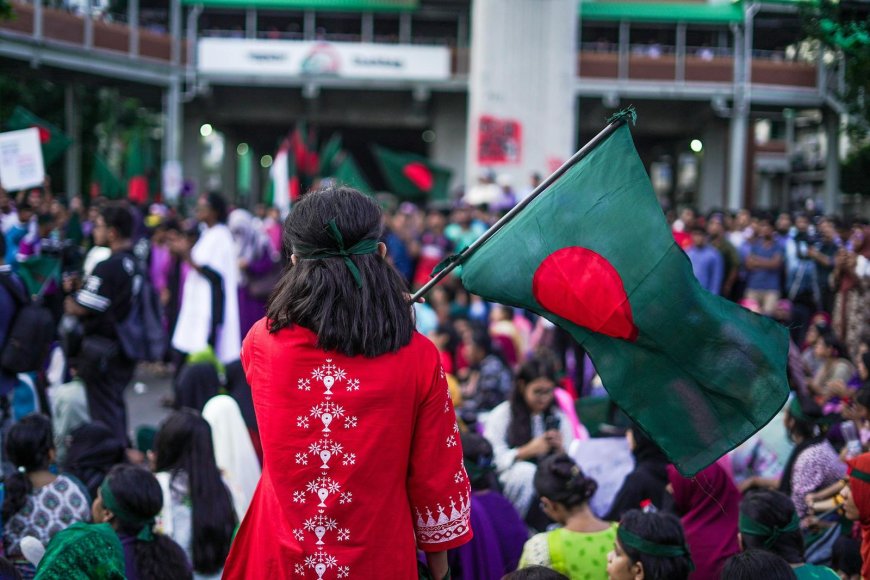
Bangladesh climbed 75 places on the Global Gender Gap Index in a single year. Seven women made it to a parliament of 300. Both of these things are true.
There is a woman somewhere in Bangladesh right now who has never heard of the World Economic Forum. She does not know that her country was ranked 24th in the world on the Global Gender Gap Index 2025, or that Bangladesh leapt 75 places in a single year, or that headlines abroad are calling it a success story.
She is busy surviving. And survival, in her case, is a full-time occupation with no holidays. She may have heard about July 2024, though. It is harder to have missed that.
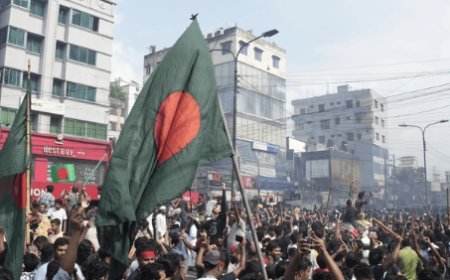
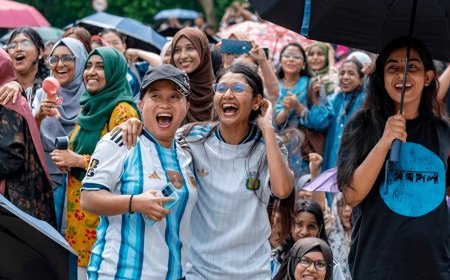
She may have been part of it -- one of the women who held street corners, coordinated logistics through voice notes and WhatsApp groups, stayed out through the nights after the government fell, and maintained order in the absence of any official authority willing to do so.
According to Chobi Mela's documentation of the uprising, it was women who broke through locked dormitory doors on July 14 to ignite what would become national resistance -- a moment the exhibition describes as central to the movement's origin rather than peripheral.
TBS News reported at the time that in July, women were impossible to ignore: on campuses and streets, in every corner of the country.
Shireen Huq, who chaired the Women's Affairs Reform Commission under the interim government, described those weeks as unlike anything she had seen before. The women who showed up, she said, did so not because they were invited. They showed up because they felt the country was theirs too.
That sentence sits differently now than it did in August 2024. It sits differently because of what came after.
There is a kind of progress that exists in institutions but not in daily life. It is real progress -- it deserves acknowledgment -- and it is also, at the same time, incomplete.
Bangladesh has a genuinely remarkable story to tell about gender equality, at least in some of its chapters.
Girls now match boys in school enrollment at the primary and secondary levels.
The literacy rate among women between fifteen and twenty-four has reached 95.8 percent.
The WEF ranking is not fictional. These achievements were not handed to anyone.
They were built across decades through government programs, NGOs, and most of all through the quiet determination of families who decided their daughters deserved a future. That is worth saying clearly and without qualification.
A country is not only its best chapters. And the distance between the headline and the lived experience -- between Geneva and the street she walks home at night -- remains wide enough to cause a kind of quiet bewilderment.
The bewilderment perhaps begins with a paradox that Bangladesh has never quite honestly reckoned with. For over three decades, from 1991 until 2024, the country was led at its highest level by women.
Sheikh Hasina and Khaleda Zia, between them, held the Prime Minister's office for the better part of that period. No country in the world has had women in its top executive position for as long as Bangladesh has over the past 50 years. That is a fact, and it is not a small one.
And yet, at every level below the very top, women in Bangladeshi politics tell a different story. In the February 2026 general election, 78 women contested among 1,981 total candidates. That is 3.93 % -- a figure lower than the three preceding elections, all of which were themselves considered inadequate.
Seven women won directly elected seats in a parliament of 300. The new cabinet was sworn in with three women among 50 ministers, a representation of 6%.
The July Charter had encouraged political parties to nominate at least five percent women candidates. Not a single party met even that modest threshold.
Leadership concentrated in one or two exceptional women at the summit of power does not automatically alter the structure of politics lower down.
Both Hasina and Khaleda rose through family lineage -- as daughters and wives of founders -- not through party institutions that believed deeply in cultivating women at every tier. The reserved seats system in parliament, designed as a stepping stone, worked somewhat differently in practice.
Women nominated to those 50 seats are chosen by party leadership, which means they are accountable upward rather than outward. Selima Rahman, the only woman on the BNP's standing committee, noted that capable women in politics tend to fade not because they are unwilling but because the party infrastructure around them simply does not carry them forward.
As a Weekend Read investigation in The Daily Star observed, connections often matter more than contributions in selecting new leaders — a dynamic that predates the uprising and survived it.
To have two women at the top for thirty years while the floors below remain largely closed is not equality. It is a different kind of ceiling, placed lower than people noticed.
Then came July 2024. And then came what happened after.
Chobi Mela's exhibition -- titled Women in the July Uprising: Essential Then, Why Erased Now? -- documents what it calls a steady erasure.
Women who had been impossible to ignore during the uprising found themselves described, in the months that followed, in the language of token rhetoric rather than genuine decision-making.
The exhibition's framing is blunt: Women were necessary when the streets burned, and dispensable once the autocracy fell.
The institutional record supports this.
None of the three student advisers initially appointed to the cabinet was a woman, as The Daily Star reported. The National Consensus Commission, which oversaw post-uprising reforms, was a largely male space.
The Women's Affairs Reform Commission developed 423 recommendations -- covering law, economic rights, protection from violence, and political participation -- and was kept out of central deliberations despite repeated attempts to be heard. The July National Charter 2025 addressed women's issues in a single line about reserved parliamentary seats.
Samantha Sharmeen, a member of the National Citizen Party born from the uprising itself, said with considerable candor that the most important decisions in her party were made without women present.
Tasnim Jara, a former senior NCP figure, contested the February 2026 election as an independent after the party formed an alliance that left her with no room. New Age Bangladesh reported that women's role in the July–August mass uprising had been largely ignored in the structures that followed.
As one researcher at BRAC's Institute of Governance and Development put it, the reform spaces opened by the July rupture remained controlled by the same old gatekeepers.
This is a particular kind of betrayal -- not the dramatic kind, not the kind that announces itself. It is the quiet kind, the kind that arrives in the form of an empty chair at a meeting, a commission's report left on a desk, a charter reduced to one line. The women who held the streets in July were not peripheral figures. They were central. And then the center was reconstituted without them.
History in this part of the world has a habit of doing this. The pattern is not new to Bangladesh, nor to the subcontinent more broadly.
Women are called upon in moments of rupture -- to march, to organize, to hold things together -- and then, when the architecture of the new order is being built, they find the doors are already closed. The invitation was for the emergency. Not for the aftermath.
Politics, however, is only one room in a large and unevenly lit house.
Women's labour force participation stands at 42.68%, against 82.4 % for men. Many women who do participate are concentrated in low-wage, informal sectors where the conditions for advancement are poor and the conditions for mistreatment are quietly tolerated. Around 65 percent of women remain unbanked.
Only 7% of registered small and medium business borrowers are women -- which means the financial infrastructure of the country has not made space for women's economic ambitions in any serious way.
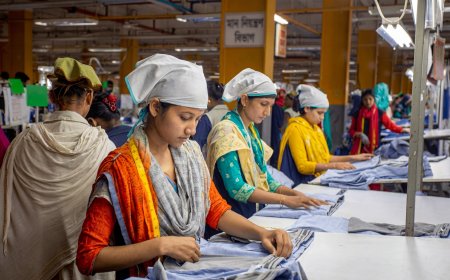
The garment sector, which is the heartbeat of Bangladesh's export economy, employs women at every level of its labor force. It is built on their endurance.
Yet the women who carry that sector face precarity, irregular wages, and a public life in which their economic contribution is acknowledged far more warmly at the national level than it is compensated at the factory floor.
On the street, and increasingly online, the picture has grown more troubling. A UN Women study found that in the period during and after the 2024 civil unrest, 66 percent of women reported receiving threatening or explicit messages on social media.
Chobi Mela's exhibition documents the same phenomenon from the inside: many women who were faces of the movement are now targets of cyberbullying, harassment, and smear campaigns -- a pattern that has made it dangerous, or simply exhausting, for them to remain in public life.
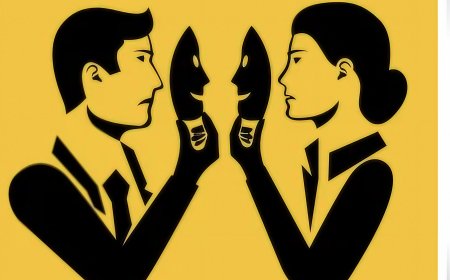
The Daily Star has reported that some women activists have withdrawn not out of defeat but because of the unrelenting hostility and the need to recover from post-uprising trauma. A young student activist described the experience of posting her thoughts online and receiving coordinated abuse in return -- of wearing a mask when she goes out, not because of pollution but because she has learned to be careful about being recognized. That sentence should give anyone pause.
The proportion of Islamist party candidates in the 2026 elections reached 33.25%, compared to 9.5% in the previous cycle, according to Transparency International Bangladesh. Shuddhashar has written about how orthodox fundamentalists have pushed actively for anti-women policies in the post-uprising period, creating a more hostile environment for female public figures.
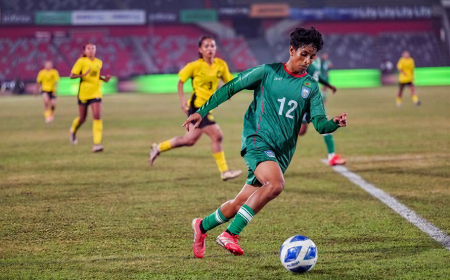
Some of the newly emboldened voices in public life have expressed opposition to women playing football, to women appearing at public ceremonies, to women occupying space in ways that feel ordinary and unremarkable elsewhere. This is not a fringe phenomenon. It is a shift in the temperature of public life, and women can feel it.
And then there is what happens behind closed doors, which no gender gap index has yet found a way to measure adequately.
The 2024 Violence Against Women survey -- the most comprehensive national study of its kind ever conducted in Bangladesh, carried out by the Bangladesh Bureau of Statistics with technical support from UNFPA -- found that 76% of women have experienced intimate partner violence in their lifetime.
In the 12 months preceding the survey, that figure was 49%. These are not numbers about strangers in distant circumstances. They describe the domestic lives of ordinary women across all eight administrative divisions of the country.
The Bangladesh Mahila Parishad recorded a rise of nearly 27% in reported violence against women in September 2024 alone. More than half of the women who experienced violence did not seek any help.
Of those who did not, the overwhelming majority said they felt it was not serious enough to report -- a response that says a great deal about what women in this country have been quietly taught to accept.
The patriarchal structure that produces these numbers is not something that lives only in individual behaviour. It lives in law. Marriage, divorce, child custody, and inheritance in Bangladesh are still governed by religious personal laws written in a different century for different purposes, laws that continue to place women at a structural disadvantage at the most intimate and consequential moments of their lives.
The constitution promises equality in public life. The personal laws govern private life. For most women, private life is where most of life is lived.
So: Bangladesh is ranked 24th in the world on the Global Gender Gap Index. Seven women were elected to a parliament of 300. Both of these things are true. They can exist in the same sentence only if one is prepared to sit with the discomfort of that coexistence, to resist the temptation to let one number cancel the other.
The WEF index measures specific things -- educational attainment, health outcomes, labour force participation in aggregate, and political representation at the highest level.
It does not measure what it feels like to walk home. It does not measure the 76%. It does not measure the masked activist, or the commission report left unread, or the empty chair at the party meeting where the alliance was decided.
Progress that stops at the gates of formal institutions is real, and it is not enough.
The question Bangladesh now faces is whether it will remain satisfied with progress that can be celebrated at summits abroad while inequality continues to organize the ordinary rhythms of life at home.
There is a memory, still fresh, of July 2024. Of women who did not wait to be asked, who stepped into uncertainty and stayed there.
That memory is now being contested and reclaimed -- through exhibitions like Chobi Mela's, through the July Kanya Foundation, which The Daily Star has covered as a continuing effort to protect women's dignity and recognition, and through the writing and advocacy of women who refuse to accept their erasure as permanent.
As The Daily Star's opinion pages have framed it, this is an unfinished revolution -- and its most unfinished chapter belongs to women.
The question now is simpler, and harder, than any index can capture: After the uprising made space for a new Bangladesh, who decided what the new Bangladesh would look like? And were the women who built it in the room when that decision was made?
The answer, as of February 2026, is already known.
Suborna Akther Laboni & Mahbuba Islam are Researchers at the Dacca institute of research and Analytics (daira).