
































































Should the Police Killings Be Investigated?
If unlawful killings by police are prosecuted while unlawful killings of police are ignored, the law becomes partisan. If mob killings are investigated while state killings are diluted, the law becomes cynical.
This is not a legal opinion. It is not an institutional position. It is simply my personal view. And my view is that the question itself should not frighten us.
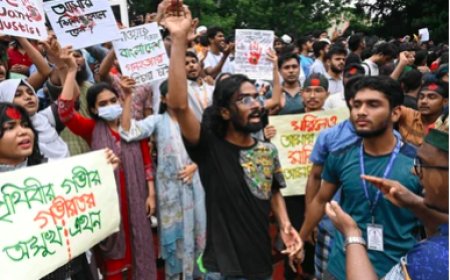
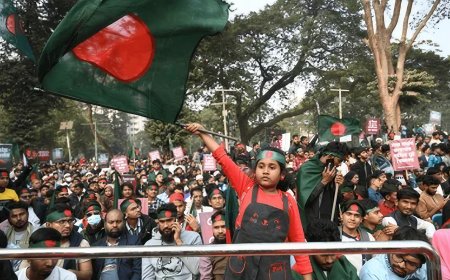
In Bangladesh today, asking whether the killings of police officers during the July 2024 uprising should be investigated has become politically radioactive. For some, even raising the issue feels like an attempt to dilute the moral force of the uprising. For others, it is a basic demand of justice.
But a republic cannot afford to flinch from hard questions.
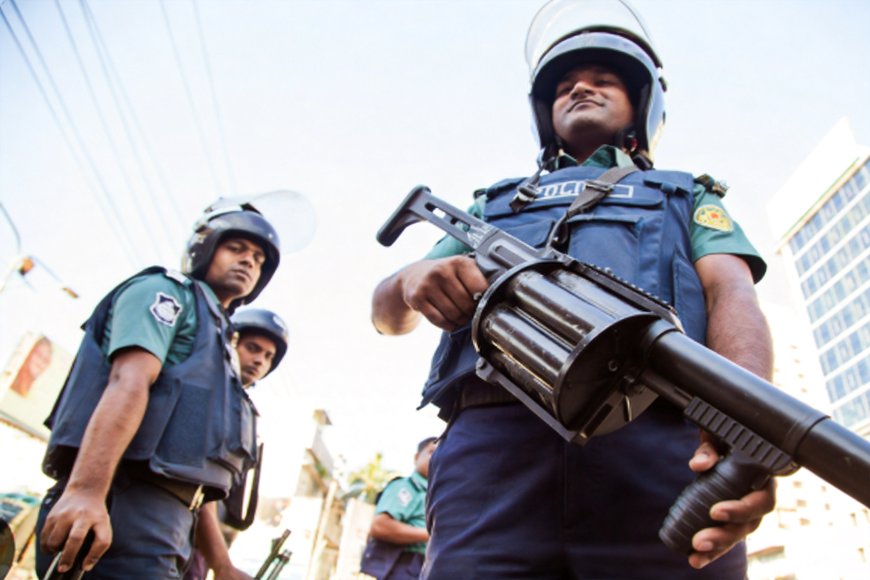
During the July-August unrest, at least 44 police personnel were killed nationwide, according to official figures. The deadliest episode occurred on August 4 at Enayetpur Police Station in Sirajganj, where 15 officers were beaten to death. Reports describe officers attempting to surrender or hide, only to be dragged out and killed. Some bodies were stripped. Some were piled together. One was hung from a tree.
Independent documentation details killings in Jatrabari, Uttara, Ashulia, Cumilla, Noakhali, Rangpur, and other districts. Across the country, 460 police establishments were attacked and thousands of weapons looted.
At the same time, the uprising itself was born of legitimate outrage. The state’s use of lethal force against protesters left hundreds dead. The moral center of July lies there -- in the demand that the state not treat its citizens as enemies. This is the uncomfortable dual reality: The state committed grave abuses; mobs also committed grave abuses.
So the question is not whether the killings happened. They did. The question is whether they should be investigated. And here we encounter resistance.
Why is the NCP resisting the investigation into police killings? Are they afraid that the BNP will use these cases as a political tool to harass opponents? Is this simply a defensive political reflex in a fragile transition? Or is there a deeper reason -- a fear that the moral clarity of July will be blurred if uncomfortable truths are formally examined?
These are legitimate political concerns. Bangladesh has a history of weaponized cases. Governments have used the criminal justice system to intimidate adversaries. Skepticism toward prosecutorial motives is not paranoia; it is historical memory. But skepticism cannot become paralysis.
The judiciary is not perfect in Bangladesh. It is not perfect anywhere. It never will be. Courts are influenced by politics, by pressure, by public opinion. Investigations can be misused. Prosecutors can be selective. Does that mean we stop investigating unnatural deaths?
If the standard for opening a murder case becomes “only if the system is flawless,” then no country on earth could prosecute any crime.
There is another argument circulating in public discourse: That after the Liberation War of 1971, killings of Biharis were not fully investigated or prosecuted. Therefore, why should police killings be investigated now? This argument is not morally rigorous.
It rests on a dangerous logic: Because justice was incomplete once, it may remain incomplete forever. Because one chapter of history was left unresolved, we may choose silence again.
Historical failure is not precedent for repetition. It is a warning. If injustices against Biharis were not properly addressed, that remains a moral wound. It does not justify new blindness. If anything, it strengthens the argument for broader truth-seeking -- not narrower.
Why not investigate both? Why not confront the unresolved shadows of 1971 alongside the violence of 2024? Let all truth come out. Let there be sunlight everywhere. Sunlight does not weaken a nation. It strengthens it.
The attack on Enayetpur was real. The killings in Jatrabari, Uttara, Ashulia, and elsewhere were real. The state’s use of lethal force against civilians was also real. None of these truths cancel the others. Justice is not a competition between victims.
If unlawful killings by police are prosecuted while unlawful killings of police are ignored, the law becomes partisan. If mob killings are investigated while state killings are diluted, the law becomes cynical. If historical crimes are invoked merely to silence present inquiry, the law becomes a slogan. None of this builds a republic.
Investigate the state’s crimes. Investigate the mob’s crimes. Reform institutions. Strengthen due process. Guard against political misuse. But do not suspend the criminal law because the political moment is uncomfortable.
And to those who resist the investigation into police killings, I ask plainly: What are you trying to hide? Why do you think your fellow countrymen should not learn what you have done? Will it shine a bad light on you? If it does -- how bad is it?
Let our republic grow up.
Omar Shehab is a theoretical quantum computer scientist at the IBM T. J. Watson Research Center, New York. His work has been supported by several agencies including the Department of Defense, Department of Energy, and NASA in the United States. He also regularly invests in the area of AI, deep tech, hard tech, and national security.