
























































At its core, Nawaz is asking something very simple and very devastating: What do we owe the dead, and how much of ourselves must we sacrifice to pay that debt?

Their visibility is not loud, neither in the broad daylight nor in the evening's glowing streetlights; they do not occupy any news headlines, yet they keep pedaling to meet the city's hunger. Therefore, the city we live in is not equal for all its citizens.
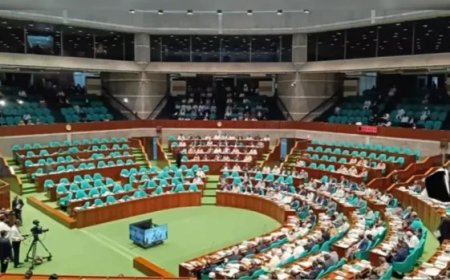
In functional democracies, losers succeed by diagnosing the situation precisely and organizing methodically. The goal is to defend the uncertainty of the next election. If an opposition misdiagnoses a policy defeat as a regime collapse, it loses the ability to speak to a combination of public segments.
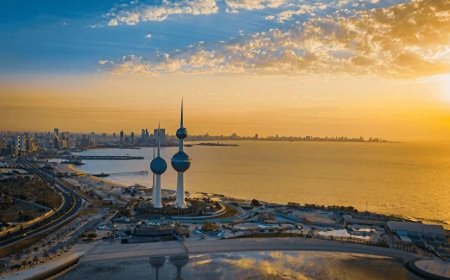
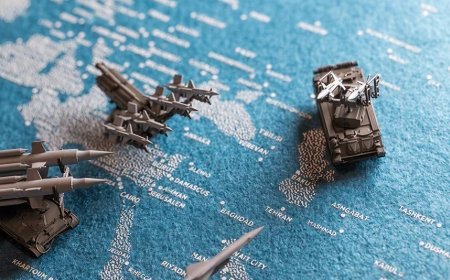
The Arab world is connected, but it is not unified. Its leaders may meet under chandeliers, embrace for cameras, and issue communiqués about common destiny in a common language. But beneath that ceremonial language lie rival economies, competing ports, divergent security partnerships, dynastic anxieties, and national projects.
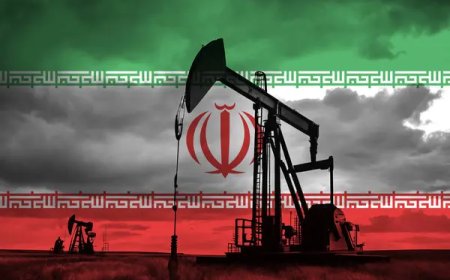
If Iran is honorably invited back into the financial system its 90 million refined and energetic people, backed by huge oil wealth, will be able to make the greatest possible contribution to strengthening not only the whole world economy but specifically to saving the US currency.

Law is not static; like people, society, and technology, it can evolve. Every advance in rights, every institutional reform, and every step toward justice has been shaped by individuals who believed that change was possible.
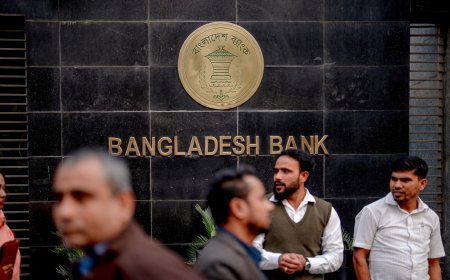
This piece talks about how bad loans, political patronage, and cosmetic accounting turned Bangladesh’s banks into a public crisis.
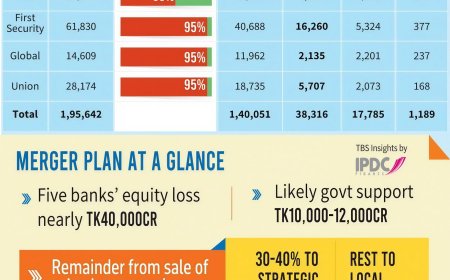
According to the Finance Minister's statement in parliament, the government has already paid more than 80,000 crore taka and will have to pay another 100,000 crore taka in the future to maintain the Sammilito Islami Bank under the Bank Resolution Ordinance.

It is tempting, to view such a crisis as an aberration, an unfortunate deviation from an otherwise sound system. What has occurred at Islami Bank Bangladesh was not accidental; it was the predictable outcome of unchecked authority and weakened institutions

New media and direct communication have created openings for ambitious challengers who can bypass old gatekeepers and speak straight to voters. The victories of Shah and Magyar may therefore represent more than isolated upsets. They may be early signs of a broader political era in which aspiring outsiders can more successfully challenge the entrenched elite establishments.

In this episode of The J&J Show, Jyoti Rahman and Rubaiyat Sarwar examine why long-term challenges—particularly fiscal pressures, the fuel crisis, and global economic volatility—require immediate attention. The discussion highlights how delayed policy responses can deepen risks, making forward-looking decisions more urgent than ever.
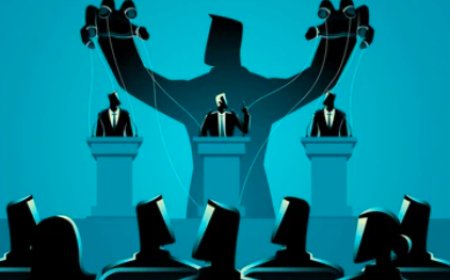
When power is built in ways that are not openly contested, when structures are created without clear political labelling yet function as extensions of a particular ideology, the line between organizational growth and concealed control begins to blur.
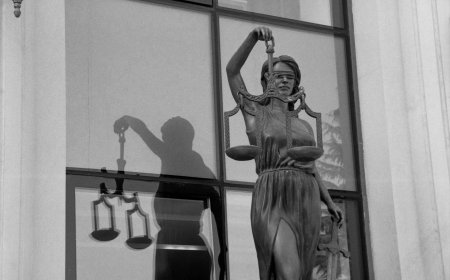
Whether a PhD student in Florida or a domestic worker returning from Saudi Arabia, the principle is the same: The state must recognize, protect, and advocate for all citizens equally. We do not merely demand justice; we demand presence, accountability, and moral integrity.

The systems that govern the world are powerful, but they are not immutable. They derive their strength, in part, from acceptance, from the belief that they cannot be altered.

The Cyber Security Acts vague language, a $190 million surveillance machine, and a political culture that hasn't reformed itself: This is the dystopian architecture of a pre-crime reality.
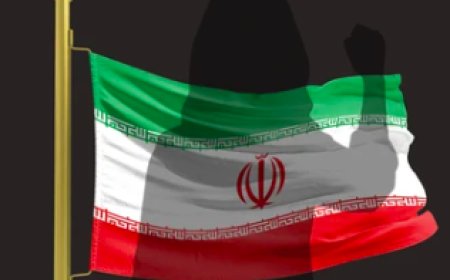
When a nation stands strong to protect its land from aggression, facing the threat of annihilation solely to preserve the dignity of its geography and people, its model of governance can’t align with any universal model for the sake of others.